


2023 CAUSE Leadership Academy Intern William Chao reflects on his Week 1 experiences.
When I received my bachelor's degree from UCLA in June, the only thing I knew was that I would be joining CAUSE for the next nine weeks. I didn’t know what to expect, however what I gained was a new sense of confidence, a community of amazing individuals, and a greater understanding of our AANHPI community and my place within it.
I often reflect on the “butterfly effect" moments that have occurred in my life; the seemingly small choices or coincidences that have led to profound changes. This internship is a prime example.
As each of the nine weeks of our internship passed, I felt myself developing skills and knowledge through my placement office at LA County First District Supervisor Hilda Solis’ Office and through CAUSE’s cohort sessions.
I often face difficulties coming up with answers for this icebreaker because my facial expressions always reveal my true feelings. So when I released the waterworks in front of the CAUSE board members during graduation, it was clear that I was not ready to say goodbye and close this chapter in my life.
As my time at CAUSE comes to a close, I reflect on the lessons I've learned about family, trust, and the collective power of API communities. CAUSE has not only deepened my understanding of civic engagement but also has reinforced the importance of prioritizing being rooted in community and centering our hearts in the work we do.
Charlie Woo, CAUSE co-founder and Board Chair, shares his reflections on Judge Ron S.W. Lew and his impact: "With the passing of Judge Ron SW Lew, the Asian American community lost a beloved icon, a role model, a mentor, and a tireless advocate. He will be fondly remembered by so many whose lives he touched, including many of us at CAUSE.

During the fourth Pod Session of the CLI program, the fellows and I delved into the process of creating a community impact plan, focusing on essential components such as SMART goals, stretch goals, and power mapping. Such a plan serves as a catalyst for driving meaningful change within a community.
Within my pod group, I shared my plan to increase public safety for children in Long Beach, particularly in high-crime areas through a safe-walking program for students. The program would pair responsible adults with children walking home after school to foster a better sense of security and protection. With my community impact plan, I wanted to highlight the potential for collaboration with schools and parents and expanding the program to other neighborhoods besides my own. To ensure the successful implementation of this program, the support and involvement of various stakeholders, including school administrators, teachers, parents, volunteers, and, most importantly, the children themselves are vital. By working together, the safe walking program will make our communities safer for our children and inspire positive change.
Setting SMART Goals and Embracing Stretch Goals
To ensure the success of the program, it was crucial to establish Specific, Measurable, Achievable, Relevant, and Time-bound (SMART) goals. By adhering to these goals, I could create a structured framework that maximizes my program's impact. My SMART Goals for this initiative included:
Specific: Establish a partnership with a local school and engage parents involved in the Parent-Teacher Association (PTA) to volunteer for the program.
Measurable: Set a target of enlisting a minimum of 5 parent volunteers within three months of program implementation.
Achievable: Collaborate with school administrators, teachers, and parents to identify and address any logistical challenges associated with implementing the program.
Relevant: Ensure the program directly addresses the issue of public safety by creating a safe environment for children in high-crime areas during their after school commute.
Time-bound: Aim to launch the program within six months and continuously evaluate its effectiveness over the following year.
The SMART goal framework made me feel like my community impact plan was feasible, especially with the collaborative support of passionate individuals like my fellows who could provide expertise in various areas.
Additionally, incorporating stretch goals inspire me to imagine my program reaching beyond my initial expectations; such as expanding the program to other communities facing similar challenges. This expansion would require collaboration and support from additional stakeholders, including schools, local authorities, community organizations, and enthusiastic volunteers. Steve Lin, the CAUSE Director of Programs, explained that “Stretch goals push boundaries and inspire innovative approaches.” I was personally skeptical to hear this at first. But upon deeper inspection, I now have a better appreciation of stretch goals. By identifying and striving towards stretch goals, it can lead to personal growth that allows people to gain new insights into their capabilities and the potential impact they can make.
Power Mapping: Understanding Stakeholders and Relationships
Power mapping was an essential component of community impact planning to help visualize and understand the interconnectedness of stakeholders and their perspectives. This also enabled us to identify potential collaborators and supporters who share the same passion and goals. Engaging stakeholders through meaningful dialogue and collaboration establishes a sense of shared ownership, paving the way for sustainable impact and long-term success. This was a valuable insight to develop engagement strategies, build alliances, and effectively navigate potential challenges.
A power map of the my safe walking program includes:
School Administrators: Collaboration with school administrators will be needed to secure their support and leverage existing resources within the school community.
Teachers: Engaging teachers can foster a sense of trust and provide valuable insights into student safety concerns and the best ways to address them.
Parents: Active involvement of parents, particularly those connected to the PTA, can significantly contribute to the program's success and help encourage wider community participation.
Volunteers: Enlisting dedicated volunteers who share the vision of creating a safer community will be pivotal to the program's implementation and sustainability.
Children: Ultimately, the program's success lies in ensuring that children feel safe and comfortable participating. Establishing trust amongst and confidence from the children will be a critical aspect of this initiative.
Creating a safer community requires collective efforts and innovative solutions. By implementing a local program that allows adults to accompany children home in high-crime areas after school, I can enhance public safety and instill a sense of security within neighborhoods throughout Long Beach. With the SMART Goals and power mapping strategies I learned from this session, I know I can establish a robust foundation for this program and strive towards its expansion in the future. By setting SMART goals, embracing stretch goals, power mapping, and fostering a supportive community, we can all collectively contribute to driving positive change. Together, let's empower dreams and work towards creating a brighter future for all members of our community.
The views and opinions expressed in this publication are those of the author and do not reflect the views or positions of CAUSE or the CAUSE network.
Written by Annie Chean, Leadership Institute 2023 Fellow
The CAUSE Leadership Institute (CLI) for professionals is a 6-month-long certificate program that prepares and equips mid-career professionals with the tools, skills, and network to lead and advocate for the Asian Pacific Islander community.
Elections! I gravitated toward them because of the clear, inspiring way in which campaigns can build power in communities. They provide a launching pad to force difficult dialogue that can eventually become narrative-setting. They also allow for otherwise difficult base building, in which we can organize and unite ordinary people to facilitate long-term social change. This is not to say that the electoral outcome itself will accomplish these aims, but they do allow for the political activation of our communities, which we desperately need to transform our highly unequal, gloomy world.
Campaigns ultimately come down to three simple themes: time, money, and people. And this past CAUSE session aptly called the Arc of a Campaign, our cohort got the fine dining version of these electoral fundamentals, — with the insights, authenticity, and strong values of LA Forward’s Deputy Director Godfrey Plata, who recently captured an impressive 43% of the vote in an Assembly race against a powerful incumbent.
To explore one of these themes in particular, time, Godfrey threw us to the lions, initiating a timed exercise where breakout teams had to place various campaign activities (fundraising, kickoff, knocking on doors, etc.) on a set timeline spanning several months. The awesome collective brains of my fellow CLI Fellows Ashley Mack, Steven Nguyen, and myself ensured the haphazard plotting of each electoral shenanigan, such as when to launch your campaign website. The epic realization? Successful campaigns are highly dependent on the early stages of the election, when staff selection, fundraising, early endorsements, and basic messaging all emerge.
This stimulating activity evoked some personal stress as I found myself recalling past campaigns I’ve run when there was never enough time to do all of the listed activities:
The year was 2020 and I’ve stumbled into running a City Council campaign as an amateur managing the race of a genuinely good person, but whose humble ego would not not let them run until just five freaking months before November. The first month which would have laid a successful foundation was instead spent trying to learn the campaign basics via trial by fire. We launched with little money, few endorsements, and an initially weak volunteer network. I will never forget the mental breakdowns both myself and the candidate had on a daily basis; nights when I just wanted to quit, or even reconsider doing any electoral work altogether. The remaining months were absolute hell as a result, and we ended up coming up just a few points short.
I’m going to borrow from Godfrey's electoral timeline prescriptions here and analogize that campaigns are like a Bob Ross painting. You can always introduce new elements, and you can always have a late stage fundraising push – like Bob spontaneously dabbing in “happy little trees,” even sometimes turning “little accidents” into accessory features of his natural landscapes. But despite such flexibility, Bob has a foundational vision and focuses on seeing the larger forest through the dabbed trees. Similarly, early aspects of a campaign can serve as predictors of the late game success. You have to generate and sustain momentum.
We also explored the importance of values and messaging, guided by the backdrop of Plata’s own campaign video from 2020, in which he articulated clear motifs of representation, belief in social justice, being from and deeply connected to the community, and a willingness to be a champion for the viewer. This bundling of ideas constitutes a crucial aspect of a successful campaign: knowing what kind of candidate you are and aren’t, and therefore what lane you occupy that distinguishes you.
Bernie Sanders can’t publicly take large contributions, but a Joe Biden or Hillary Clinton can. One candidate could win with little money by knocking on every single door, while another could win by barely knocking on any doors. In the former case, Bernie is better off not wasting time on fundraising events, while a Biden could forgo organizing large rallies or high-energy events. Sometimes, lanes are basically cleared for you, such as in the case of most Dem vs GOP races, because study after study shows that most voters solely look at party ID when filling out their ballots. But in the case of a more complex Dem vs Dem race, such as Godfrey’s, your ability to win will be dictated by what you will provide that the other candidate cannot – coupled with the well-oiled machine of direct voter outreach to make sure that message is received.
I especially appreciated several aspects of campaigning that Godfrey brought up:
The complexity and importance of labor: It’s really hard to win without the supportive funds, people power, and leverage of unions. Many races in California become inseparable from tug of war fights over who secures which unions, and the unique politics and preferences of different types of unions.
Using an election to create change, even without winning: He highlighted the inclusion of language justice in all of his materials, with intentional, unprecedented outreach to the Filipino community in his district. By activating lower propensity voters left out by the process, he planted a seed for future progressive candidates.
Knowing a person for every need: Whether it’s designing a t-shirt, filing paperwork, or bypassing email spam filters, a good campaigner is resourceful and able to find someone for every service imaginable. Failure to do so can result in unfortunate circumstances; take for instance, a candidate (who actually won) hired his 14-year-old cousin as their treasurer. The FPPC smacked him with massive fines, and he risked going to jail because his kid cousin kept $43k in a literal shoebox. With the diverse experiences and multi-sector lens of CAUSE, we likely have enough skill sets to run a successful campaign together!
As we all continue to engage in elections at our various levels of comfort, whether as a small donor, or as a paid staffer, I would challenge all of us to analyze every campaign in terms of how it transforms the political landscape in the process – does it build power or shift narratives? But we can also do both: run disruptive campaigns and also WIN, especially if we implement the learnings from Godfrey’s Arc of a Campaign.
Onward! Not every campaign will be a win – after all, Godfrey mentioned a sobering stat that only 10% of first-time candidates win their races. But now each of the 2023 CLI fellows is better equipped to play a role in potentially raising that 10% to a solid 15, 20, or maybe even 40% success rate for races that align with our strong values as a cohort.
The views and opinions expressed in this publication are those of the author and do not reflect the views or positions of CAUSE or the CAUSE network.
Written by Neil Park-McClintick, Leadership Institute 2023 Fellow
The CAUSE Leadership Institute (CLI) for professionals is a 6-month-long certificate program that prepares and equips mid-career professionals with the tools, skills, and network to lead and advocate for the Asian Pacific Islander community.
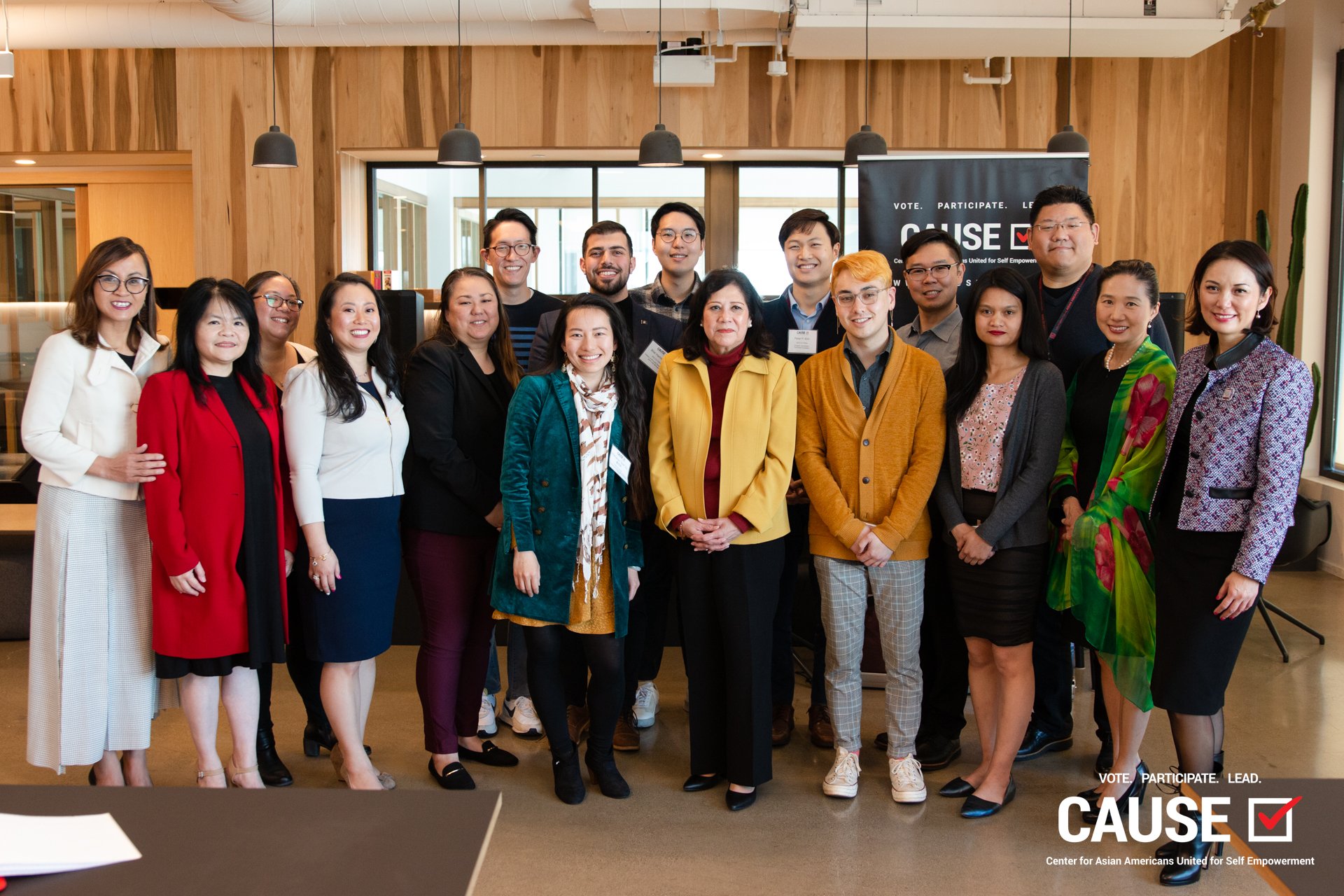
“My passion is in opening the doors for the next generation and mentoring the future leaders of our community.” With those words, Los Angeles Supervisor Hilda Solis addressed our 2023 CLI cohort during our second in-person session. Featured as the keynote for the “Women in Power” session, Solis engaged in a fireside chat for our cohort, describing her journey and upbringing as a Los Angeles native born to immigrant parents.
Solis was first asked to describe how her values have guided her leadership. She took the opportunity to give the cohort insight and advice on how to deal with crisis and tough situations, acknowledging that she has always been the person to find out the “why” behind the problem and to address the issue by finding a solution. Solis encouraged the cohort to surround ourselves with advisors and to listen to the community.
As a child of seven to immigrant parents, Solis did not receive the same levels of attention and support as some of her peers. When someone paid attention to Hilda and saw something in her that she didn’t see in herself, she was inspired. She recalled a guidance counselor encouraging her to attend college and helping her with the application. This encouragement would lead her to becoming the first of her family to go to college at California State Polytechnic University, which she would pay for with government grants and part-time jobs. Solis then went on to describe her career journey starting with various internships and intergovernmental programs that would take her to Sacramento, Washington D.C., and back to Los Angeles. Through her experience, she gave the cohort a few valuable pieces of life advice:
Know you might not always be safe in your space and don’t fear venturing out of your comfort zone.
Be on your toes. Always be aggressive and don’t give up on your passion.
There is value in listening, persistence, and continued navigation.
As a mid-career professional working in both corporate and the community, Solis’ advice speaks to me personally, especially as an introvert having to find my voice in unfamiliar spaces. I am a strong advocate for people to continue to be bold and to venture out of their comfort zones, to explore uncharted territories to not only benefit themselves but for those who follow in their footsteps.
Secondly, Solis was asked how she uplifts and serves communities. Solis provided background that in December 2021, Los Angeles County adopted a redistricting plan that would make her district, District 1,have a 25% AAPI population – the largest AAPI seat in California. With this change, Solis described how she now represented the highest makeup of AAPI communities. She now focuses on her work finding ways to provide more funding and support, especially in areas of mental health and healthcare disparity. Solis also spoke to prioritizing hiring staff that can speak the language of the communities she represented. Passionate about developing young leaders, Solis hires interns who she can help grow by opening doors and other opportunities to them.
When asked specifically about the mass shooting in Monterey Park, Solis made translation services available for mental health. She also spoke to appointing the first Director of the Los Angeles county Department of Mental Health, Lisa Wong. On these topics, Solis advised, “Have people in leadership positions who will fight to have representation in civil service.” Solis makes a great point here. As a community, we are only as strong as the advocates, champions, and sponsors who will also fight in the trenches with us.
Solis then went on to describe “LA vs Hate”, a community-centered system designed to support all residents of Los Angeles County led by the Human Relations Commission and supported by all five county districts. The goals of the system are to address the normalization of hate and inspire people to stand up to it, build understanding about what constitutes a hate act and how to report it, and to support individuals and communities as they heal from the trauma of hate. Solis spoke to the accomplishment of this system, setting up a hotline with various in-language services and representation, defense courses, and funding CEOs. To date, the system has received 3.2 million in grant funding and looks forward to receiving ongoing funding. Solis leaves us with these last powerful words, “The stronger we are united, the more we can do.” I was inspired by Solis’ speech and very honored she made time for our cohort. The time spent with Solis made me want to learn more about relationship building and state government.
The views and opinions expressed in this publication are those of the author and do not reflect the views or positions of CAUSE or the CAUSE network.
Written by Ashley Mack, Leadership Institute 2023 Fellow.
The CAUSE Leadership Institute (CLI) for professionals is a 6-month-long certificate program that prepares and equips mid-career professionals with the tools, skills, and network to lead and advocate for the Asian Pacific Islander community.
Sign Up for Our Newsletter: Receive updates on elections, leadership, and advocacy.
Explore Programs & Events: Find leadership programs, voting initiatives, and ways to participate.


