Leadership Academy

Blog 3: Redirection & Reassurance: What I Learned From Canvassing

By Kara Mak, 2026 CLA Intern

Unlike many of my peers in the cohort, prior to Election Night, I had no experience with political campaigning or canvassing. My team rehearsed our pitches and prepared answers to what we thought were going to be frequently-asked questions, but I still felt nervous. I was, however, pleasantly surprised by the experience! While the interactions I had during canvassing were mixed, each taught me something new about how I presented my candidate, how I presented myself, or what people were looking for in a county executive.

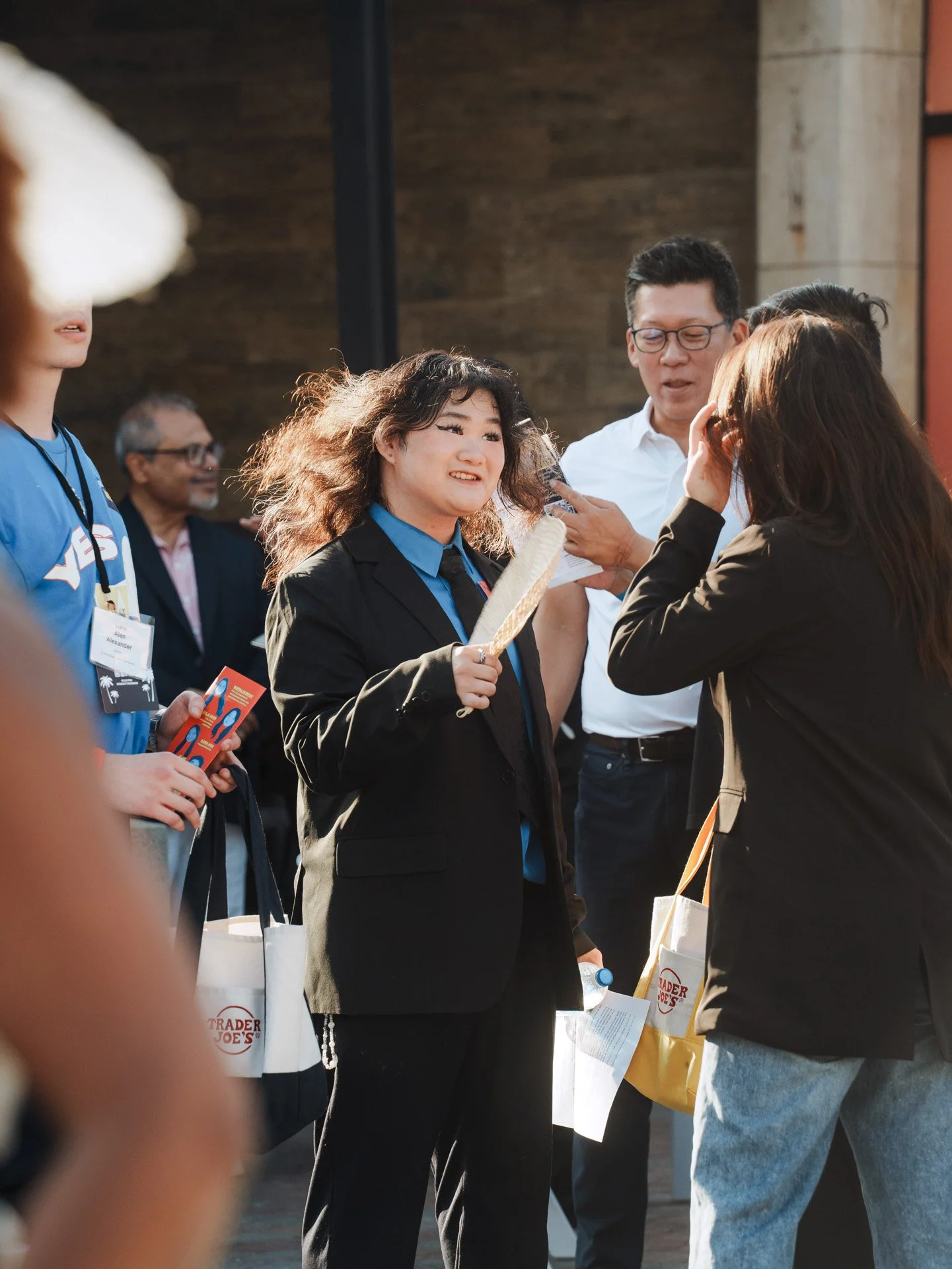
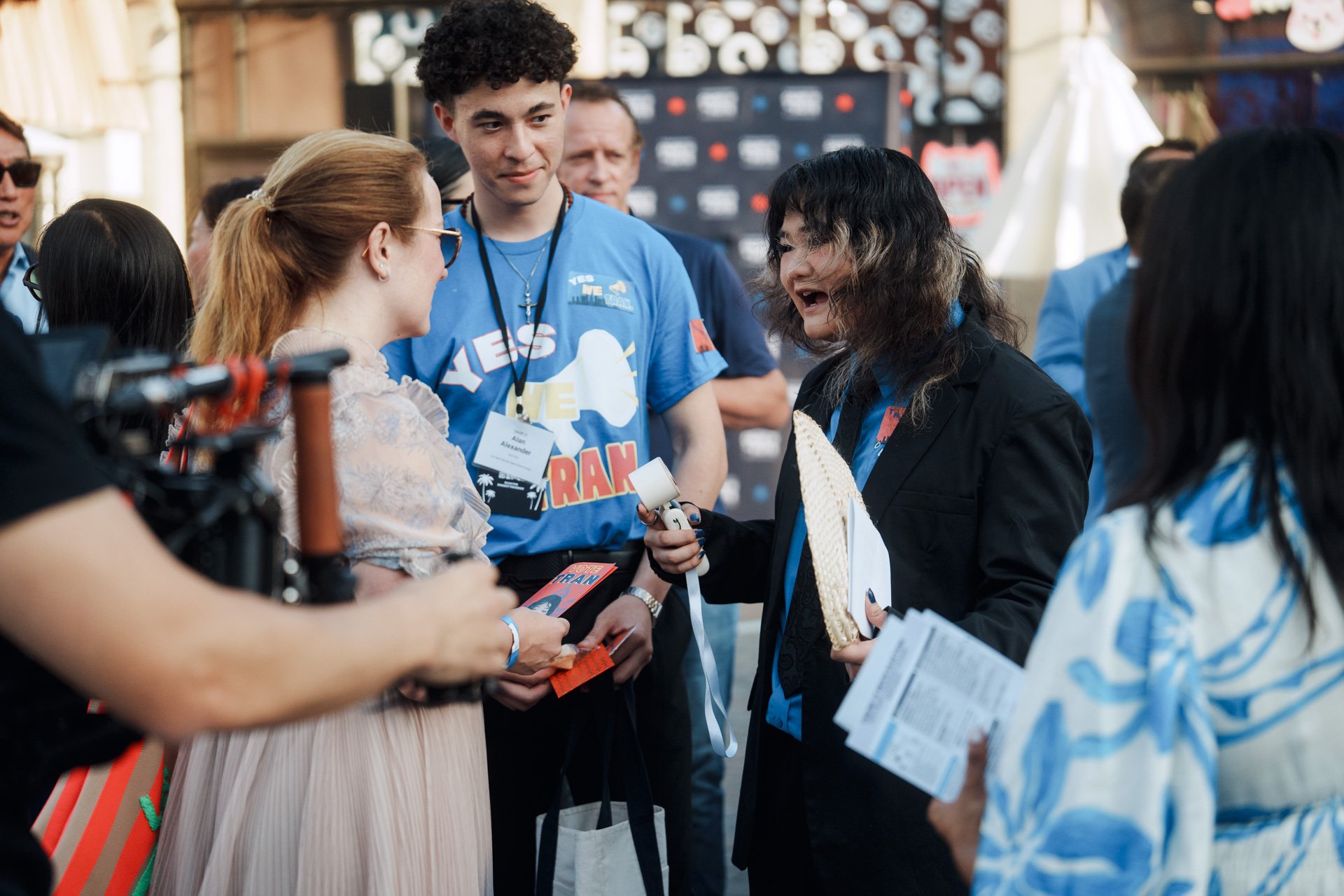
Some interactions I had emphasized the need for redirection. When I approached one elected official asking if they had heard about my candidate yet or if they would like to learn more about them, she straightforwardly replied, “No.” Slightly shocked by her response, I tried to quickly thank her for her time and move on. But before I had the chance to leave, she said, “Do you want a little advice? It’s because [the other team] got to me first. You guys didn’t try to come up and talk to me.” This confused me. Here I was, trying to talk to her, but she simply didn’t want to hear it. When I brought this up to Nancy, she explained that may just be the voter strategy that certain elected officials were taught, and what they personally believed was best for securing votes. Although I was unsure how to approach it at first, this elected’s comment ended up informing my outreach approach for the rest of the night: talk to as many people as possible, as concisely as possible.

As I continued canvassing throughout the night, I felt my pitch getting clearer and more concise, all the while I felt myself getting more confident. I got into a flow, detailing my candidate’s lived and professional experiences, tying it into their policy platform, before passing out fortune cookies that would “predict” who the people I was speaking to were voting for— all in under two minutes. I felt people becoming more receptive to my pitch because of the energy and enthusiasm I was putting into it. A handful of elected officials told me I was doing a great job, and one even told me that the way I tied the candidate’s backstory into their policy approach really resonated with them. Those moments were incredibly reassuring, especially forsomeone like me, who went into canvassing today with a lot of nerves and no experience.

All in all, this experience demonstrated to me that canvassing is not about the perfect pitch or having the most experience with campaigns. Rather, being successful at canvassing all comes down to connecting with others. Connecting with as many voters as possible, as quickly as possible, so they can be empowered with the knowledge they need to cast an informed vote. Connecting with your candidate so you can meaningfully convey their reason for running to voters. Connecting with individual voters on a personal level, through being open to their questions, advice, and concerns. While I do not see myself working the campaign trail, I do know that the skills I learned while pitching and the self-confidence I gained through this experience will serve me well in the future as a mentor, community advocate, and leader.
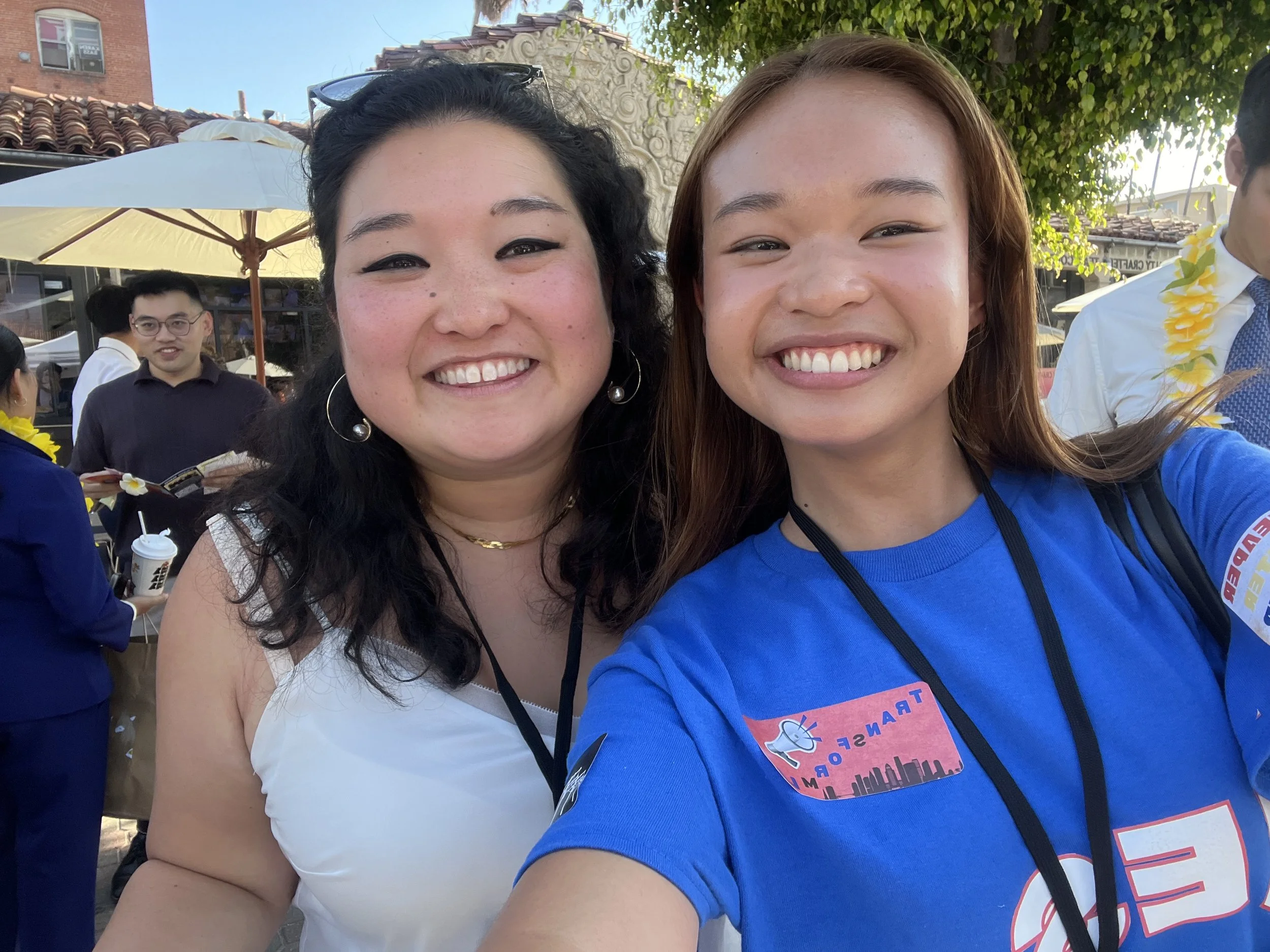
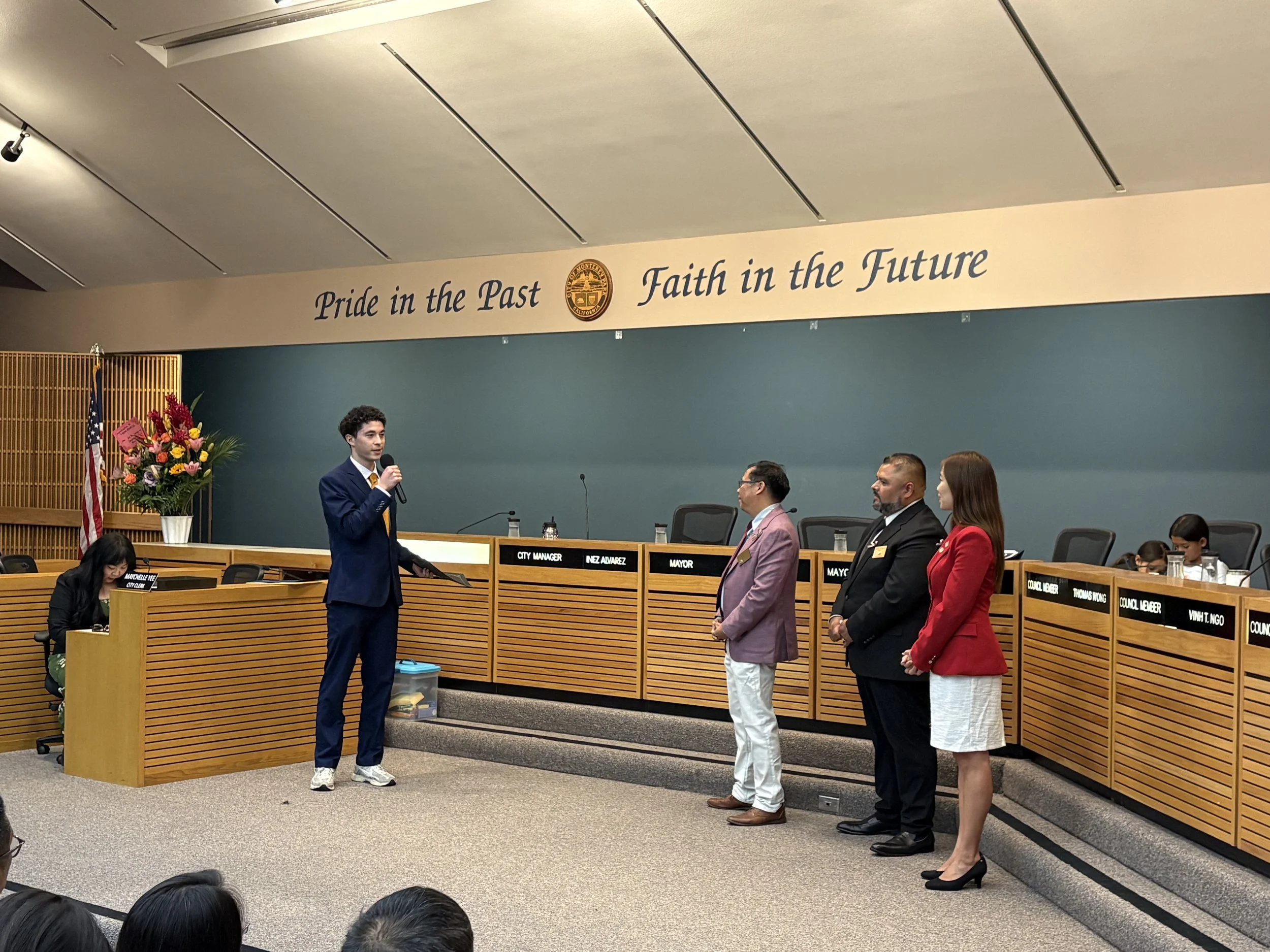
I had a great conversation with Mayor Adena Ishii, the first Asian American and the first woman

of color to serve as Mayor of the City of Berkeley!
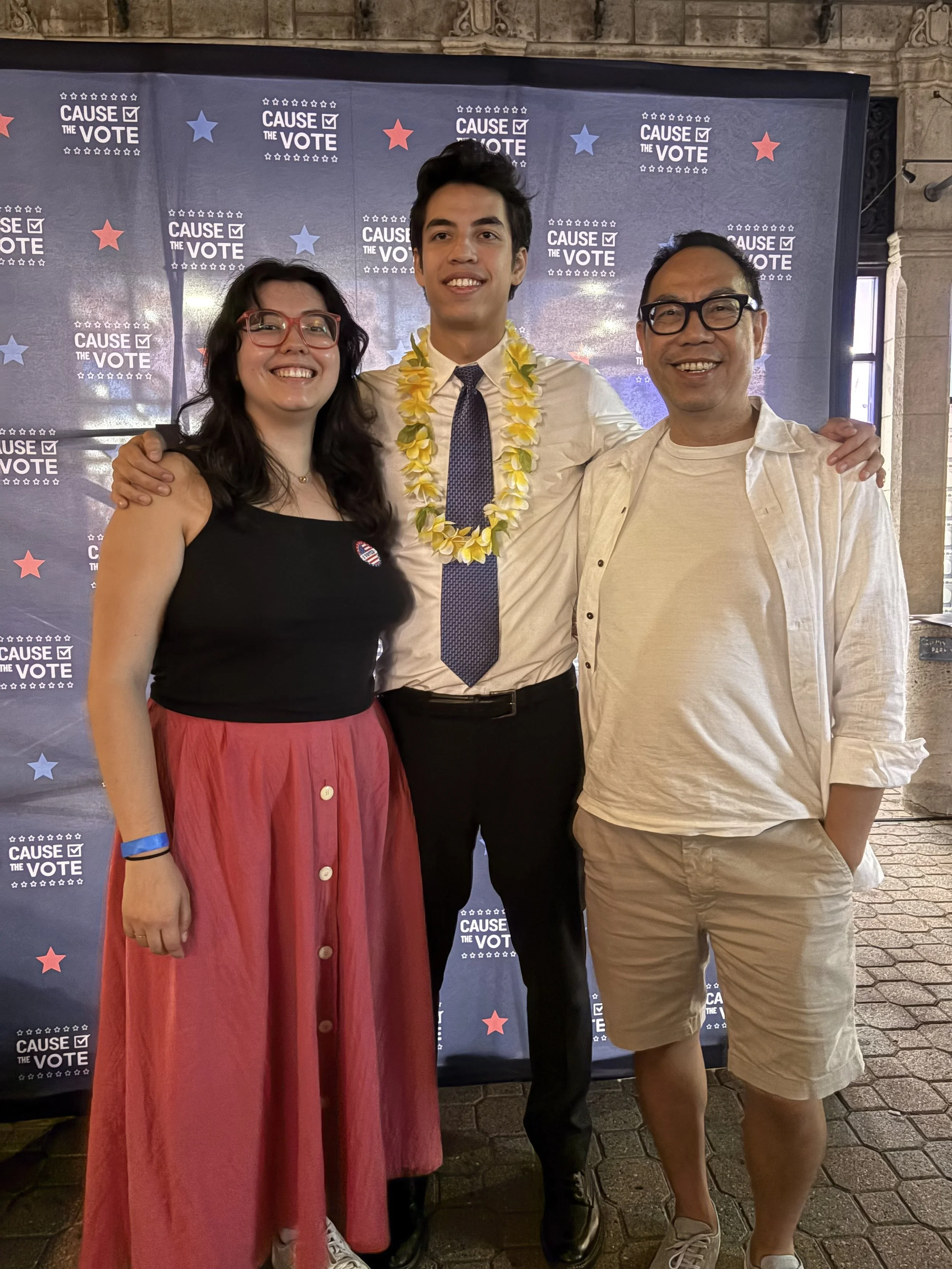
Blog 3: A Shakespearian Saturday

By Gabriel Molina-Kong, 2026 CLA Intern

Election night gave me a feeling that I hadn’t felt since my days playing Macduff in a high school production of Macbeth. It was the feeling of having weeks of preparation culminate in one night when you give everything you have for the audience, or in this case, the electorate. As a candidate, I had to memorize and give a speech, think about the life that candidate Molina-Kong had lived, and talk to people as if I were that man. It’s exactly the kind of character preparation that our director would have us do in my school’s theater program. And just like any high school play, some of the audience was receptive to our performance, and others just sat through it. 

At a certain point in the night, I was speaking with Vice Mayor Danny Hang and Councilmember Sabrina Bow, and I embodied my character so well they actually believed that I was the former city manager of Pasadena, had raised $1.8 million, and was really trying to take on the major players that intend to run for County Executive. They kept hitting me with questions that neither me nor my team had prepared in advance, and it was in that conversation (and many others like it) that I saw the positive impact that nine years of improv could have on a career in politics. My team and I had prepared ourselves for what we thought was every possible question and concern that could be raised in a room full of elected officials, but all that prep gets thrown out the window when someone asks you about a department you’re unfamiliar with or a policy you didn’t know existed. It’s like what General Eisenhower once said: Plans are worthless, but planning is essential. 

One thing the mock campaign did was give me a reason to talk to everyone in the room and introduce myself. In leading with the campaign, many people were intrigued and then turned their focus onto me because they were interested in knowing the kind of person that would participate in something like that. It made networking feel less stilted and more a natural byproduct of a task that we needed to execute for our campaign. It was an incredibly fun night, but I suppose that’s easy to say when you win.

Blog 3: A microcosm of our moment

By Kayla Mar, 2026 CLA Intern

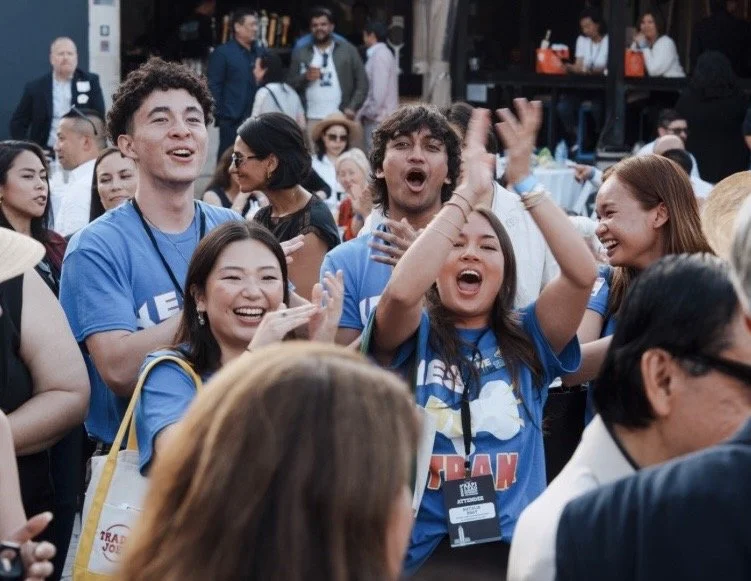
After a whirlwind of an evening, would you mosh in front of your elected officials? Apparently for CLA’s 2026 cohort, the answer is an astounding yes. As the votes were tallied and results announced, the nerves and exhaustion melted off our bodies into a celebratory euphoria. But this feeling could only exist after an arduous 10 hours of campaigning to an audience not always receptive to being sold on a mock election.

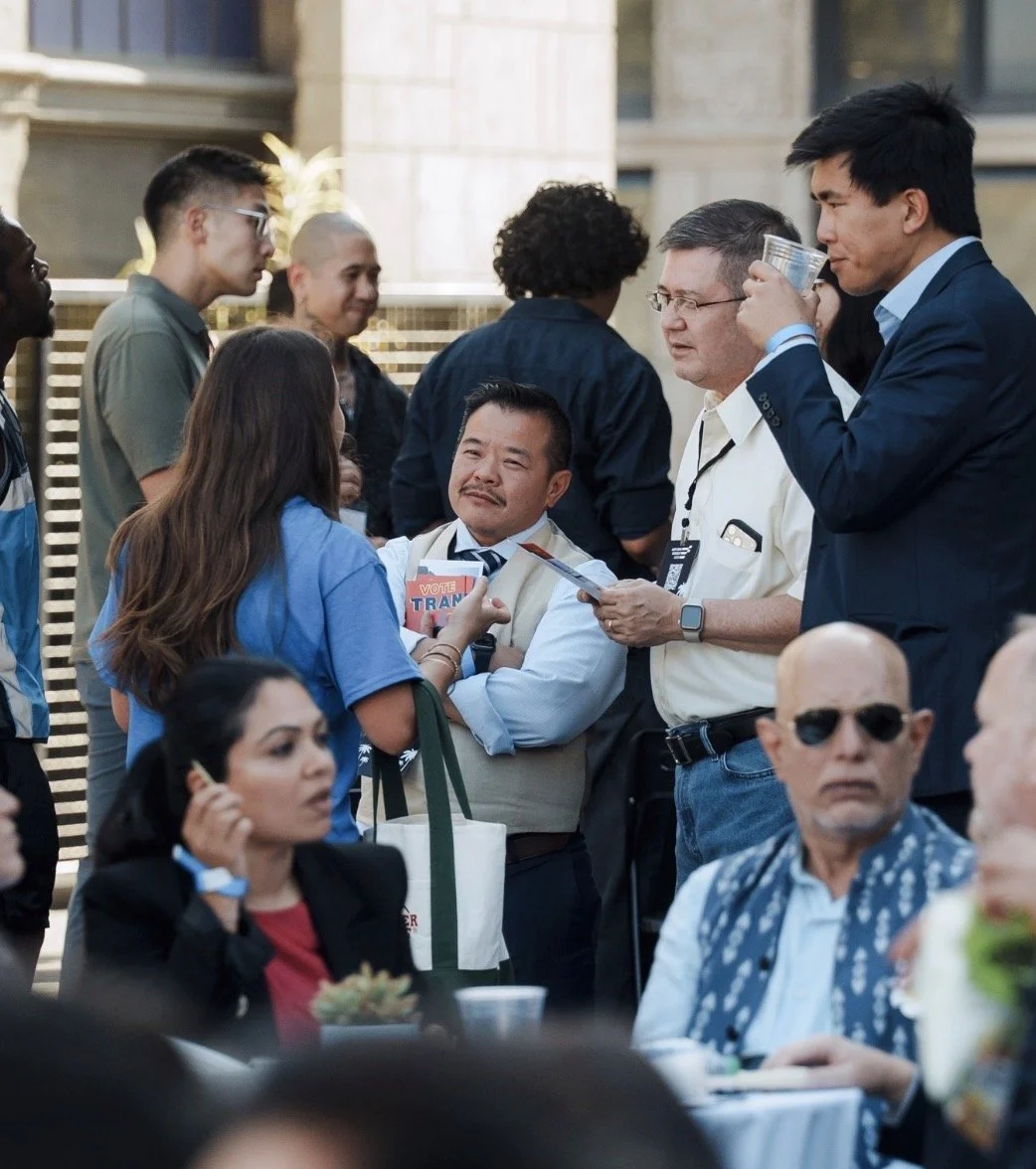
In a plaza full of elected officials, I quickly realized just how consistent voting behavior can be. Many people do not vote solely on policy. Politics is an arena where feelings champion the hearts and minds of voters. I assumed this would be different while canvassing the elected officials and community leaders buzzing around Chapman Plaza, but as I interrupted yet another tabletop conversation, it became clear that the policy issues my team and I fussed about for a month straight were perhaps less important. How we talked to voters, how we spoke about our candidate’s approach to governance, how we will address an individual’s most pressing concern, how people felt looking at our pamphlet at first glance — that is how you run an effective campaign.

For two candidates with seemingly identical policy platforms, I did not know what to anticipate leading up to the mock election. I read and reread the candidate profiles trying to find the best words to differentiate the two and spoke at length with the team to shape our candidate into the most concise language.

I found a lot of my time was spent explaining what the County Executive position is and how it came to be. There was mild confusion about whether the County Executive was a real position, whether this was a real election, and whether I was a real college student. But at the end of the day, I found the educational and research impetus of this mock election the most gratifying. To be the person that explains a role that will dramatically reform California politics to people for the first time made all the hard work over the past month worth it. Until LA County knows what’scoming onto their ballots in 2028, I can rest my canvassing-mock-election hat.

BLOG 3: Network is a synonym for community

By Sophia Pu, 2026 CLA Intern

Feet: hurting. Makeup: sweating off. Mouth: tired of talking. And yet, there was a nightmare scenario on repeat in my head that kept me campaigning: someone telling me they didn’t vote for my candidate because no one reached out to them.

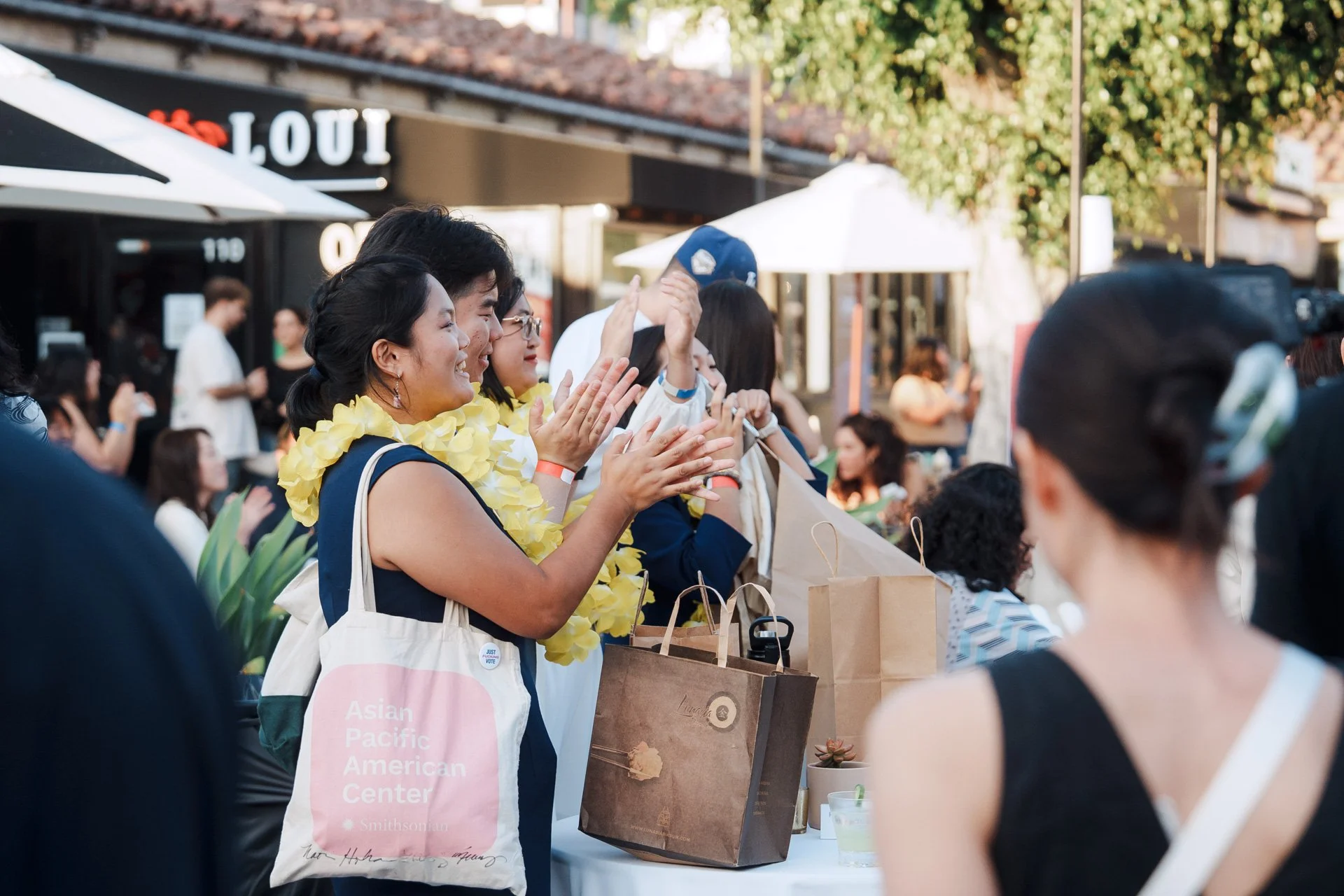
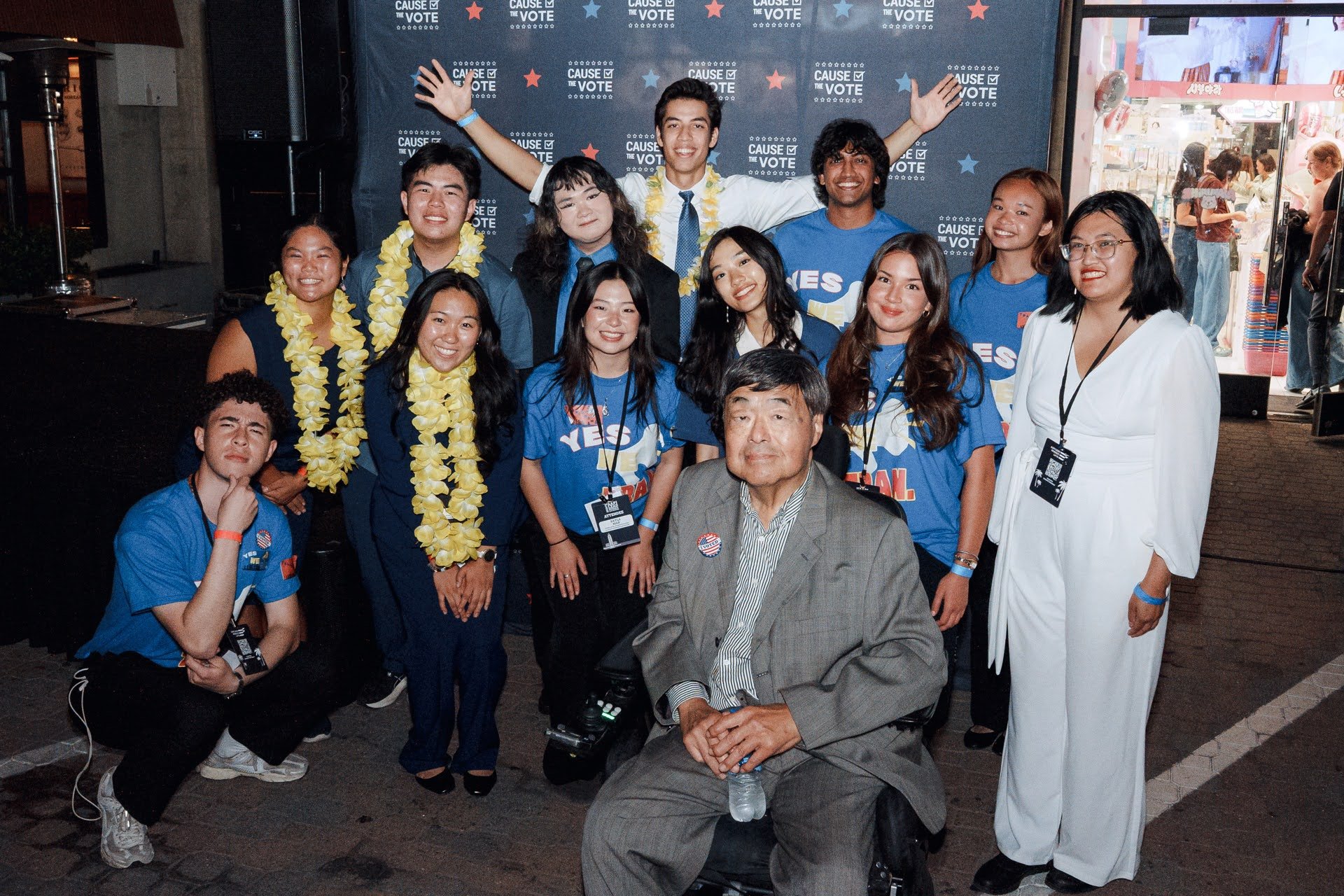
The time for hesitating to talk to people had passed hours ago. Whether it was reconnecting with people I hadn’t seen in months or forging entirely new relationships, I didn’t go five minutes without giving a spiel for my candidate, Gabriel Molina-Kong. When I got anxious over ensuring we spoke to each voter, I was comforted by seeing my team’s bright yellow leis scattered throughout the crowd and knowing each of them was giving their all. We didn’t stop until almost everyone at the event was wearing one of the yellow plumeria clips attached to our brochures.

The whirl of campaigning was exhilarating because I truly believed in the vision we were putting forward and I was confident that our ideas were well-researched. We spent dozens of hours wrapping our heads around county governance and crafting our platform. I laid out an hour-by-hour plan of where we would be, what we would be talking about, and how we were going to execute on election day. Of course, our plan went out the window as soon as we stepped into the AAPI LEAD Summit. As Dwight D. Eisenhower once said, plans are worthless, but planning is everything.

Not all of the campaign process was energizing. It was a struggle to approach people to network, let alone invite them to a fake election for a position that doesn’t exist yet. Where I expected to strike natural conversations at the AAPI LEAD Summit, I instead felt like a shark circling the lunch area, looking for prey. Gabriel faced detailed questions about positions he never actually held, while other members of my team overcame hostile confrontations.

What made it all worth it was the realization that “network” is just another word for community. I met leaders at the Summit who were fighting for AAPI representation in Alaska and Tennessee, reminding me that a seat at the table cannot be taken for granted. When I needed a break from pitching people who were only half listening, I took refuge in conversations with old friends like Alton Wang, PCC trustee, and new allies like staff in Assemblymember Al Maratsuchi’s office. At the reception, I got to see Kari Okubo, Karen Umemoto, and Chancee Martorell, the pillars of an Asian American studies class I took at UCLA. Seeing the strength of my network, or community, reminded me of Nancy’s lessons on networking being a team sport. I was surrounded by people I could lean on because they had paved the way before me and are walking alongside me now.

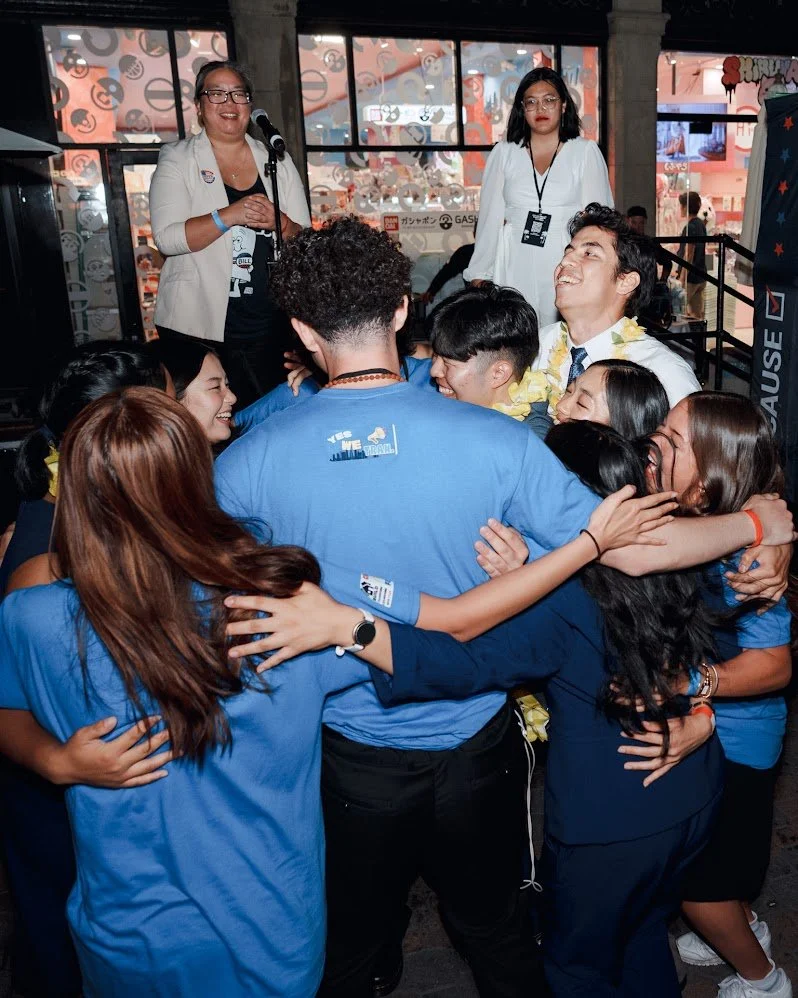
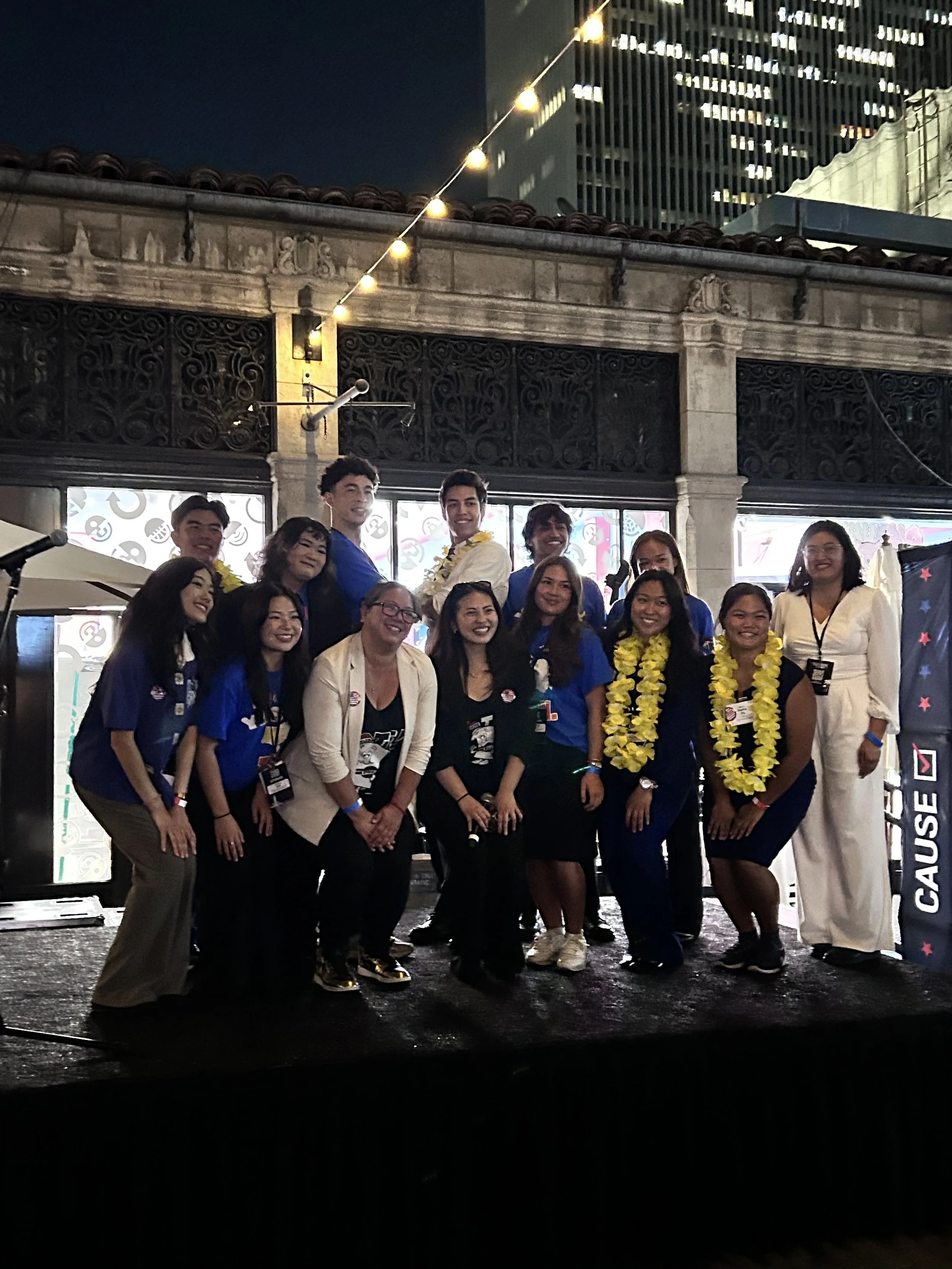
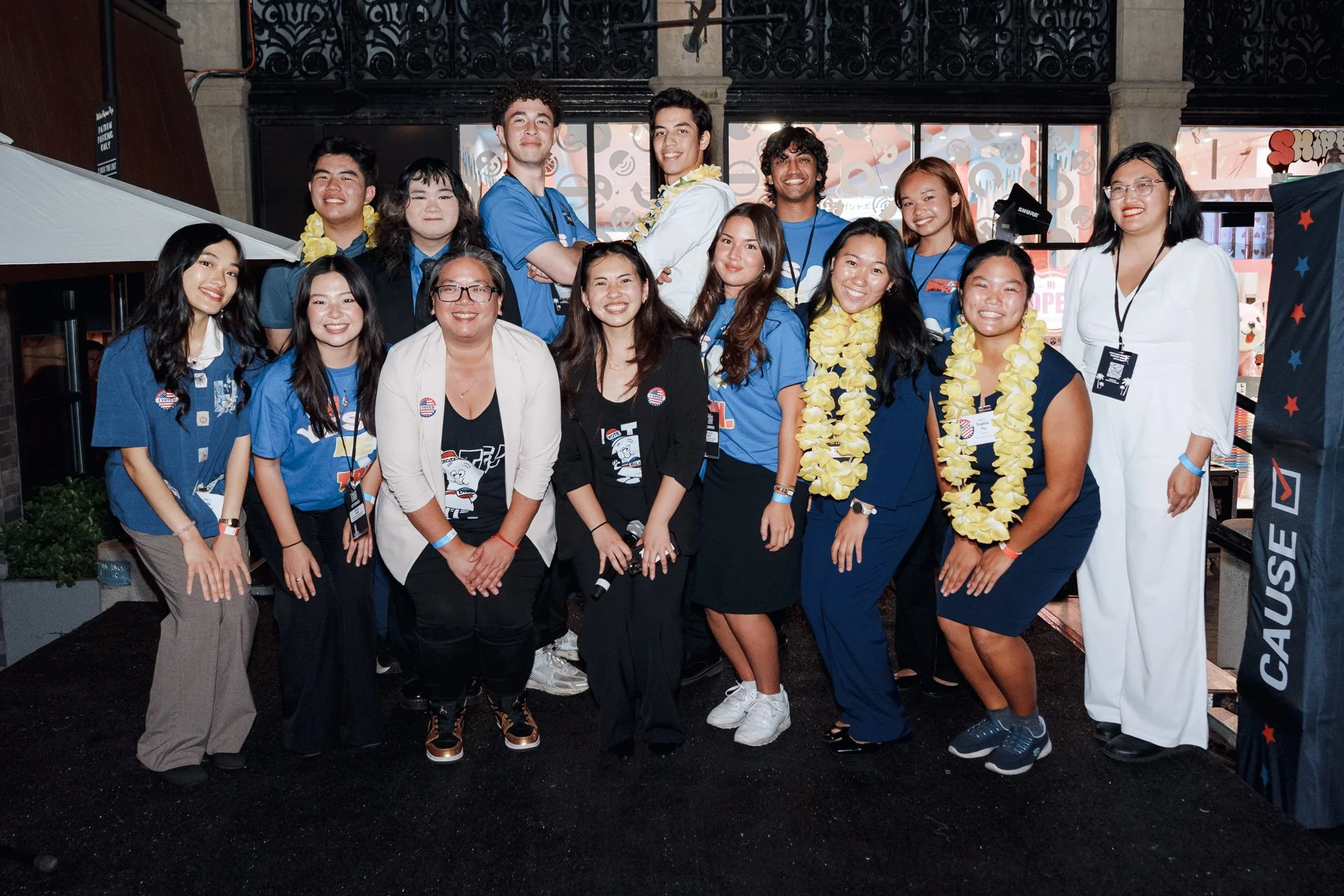
The highlight of election night for me was after Gabriel won and I ran to the other team with arms outstretched. We ended up in a giant group hug, jumping in a circle to Kendrick Lamar’s “Alright”. After all the blood, sweat, and tears we put in together, it was the perfect moment of catharsis.

Blog 3: Fixed In Post

By Jayden Tran, 2026 CLA Intern

During high school, my business team took staff pictures for our departments. When the time came for my two-person department, I stepped away from the camera to be photographed; as a peer of mine took the shot in my stead, I heard my teacher yell from behind the camera — “Jayden, you need to tame your hair. It’s too poofy — Can you fix it in post?” Ever since, I often look back at photos and question my appearance.

In politics, candidates don’t look like me — no dyed or frizzy hair, dramatic makeup, or vivid outfits. As my professor for “Mass Media/American Politics” alludes, your appearance is the first and last thing a voter will judge you on in your campaign. It’s also likely that politics will continue to be a sport where policy is spoken, but appearance is key. It’s why politicians love photo ops and translucent powder and why “looksmaxxers” on social media are beginning to influence everyday politics (funnily enough, this was the heart of my political science thesis idea).

I found myself viewing the photos from CAUSE’s Community Reception with a critical eye. Would we have won the election if my eyes weren’t bloodshot from the stress of a family issue the night before? If my blazer sat on me more comfortably? If my hair wasn’t so… “unruly”? As I gave my concession speech, I thanked voters regardless of who they voted for, making informed decisions to decide the future of LA County. But in the back of my mind, I questioned what I could have edited in post, both on the inside and the outside, to have secured a victory.

But soon, I realized those thoughts were all bygones.

While my appearance could be fixed in post, my policy couldn’t. Neither could my dedication, my commitment to marginalized identities, or my desire to change an issue. Speaking to voters, I put my heart on my sleeve, and so did my team. We discussed issues that directly impacted us, policies that would support our families, and hopes for the futures of our communities.

I resonated with the stories of voters, who told me their own narratives of feeling pushed to the margins of government. Being endorsed by the likes of Hon. Manufou Liaiga-Anoa’i, Mayor Paul Seo, State Senator María Elena Durazo, Lake County Treasurer Holly Kim, and more showed me that people from across the aisle can support a candidate who brings about transformative change, one who comes from and represents the people rather than egotistically deciding things for themselves.

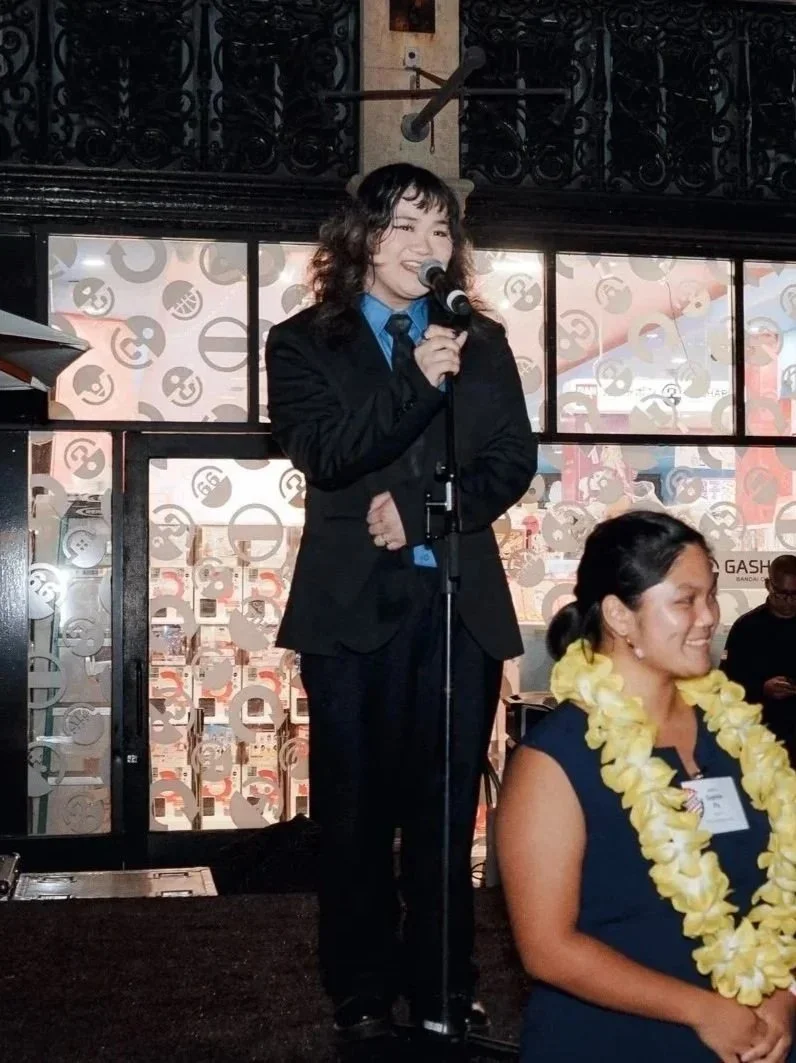
What mattered to me most in that moment was not how I looked — that’s something I could mull over in post; instead, I focused on delivering the very transformative future of politics that I’ve envisioned since I was a kid. I didn’t care about how poofy my hair was or the sweat from the sun beating down on my face. As I spoke on stage, I only cared about taking space in a plaza full of people who would have never expected me to try bringing a seat to the table, showing them that they must pay attention to the communities I belong to: queer; low-income; (formerly)unhoused; disabled; Asian; etc.

I am unabashedly myself, but that doesn’t mean I’m confident. Sometimes, I wonder if confirming to “the standard” is a better decision as I move forward in my career. Throughout the campaign and on election night, comments about my appearance, some well-intentioned and others less so, made it difficult not to wonder if there is a version of myself more suited for politics. But now, when I’m confronted with these hesitancies, I’ll forget the voters commenting on my appearance and remember the many voters I spoke to who told me I’m doing the “good work” for representation, who exclaimed I was a “breath of fresh air”, who said my story was a vision of inspiration for a future politic that includes the marginalized, rather than disenfranchising them further.

In many ways, I knew what I was signing up for when I threw my hat into the ring to represent my group. When I’m behind the camera, I can control the narrative through edits and touch-ups in post; I knew that this wouldn’t be possible once I stepped in front of the camera and took the stage to campaign.

But none of that mattered throughout our reception. My team reassured me, allowing me to focus on the night at hand: Natalie, always making me smile in photos; AJ, commenting on my aura; Kayla, making sure I was eating; Kara, bouncing around, speaking to everyone I missed; Alan, putting me in contact with another random contact he knew.

These moments of camaraderie, of support, of connection are not always memorialized in photos, but they are the memories I’ll remember most as I think back to election night. And those hold more weight than any of the changes I would have made to my campaign after the fact.

Although I still catch myself wondering what I could have edited in post, when I think back to election night, I remember the voters, the stories, and the community long before I remember the photos.

Blog 3: Mock Election and Real Reflection: A Synopsis of Campaigning

By Natalie Bray, 2026 CLA Intern

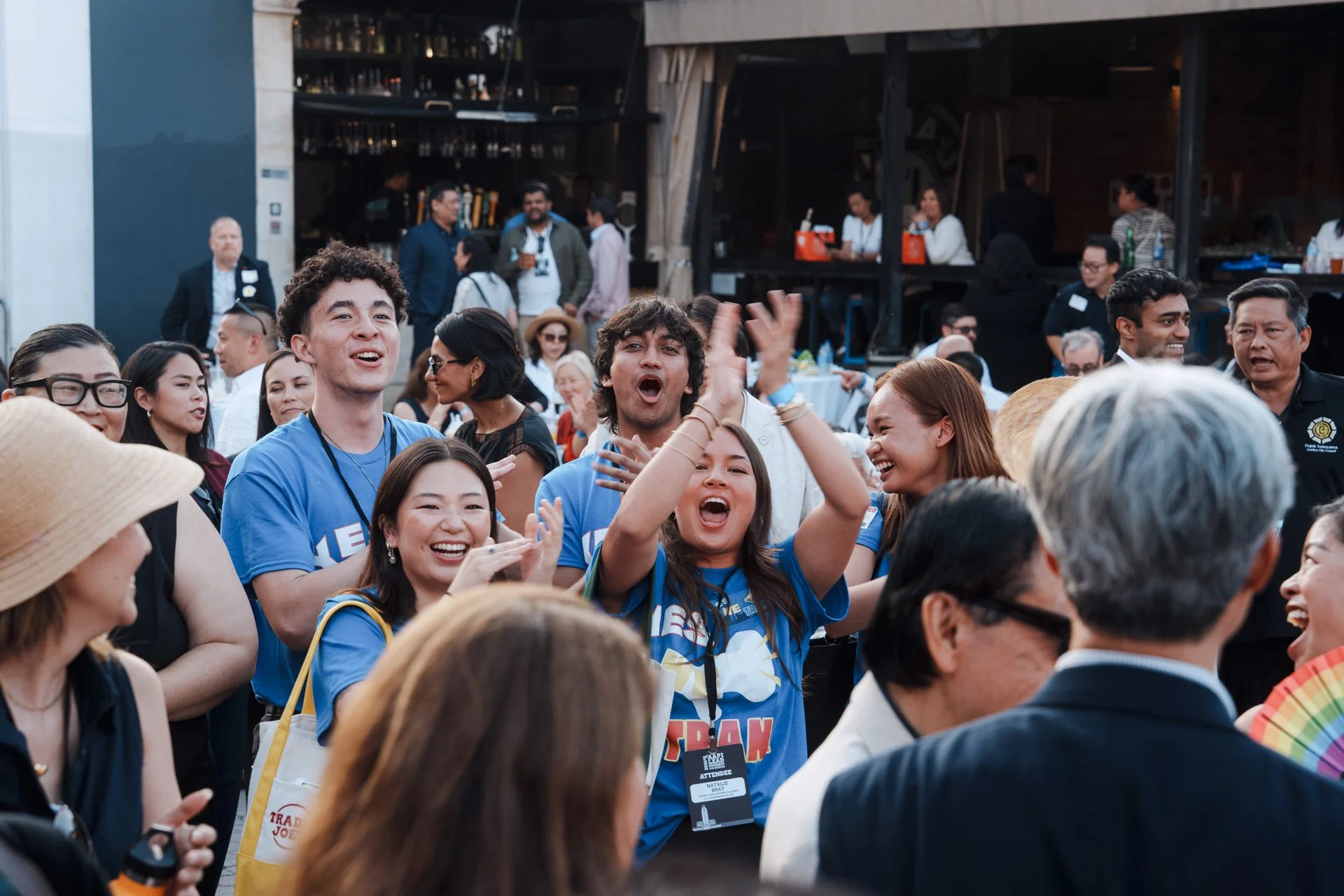
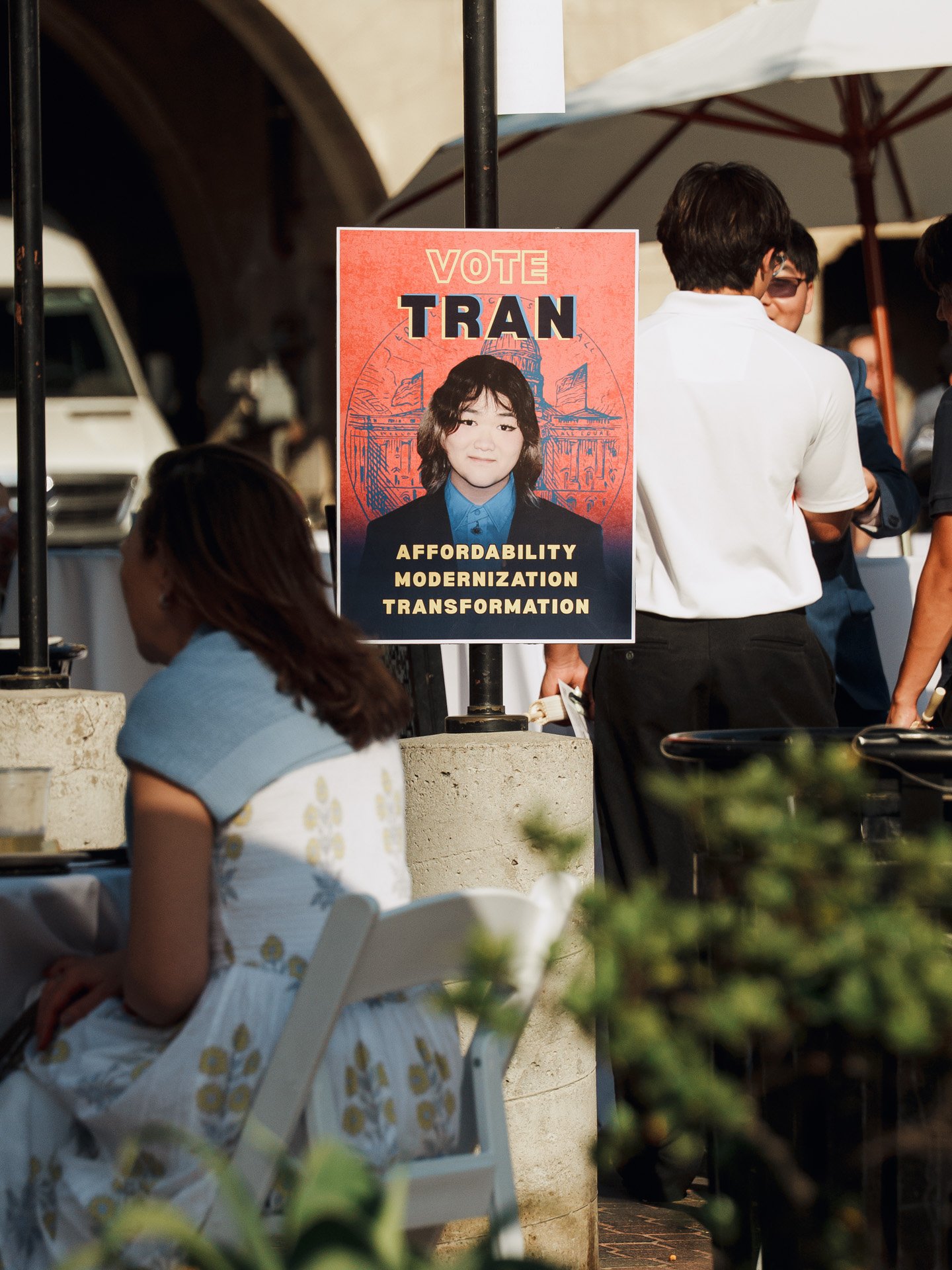
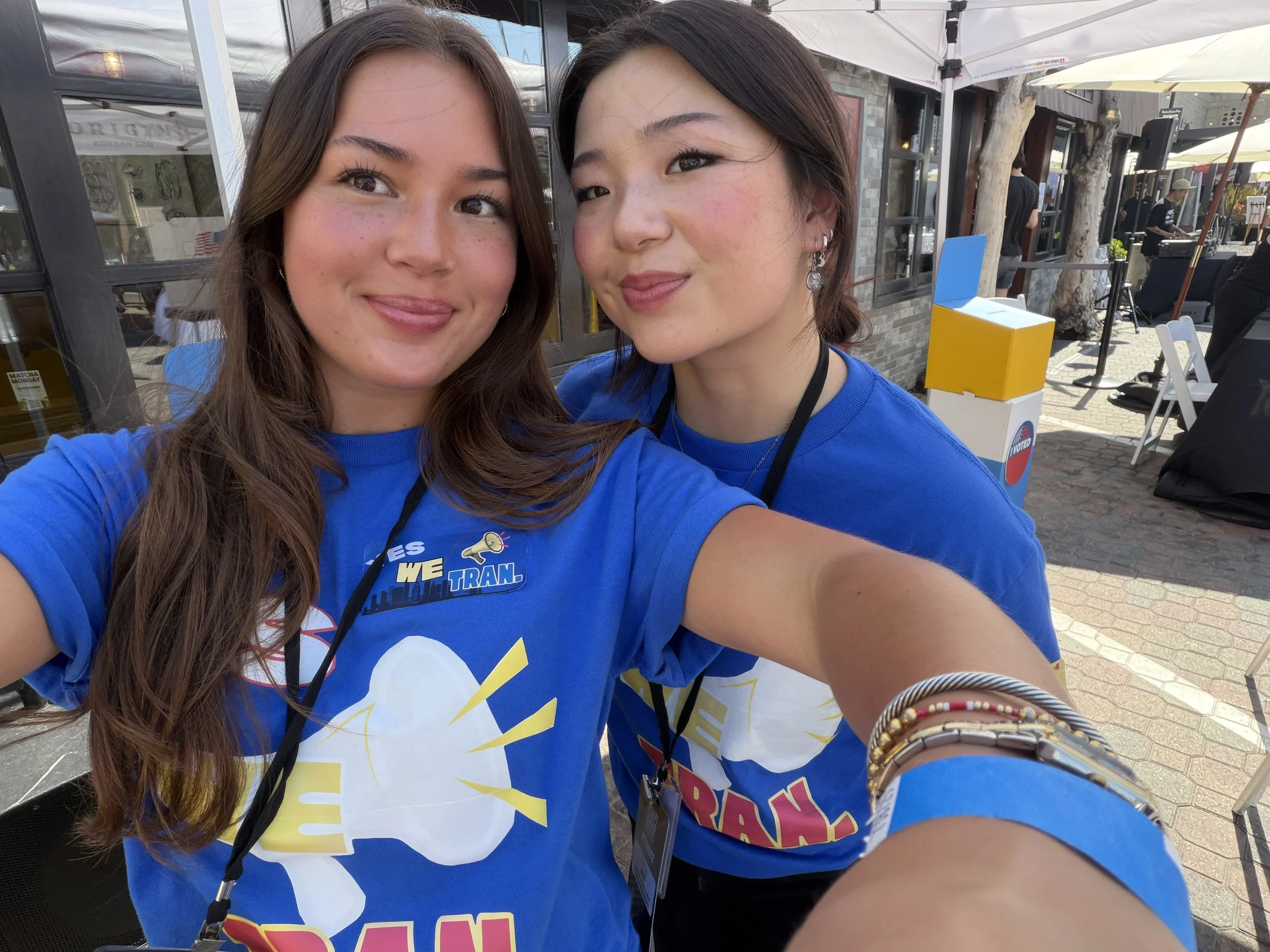
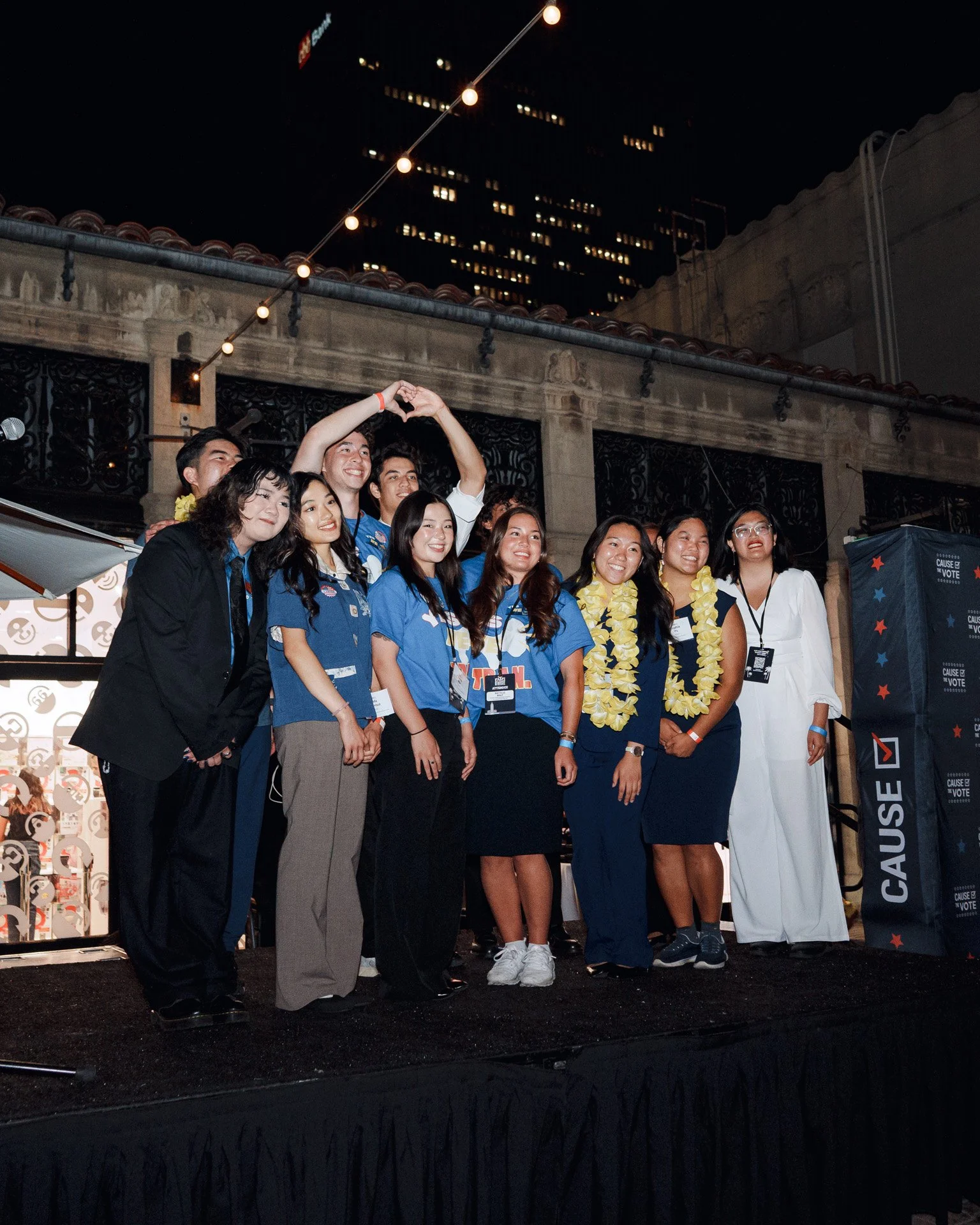
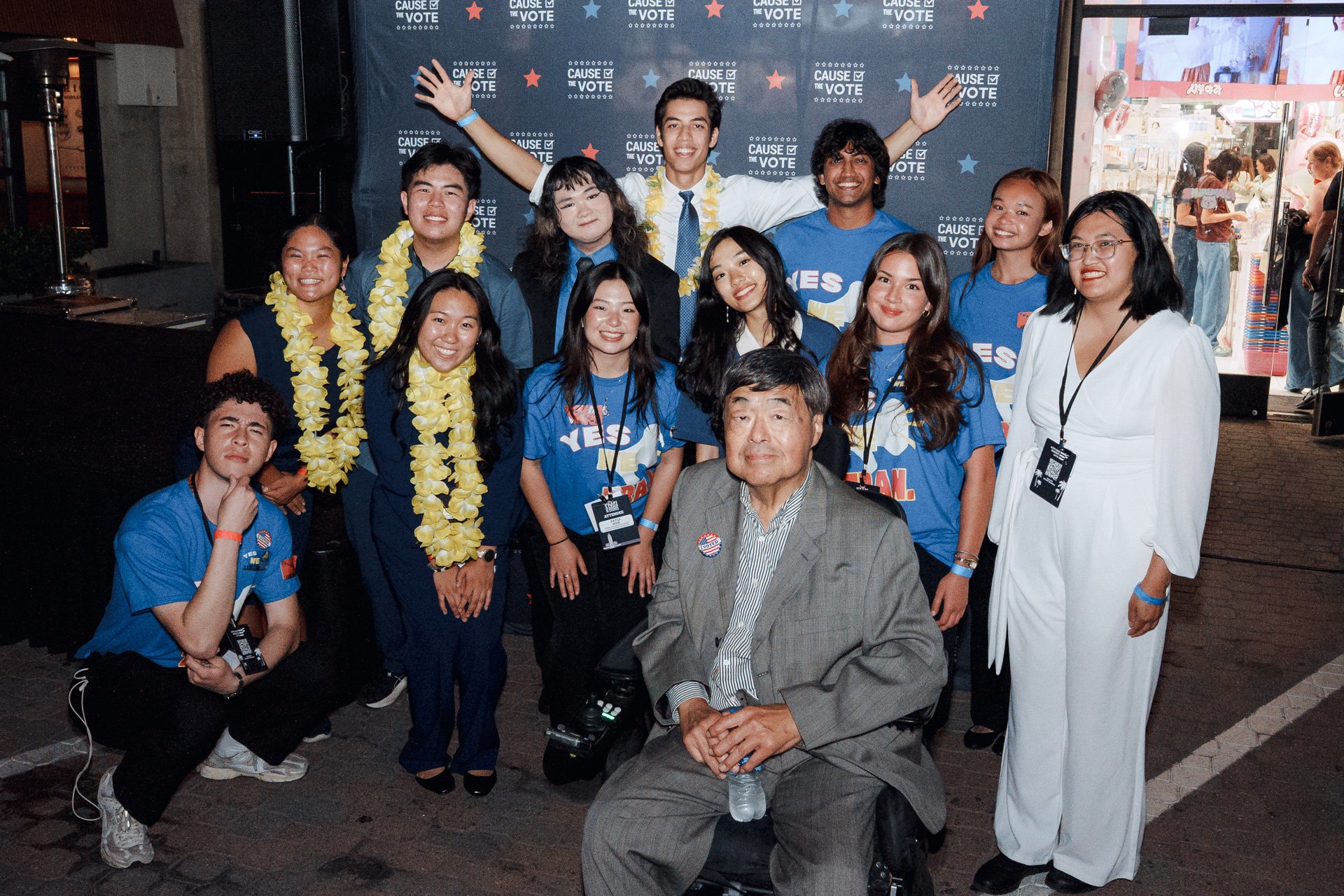
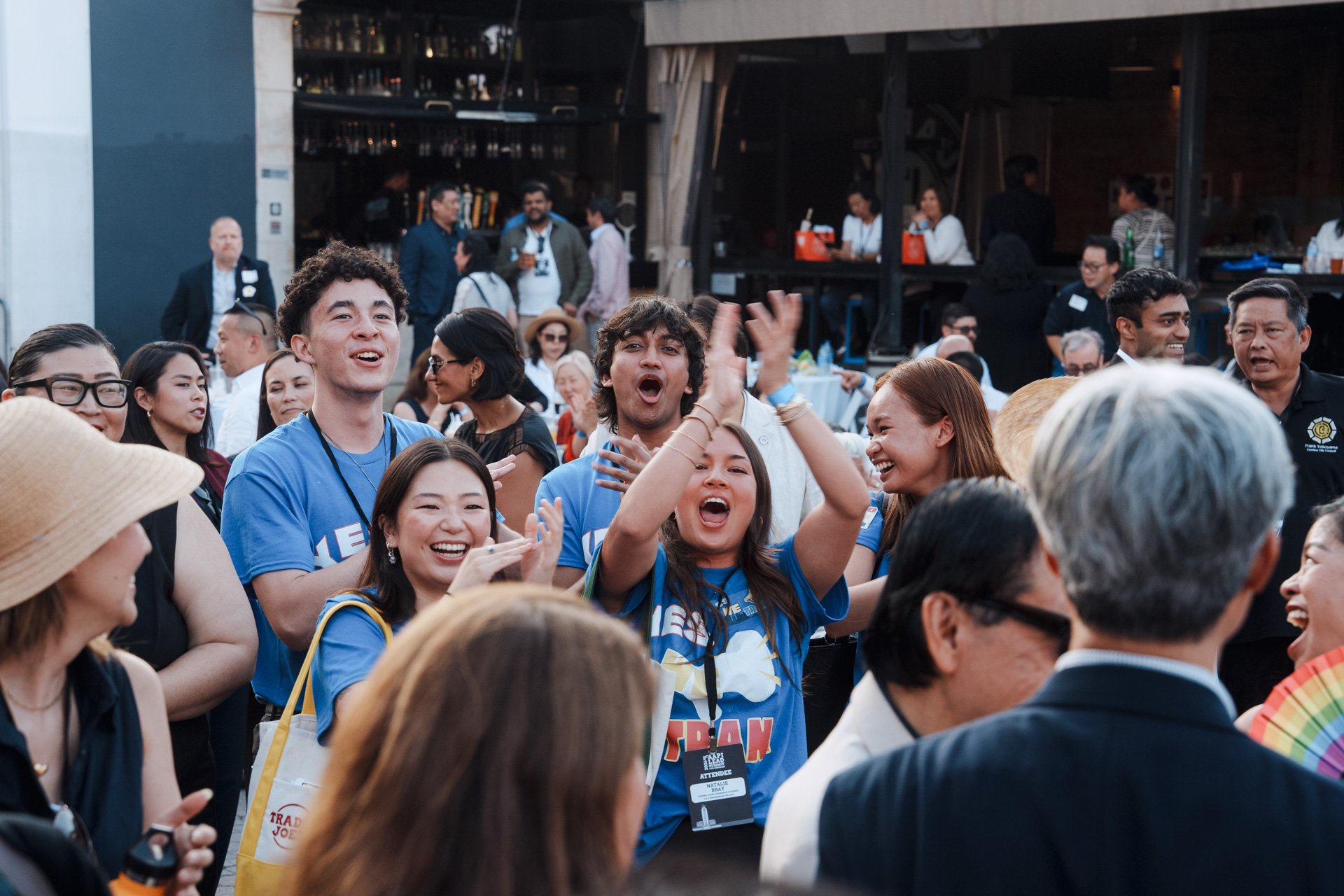
“Yes We Tran!” Me and my team, composed of Kayla Mar, Alan Alexander, Kara Mak, Abhishek Jagannathan, and of course our candidate Jayden Tran, chanted this phrase after getting urged to do so by Lake County Treasurer Holly Kim prior to our candidate’s speech. Teammates, Treasurer, and Tran: the three T’s of the night perfectly encapsulate the mock election and its aim towards providing the cohort not only with faux campaigning experience, but also an opportunity to grow into ourselves as young professionals.

The mock election canvassing began in the morning at the third annual AAPI LEAD Summit held in Los Angeles, California. Going into this morning's event, I was nervous, as I had never helped on a campaign before, nor canvassed for a candidate (let alone having that candidate also be my friend). Going up the escalator, I did not know what the day held for me, and also wondered if people would even give me the time of day to give them my rehearsed pitch about Measure G and the newfound LA County Executive position that would be going into effect after the election in 2028. Brochures and red envelopes in hand, I paired up with my teammate AJ in order to begin our canvassing journey. 

Our first gameplan was to go into the actual stage area, and find individuals to talk to who were making their way out of the previous panel discussion. We ran into Susan Jin Davis, Chair of the AAPI LEAD Foundation Board of Directors, and a woman who I had done research on for the day prior, when my boss Congressman Ted Lieu was on a panel in which she was introducing him. Tentatively, I stood by her and her comrade who she was in conversation with before she turned to me with a big smile. AJ and I ended up having a lively conversation with her about what we were campaigning for, what our internship at CAUSE consisted of, and if we would see her at the reception later in the day. Through jokes being cracked and laughs being shared, all of my anxieties were eased. She even gave us other individuals to talk to, who also shared Susan’s friendliness. AJ and I continued on talking to people at the summit, from interns to public officials, from welcoming to dismissive. All of which were important interactions that helped me not only gain more knowledge about the most pressing issues that people cared about in the political sphere, but also how to interact with individuals of all backgrounds and political positions. 

At the reception, vibes were high. The energy was up, people were lively, and I was confident. Going off on my own this time, I was able to talk to so many individuals I had met earlier, and also new ones. When we all gathered to listen to candidate speeches, I truly felt empowered by both of our candidates, and was so proud of everyone in the cohort for their hard work and dedication to our communal research project and campaign. It truly felt like we had an important role in the work we were doing through our education on Measure G and the Los Angeles County Executive, and I look forward to seeing this all play out in real time in 2028. I would say this day was pretty TRANsformative.

Blog 3: A Day of Canvassing, A Lifetime of Support

By Kaitlan Sakuma, 2026 CLA Intern

The mock campaign for LA County Executive taught me more about organizing in one night than any textbook could. Supporting Gabriel Molina-Kong’s candidacy meant more than drafting policy platforms or perfecting our slogans – it felt like stepping into the actual rhythm of an authentic campaign. From the real conversations to the collective exhaustion, campaigning for twelve hours straight was quite humbling yet extremely rewarding.

Campaigning and being in politics requires thick skin. Not every door opens with warmth, and not every conversation lands the way you hope. But what the mock campaign night really taught me is that a food support system is just as important as thick skin – especially during something as demanding as canvassing. It was in the middle of that same exhausting night that I found some of the most meaningful connections, and they reminded me of why having people in your corner matters so much in this work.

For one, my cohort was an incredible group to lean on throughout the entire day. Even though we weren’t all on the same mock election team, we shared a common goal, and by the end of the night it was clear that we were all still part of one CAUSE family – something I am endlessly grateful for. Making sure everyone stayed hydrated and checking in on each other throughout the night made me feel grounded, and reminded me of our common goal: educate voters and explore our own personal values along the way.

There were two groups I met at the conference that left a lasting impression on me. The first was a group of union organizers representing healthcare workers, who invited me to eat with them during the conference. What struck me wasn’t just their passion and expertise in labor organizing – it was how much they genuinely cared. They checked in on me throughout the night, made sure I was pacing myself, and reminded me to take breaks. In a space that can feel relentless and high-stakes, their care reminded me that organizing requires people to look out for one another.

The second group was a set of educators, and given my own interest in education policy, I found myself gravitating towards them instantly. We ended up talking more about my past research and academic interests than we did about campaign strategy. They were genuinely curious about my work and I truly got to be myself, as someone excited to talk about the education system with people who understood why it mattered.

What made the night so powerful wasn’t just the act of campaigning itself but the fact thatI was doing it alongside AANHPI leaders from across the country – people who had built careers in organizing, labor, and education. Sitting with the CAUSE family next to ChaRedefined in the Chapman Plaza at 1am, I understood something I couldn’t have grasped from a lecture: campaigning demands persistence and humility, but behind every campaign are people who choose, again and again, to show up for one another. Having that kind of support system behind you is key, and experiencing it firsthand made me excited to keep showing up as that support system for the CAUSE family, too.

Blog 3: Build, Bridge, Belong TOGETHER

By Jada Sirivisut, 2026 CLA Intern

From the moment I woke up, my mind was racing with anticipation for the day ahead: the AAPI Lead conference, the Community Reception, and finally, Mock Campaign Election Night. As I went through my morning routine, I repeatedly rehearsed my pitch, practicing how I would invite community members and government leaders to our event while advocating for Team GMK.

To foster an authentic civic engagement experience, we reached out to API elected officials and experienced industry professionals to spread the word of Measure G and our summit. From the conference room to the courtyards of Koreatown, we were hard at work behind the scenes. By the afternoon, we hauled heavy boxes, set up booths, arranged table centerpieces, and folded brochures—the unglamorous side of running a political campaign. Although Team GMK and this election were built as a mock campaign, the effort we poured into it was as real as it gets.

The CAUSE Mock Election was the culmination of all that groundwork. Once the reception began, the heavy lifting was already done, literally and figuratively. Our comprehensive policy platforms were printed, talking points were locked in, and no matter the outcome, the cohort and both respective teams knew we had already made each other proud.

The rest of the night passed in a blur. I moved between tables, introducing myself, explaining the new LA County Executive role, and pitching Team GMK’s vision over and over to more people than I could keep track of. My favorite moments manifested when conversations drifted into personal stories. From connecting with community leaders from across the county, state, or nation, to exchanging experiences with CAUSE alumni, I reflected on my growth since the first few days of CLA as I became increasingly well versed in this ever expanding community.

Throughout the event, one theme repeatedly surfaced: solidarity. Running the day-long show of canvassing, networking, and outreach required us to completely rely on and look out for one another. Between constant conversation, I made a point to check in on my team, pausing to catch our breath together and find some reassurance.

With the evening’s campaign gauntlet finally drawing to a close as the voting period ended, I took a brief moment to handle a quick late-night mission: securing a well-earned dinner using my Chapman dollars for sushi takeout. I hurried back to the courtyard just as the winning result was announced for my team. There, I was breathless yet genuinely ecstatic to be part of that pivotal moment.

Our victory was an incredible feeling, but my greatest fulfillment came from the weeks of collective effort that brought us to that point. When our cohort celebrated on stage, we were cheering for more than just GMK’s win. We were rejoicing for our teamwork, every long afternoon invested into this vision, and the lessons we learned along the way. And as the night wrapped up, celebrating alongside the entire CAUSE family and our personal supporters made one thing clear: regardless of who won the election, the mock campaign was a victorious success for our whole community.

Blog 3: Yes We Tran.

By Abhishek Jagannathan, 2026 CLA Intern

My favorite moment from election night happened right as it ended. After the results were announced (Congrats, Team GMK!), and both candidates gave their final statements, our campaign teams converged into a massive group hug/impromptu dancing to the tune of Kendrick Lamar's “Alright”. I felt this was just an amazing moment of community, something I have personally struggled to find in the past. This feeling for me was pervasive throughout all of the mock election night - while seeing community leaders and elected officials socializing together, and while interacting with many of them through the course of our canvassing. I felt very connected to the people I was around and the space I was in.

This event also marked the closing of a chapter in our cohort experience - working with our mock campaign teams. At the risk of sounding overly sentimental, I feel extremely proud of everyone on my team. Working with each one of them on our campaign over the last month has been so much fun, and has generated memories that I will treasure for a long time. I’d especially like to acknowledge the hard work that everyone put in.

Alan, our campaign manager, brought an unorthodox approach to the table when it came to policy ideas and direction (the thought of cap and trade housing will undoubtedly haunt the members of our team for years to come), but I believe that in doing this, he set the tone for thinking outside the box that allowed us to all have fun and be creative with the way we tackled all aspects of our campaign. His spirit and confidence, especially while campaigning during election night, are traits I admire deeply.

Kara, our finance director, I think was probably the most effective member of our team. Whether it be making the budget, spontaneous phone calls to vendors for our campaign materials, or handling last minute purchases, every step of the process was handled so seamlessly that I was barely even aware it was happening (which I mean as a compliment). During election night, I was struck by just how personable Kara was while canvassing, and by her ability to explain convoluted topics in a uniquely straightforward and disarming fashion, which were very inspiring to see.

Natalie handled basically all of our materials and social media, and I feel that she did a uniformly outstanding job with all of it. Our candidate brochure, which was very much a challenging process to complete, is beautiful and lively and conveys an incredible amount of personality that perfectly encapsulates our candidate and our team. The same holds true for our social media posts, especially our team video, which I have definitely watched quite a few times since we shot it (@jayden4la on instagram!). I think she really made something special for all of us.

Kayla (our political communications lead) and I ended up working the most closely during the course of the campaign, specifically on Jayden’s campaign statement and speech. Writing these items with her has been one of the most satisfying experiences I’ve had in terms of collaborative work. When it comes to something creative like writing, I feel it’s rare to find someone with whom you can easily communicate ideas and mesh styles, and it’s so rewarding when you do. Kayla is that kind of person - a fantastic writer with great taste, and an absolute pleasure to work with. I am extremely proud of what we accomplished.

Jayden, our candidate, our fearless leader, was at the heart and soul of this campaign. Even in a mock election, it is extremely stressful to put yourself in the spotlight, and to place your name under scrutiny of strangers. I have so much respect for the way Jayden carried this responsibility, and conducted himself throughout the night. He conveyed genuine care and compassion in every conversation, traits that I think are sorely needed in politics. I said this to many people while canvassing, and I mean it truly - Jayden is the kind of candidate I would be honored to vote for in a real election.

Of course, major kudos to the other team, team GMK! Their dedication and passion for this campaign was palpable, and their win was very well-deserved :) And last, but certainly not least, a huge shoutout to Nancy, Andrea, and Rachel, who planned the election night. From my own personal experience, and from my conversations with everyone at the reception, this event brought our community together in an enjoyable and refreshing way, a testament to their hard work and effort. I’m looking forward to the next one.

Blog 3: Mock Campaign Readiness

By Ivory Sihashath, 2026 CLA Intern

Even though the mock campaign was very eventful and demanded a lot of dedication, I feel as if I learned a lot about Measure G and local political governance.

I really appreciated my team. I really do. They were incredibly understanding and accommodating for everyone. Which I feel paid off when we actually won the mock election and gained knowledge!

At the actual event, it was wonderful to make meaningful connections, albeit difficult as I felt I had to network for my career alongside advocating my candidate.

What was powerful for me was those connections I made. Especially with the West Covina superintendent, where she gave me advice on my aspirations for running for office, and about campaign strategy. Another person was a Tempe City Council Member, it was great to see someone from back home who is representing the Asian American community.

An important lesson for me during these weeks was that you can’t win everyone over. That was present during my campaigning for the mock election and when we had our guest speakers teach us the nuances of trying to be efficient and gaining votes. Even if you don’t or can’t win someone over politically, that can motivate you to try to win 10 more votes or support over 1. The discussion we had with our guest speakers on 7/23 about campaigning and organizing really was a culmination of the group work we had done but also the campaigning in practice.

To expand on this, the campaigning we did was in no means equal to that of a real campaign, but a fragment of one. It really showed how constituents react to the marketing and strategies, even if they fail, it is still a lesson of what can work for the next constituent. I felt that constituents at the event taking the time to vote in the mock election is very much civic engagement, as they took the time to learn about Measure G and the County Executive Position.

Blog 3: VOTER ENGAGEMENT WITH UNENGAGED VOTERS

By Matthew Inui, 2026 CLA Intern

This past Saturday, our cohort had the privilege of hosting a mock election for the new LA County Executive position at the AAPI LEAD Conference, a national gathering of AAPI elected officials—and it was truly exhilarating. From listening to Kamala Harris speak to seeing some of the most powerful people in the country casually eating mac and cheese and brisket, nothing about the event was normal.

Yet, ironically, the realest part of the event was trying to get people to vote in our very not-real election. I was confident in my ability to talk about my candidate’s background and policies, but when it came to convincing people to care enough the mock election to actually cast a ballot, I was at a loss. And while there were a surprising number of people who responded with enthusiasm, there was also a solid group of people who were understandably unenthusiastic about taking time out of their night to participate.

But as I talked to more people and was met with mixed reactions, I realized that this is what real voter engagement work can feel like. Real elections may not be fake, but for so many, they might as well be. They vote for candidates who make ambitious campaign promises, yet years later it can be difficult to see how those decisions have affected their daily lives.

Now that we’re past election night, our internship is shifting toward taking the lessons from our campaigns and writing them into a final report, and what I’m most looking forward to is bringing these perspectives about voter engagement. For many residents, county government remains something of a mystery. County elections can feel a lot like our mock election—you cast a ballot for someone you only recently learned about, and then rarely hear about what they do once they're in office.

Yet as I did my research about the new County Executive position, I became more excited for the 2028 elections because I realized how much of an impact the new position will have. As I'm writing this blog post in the back of a Governance Reform Task Force meeting, members are discussing how the public “does not yet grasp the magnitude of the County elected executive role”, and I couldn’t agree more. If people understood how much county government influences their everyday lives—and how much the County Executive will shape that work—I think many more people would want to be part of choosing who fills that role.

I think the challenge in the coming years won’t just be electing the first County Executive. It'll be helping people realize why this new position matters in the first place. If we can do that, then by 2028 we'll have an opportunity not only to introduce voters to a new office, but to remind them that their really can truly shape the future of Los Angeles County.

Blog 2: Rachel’s Exercise

By Alan Alexander, 2026 CLA Intern

Every afternoon, as we escape the hustle and bustle of Little Tokyo into our cozy conference room, Rachel grounds us with her signature mindfulness exercise: name four things you can see, three things you can touch, two things you can hear, and one word that would describe how you’re feeling. 

The word that would describe how I’m feeling right now is determined. 

A few weeks ago, I began my wondrous journey at the Office of State Senator Maria Elena Durazo. On the first day, I was introduced to the official constituent information management systems, where we logged the concerns of hundreds of people everyday. One detail that truly struck me as I began to help make sure our residents’ voices were heard was the incredibly diverse range of issues and experiences they presented. There were people from seemingly every walk of life fighting for actions such as the ban of 3D-printed cosplay weapons or establishment of state-subsidized portable solar panels. These exchanges revealed to me the unique perspectives that each individual carries and how that translates into true action within our government. 

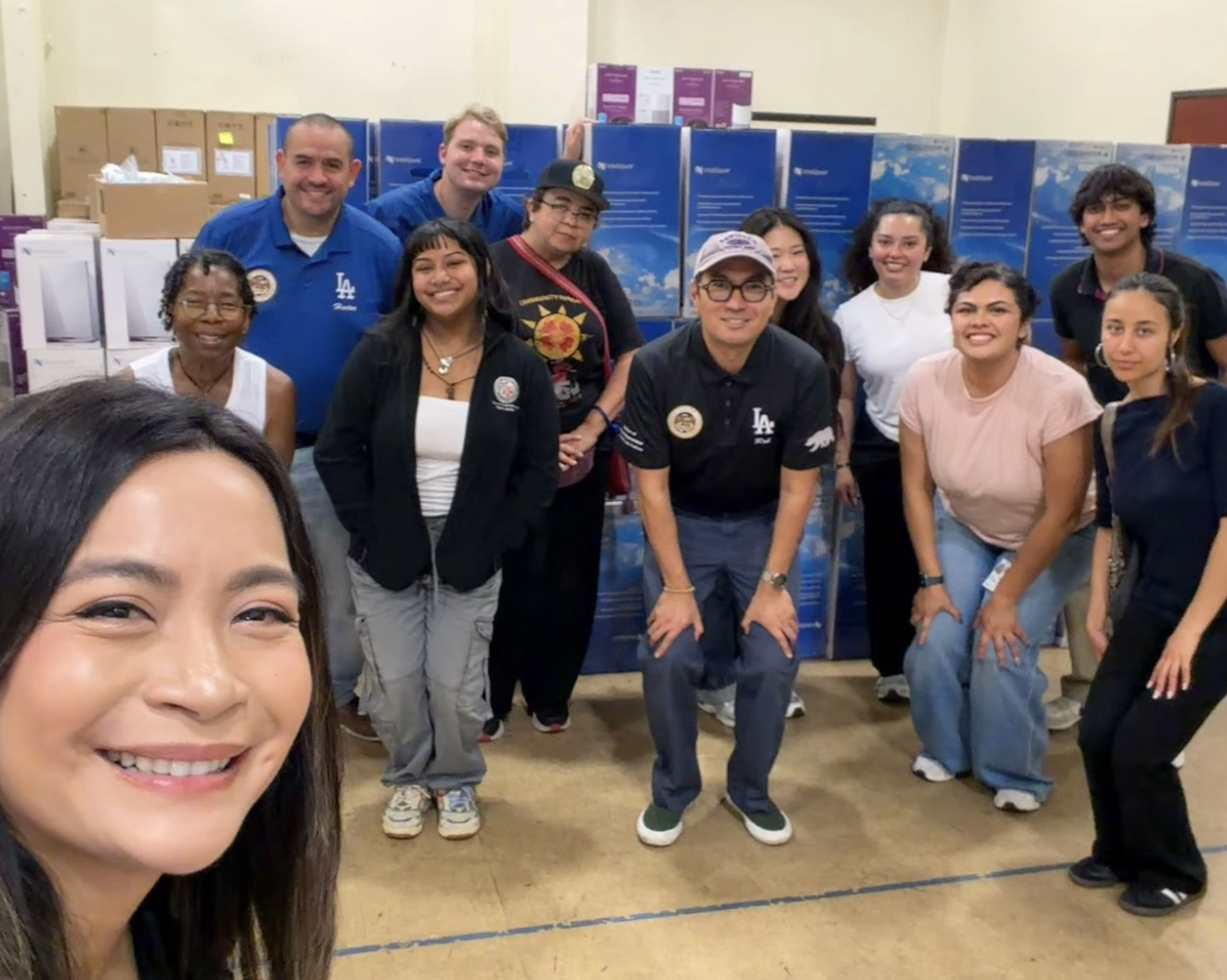
Just as I was falling into my flow at the office, fate struck down on our district with a horrendous catastrophe: the Lineage warehouse fires. Thousands of residents were egregiously affected during these fires and I even personally lost my voice due to smoke inhalation. However, during those days, the candid spirit of the office was replaced with a steely resolve as we worked furiously to convert our office into an emergency command center. The spacious office cubicles were filled with air purifiers that we later distributed to families in need, and I along with other staff provided as much as we could to support residents, especially elders, who called in seeking help. I also personally worked on a resource guide for thousands of people that provided direction to emergency pop-up medical clinics and unemployment services. 
One incredibly important lesson I learned from this disaster is the importance of adaptability and exploring alternative possibilities. Our district office isn’t granted any funding for items such as air purifiers, so one of the main challenges we ran into was how to source much-needed resources without any money to spend. Unfazed by this obstacle, we persistently called non-profits we knew in the area until we were able to cobble together an adequate supply. 

There are so many other experiences to delve into, such as tabling at the Lineage factory post-fire, but for the sake of preventing this blog from becoming a book, I’ll close by saying that it was heart-breaking to personally talk with so many who lost their jobs and livelihoods and were desperately seeking support for their families. However, the experience was also heart-warming in the sense that by providing for each other, we were able to come together as a closer community, as one people. 

So, going back to my original sentiment of determination that I expressed at the beginning of this blog, I’m now much more aware of the ginormous amount of issues that have yet to be addressed and solved. However, through the heart of the community, I’ve learned we can come together to truly bounce back stronger than we were ever before. 

Blog 2: They Waved Back

By Sophia Pu, 2026 CLA Intern

It’s hard to miss Men’s Central Jail if you’re walking down Alameda St from Little Tokyo to Union Station. At first, all I could see was pale concrete and metal fencing, making it hard to imagine what it must be like inside. Then I saw their hands.

Inmates, pressed against caged windows, looking out onto the street. I had a feeling they were looking at me while I waited to cross the 101 freeway, so I waved at them. And they waved back. 

That one simple, human interaction broke my heart. I had known conceptually about the overcrowding, sexual violence, and unsafe conditions in the jail — When CLA went to the Board of Supervisor’s meeting, activists were there to beg and berate the Board for failing to close the jail like they planned to 5 years ago. But what haunted me was seeing their hands and faces and thinking about them trapped behind fortified walls while I got to shake the Supervisors’ hands.

As an intern in a political office, I often feel as though I’m trimming the leaves of a tree that’s producing rotten fruit. So much of my job is to tell people, “sorry, that’s not under our jurisdiction.” Or, “we can submit that request for you but don’t know when they’ll get back.” Everyday I see and hear how layers of bureaucratic hot potato are keeping people from the support they need to survive. When people are truly suffering from inhumane conditions, like those at Men’s Central Jail, I’m just another cog in the machine.

There are some ways I am able to make real change in people’s daily lives. Whether it’s helping someone’s disability insurance come through, or just listening to a constituent’s grievances on the phone, I have the power to make someone’s day through my work in Senator Allen’s office. Perhaps it is those simple, human interactions and acts of service that add up into something great. But I still can’t help but wonder why the word of an intern holds more weight than someone who can’t pay their rent. Or what happens to all the people who don’t know to call our office when their insurance claims are denied.

As we approach our mock campaign election night for LA’s incoming county executive position, I’ll be thinking about the inmates in Men’s Central Jail. The county executive is supposed to cut through the layers of bureaucracy and rebuild trust in government. They’re supposed to be the one who can finally make a decision on how to shut down Men’s Central Jail. I’ll be looking forward to the day I can make that walk from Little Tokyo to Union Station and feel not heartbreak, but hope.

blog 2: Finding Small Ways to Make a Difference

By Kara Mak, 2026 CLA Intern

Over the past couple of weeks, the advice I have heard time and time again from CLA alumni, CAUSE board members, and government staffers is to take initiative at my host office. Before beginning at the Office of Congresswoman Judy Chu, I did not expect how deeply I would come to live by that advice in my work life.

After the first couple days of training, when I began getting more comfortable and less anxious about the usual intern job duties, I realized that there was a lot of downtime between tasks. Being the type of person who likes to keep herself busy, this downtime became boredom very quickly, and I also didn’t like feeling like I wasn’t contributing meaningfully to my office. So, by the end of my first week, I took the initiative to ask one of the new field representatives if I could help her by creating a resource with the names and photos of city officials representing the areas she is assigned to. She happily said yes, and I was added onto the field representative resource project that the interns, working on the opposite days as me, had been working on for the past couple of weeks. Through that interaction, I learned that more often than not, those in the office will always appreciate the help, and the initiative it takes to ask them if and what they may need help with. Since completing the field representative project, I have asked to lead and take on two additional projects, utilizing my skills, interests, and time to find small ways to make a difference in the district office.

Sometimes, it takes the same kind of initiative and resourcefulness to help constituents calling the office for assistance. Constituents call hoping that we can help them with a plethora of different concerns and situations. The ones responsible for picking up the phones—interns, like myself— do not always have an answer or solution for them. However, serving in this role has taught me how to find those answers on my own, or at least, find someone else who might have an answer for them. The most memorable instance of this occurred last week, when we were trying to help a constituent in Vietnamese with USCIS. No one in the office could speak Vietnamese, so we typed out what we wanted to say into Google Translate, then played the Vietnamese translation out loud on speaker for the constituent over the phone. Becoming frustrated, the constituent hung up. We began scouring the internet for a resource that could assist him in-language. Surprisingly, there were none. However, I was able to find an immigration resource center that could refer him to another agency that could possibly assist him in Vietnamese. While calls like these can be difficult to manage, they have demonstrated to me just how valuable our office is to the community, and just how important our role, resourcefulness, and ability to take initiative as interns is to making a difference in someone else’s life.

Blog 2: Beyond the Viewfinder

By Jayden Tran, 2026 CLA Intern

The viewfinder of a camera defines what will be in a shot, and what escapes it; you’re taught to omit the colors and subjects that detract from your focal point when photographing. Oftentimes, this means angling your camera slightly to crop out a distraction or removing a distraction in post.

I’ve always viewed politics as sharing this sentiment: promote the beautiful subjects, ignore the ugly distractions. Although rooted in a pragmatic point of view, it seemed realistic after years of studying Ezra Klein’s theories, democracy, and gridlock in the national government. And so, when I walked into my first day at Assemblymember Mark González’s District Office, I wasn’t expecting to be thrust head first into addressing “the ugly.”

Going through a TSA-adjacent security and up the elevator to the tenth floor, I anticipated a receptionist-adjacent role; my friends who have staffed district offices for national political offices often told me that work days were long and boring. Instead, I was met with the Assemblymember’s team immediately mobilizing that Monday to begin identifying resources for local constituents falling victim to the air quality, smoke, and smell of the Lineage Fires, located right in the heart of our district.

Amid their office coordination meetings on managing resource distribution, they tasked myself and a fellow intern, Devon (the current Y&G Youth Governor, a reminder of my failed campaign in 2022…), to field phone calls and manage constituent intake. We established a victims contact list of all district office callers, communicated with local organizations, and noted online requests for support made via website or social media.

This spontaneity became a constant as our office spent three weeks assisting in the distribution effort. From being listed as a dedicated resource for LA’s 311 line to taking many calls outside our constituency, rather than learning through tutorial, I learned through action, quickly familiarizing myself with systems like LCMS while calling constituents. I used these new lessons in combination with skills already developed from prior work: customer service for phone calls; graphic design when making distribution flyers; policy analysis when responding to constituent comments.

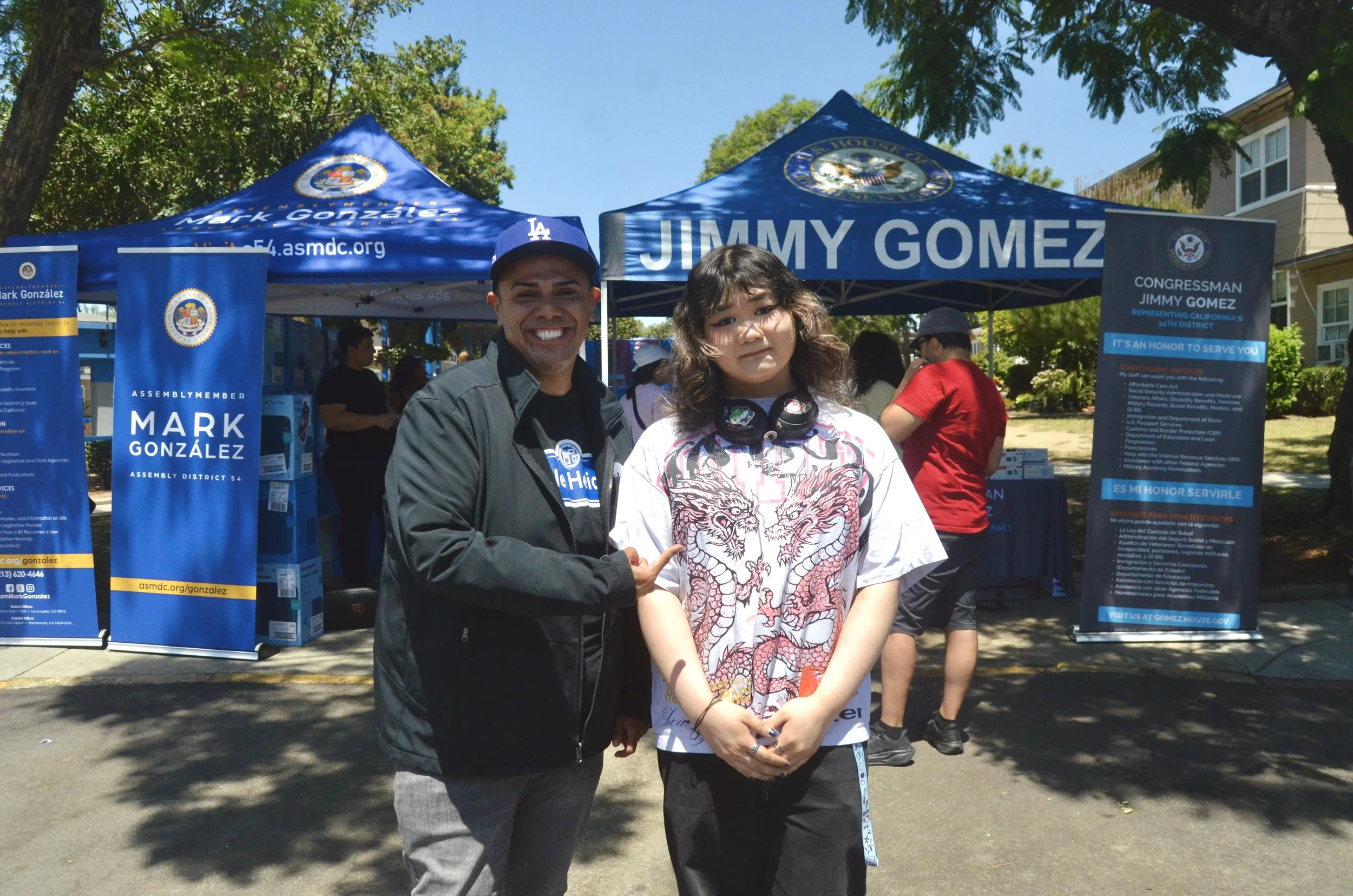
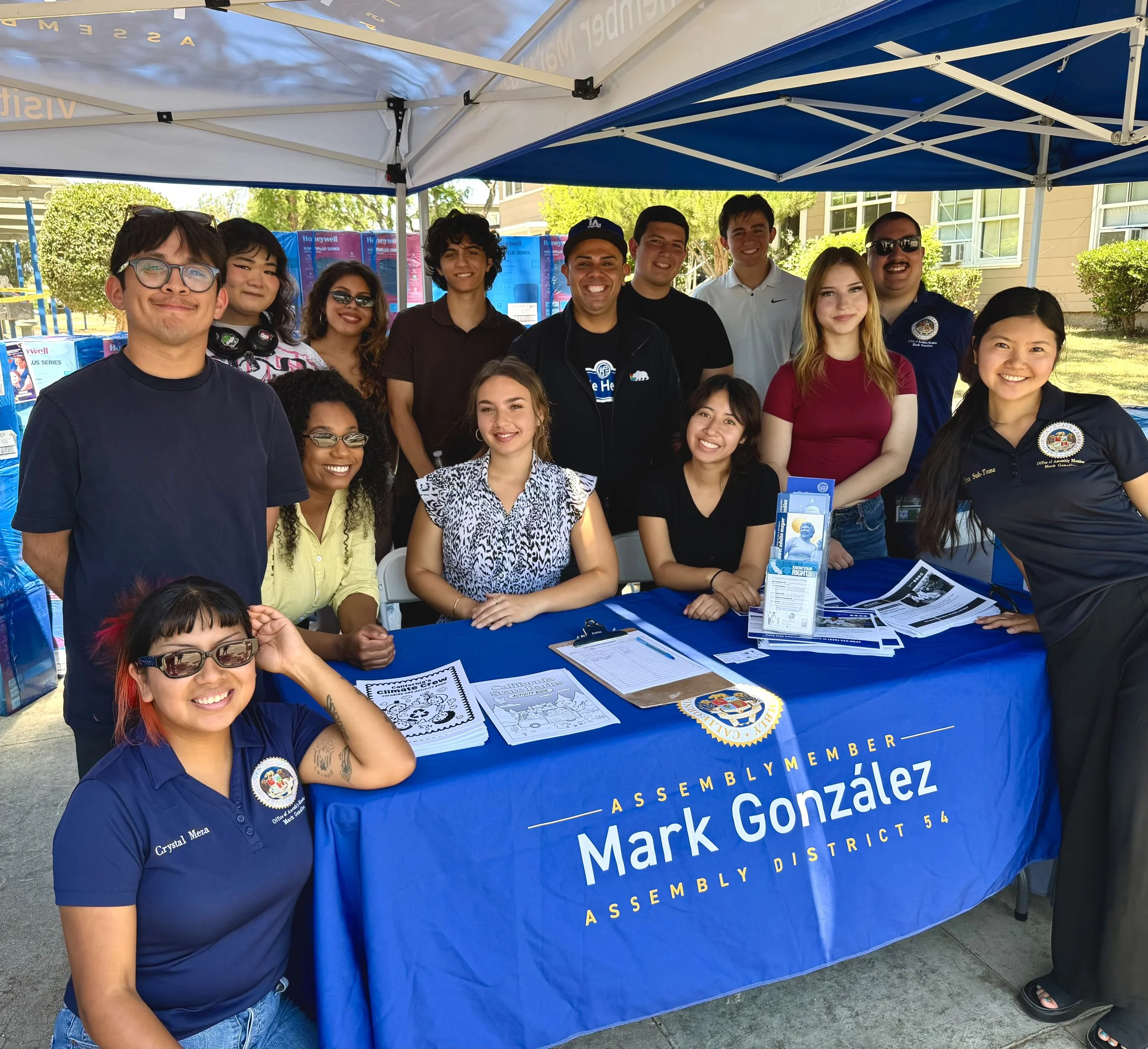
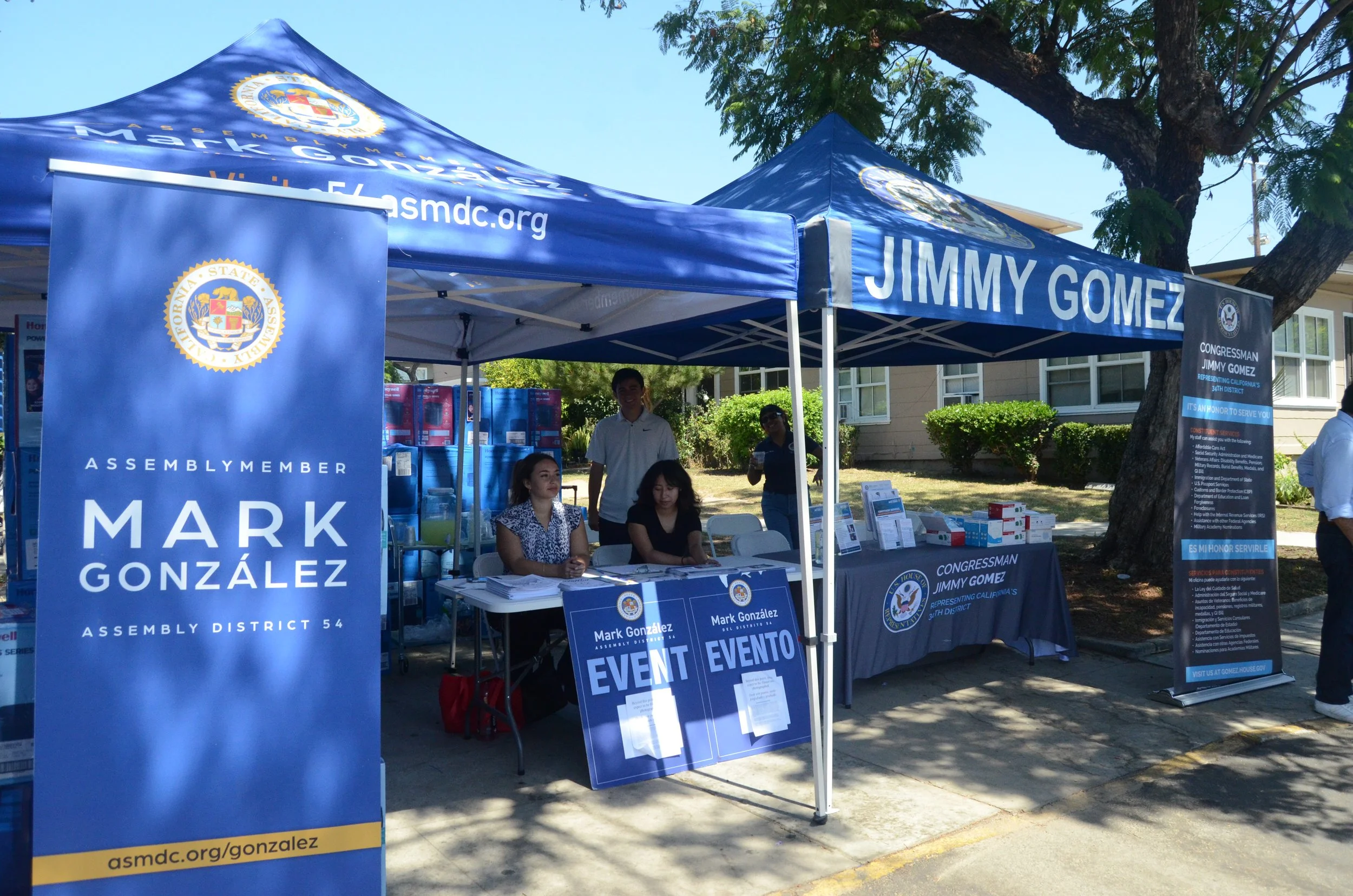
My work was filled with many microwaved popcorn breaks, walks to Grand Central Market, and staring at excel sheets. It all came to a head when I was assigned to staff an air purifier distribution event on Tuesday, July 7th in collaboration with Congressman Jimmy Gomez’s office, will.i.am’s I Am Angel foundation, and Proyecto Pastoral. Photographing the distribution, we helped do a final push for air purifiers in Estrada Courts and delivered 200 purifiers to the area.

While I’ve never viewed critical response as “the ugly,” the political world nowadays seems to view community dismay as subjects not worth focusing on. But as a community advocate, I’m acutely aware of the importance of shedding light on community response. Continuing to work with an office constantly on the ground will expose me to both the beautiful subjects and the ugly distractions, a reminder that politics often extends beyond the viewfinder.

Blog 2: Quiet Rooms with Loud Impact in Defining Modern Justice

By Jada Sirivisut, 2026 CLA Intern

Behind every milestone, policy, and statewide directive lies a foundational commitment to progress at the intersection of statewide authority and the community it is meant to serve. During my experience at my host office at California Attorney General Rob Bonta’s Office of External Affairs so far, I have barely scratched the surface of the extent to which the Attorney General’s influence touches. Spanning the entire state in numerous districts and covering areas such as environmental justice, labor, crime, healthcare, and more, I have been enlightened to the office’s jurisdiction. From my time being learning from my supervisor, Eric Boyd, it has become clear that true pride in this work oftentimes is rooted in small ideas and quiet, intimate conversations that can be amplified into groundmaking change.

In a massive bureaucracy, it is easy to focus solely on standout legislation or high-profile litigation. However, with the past few weeks of mentoring, Eric has shown me that meaningful progress starts with actively listening to the concerns and ideas of passionate individuals and community members. A single, local concern voiced in a spontaneous meeting can expose systemic gaps and pave the way for remarkable reform. By taking these grassroots conversations seriously, I look forward to contributing to the way the Office of External Affairs serves as a vital bridge to translate lived experiences from constituents in Los Angeles and beyond into policy initiatives and statewide priorities.

This profound potential for positive, systemic impact is something I am honored to be part of. Some of my most memorable work currently manifests in preparation for the upcoming annual community-building campaign National Night Out or notetaking during a logistics call with Transformative Good Lab to discuss leveraging Artificial Intelligence for the good of youth in BIPOC communities. I am excitedly anticipating the journey of how these endeavors, along with the many I hope to take on throughout the rest of my summer with Attorney General Bonta’s office, will develop beyond mere projects and into tangible forms of change in both a local and national context. 

Beyond my personal work, I have also had the pleasure of interacting with several other staff members and fellow interns within both the Attorney General’s office and beyond. Through shared assignments such as compiling daily press clips in order to supplement the Department of Justice in tracking relevant events within our county, or getting to know the Department Director and Analysts as we explore new spots during the lunch break, every moment has exceeded my expectations. 

Engaging in this space has shown me how the Department of Justice, and by extension governments, can proactively shape the future to ensure that these ever-evolving institutions can serve as instruments for equity and peace rather than displacement and marginalization. Each event, interaction, and assignment reveals that truly successful governance is a collective effort driven by a network of individuals dedicated to protection and empowerment—a mission I further develop at CAUSE, my host office, and am committed to henceforth.

blog 2: Home at Supervisor Hahn’s: Reflections on Civics

By Kayla Mar, 2026 CLA Intern

When I describe what I do at Los Angeles County Supervisor Janice Hahn’s office, a familiar preamble immediately forms in my mouth:

“The Board of Supervisors legislates and governs over the largest local government in the country. Ten million residents, five supervisors – so that’s two million constituents that one person must stay accountable to.” 

My first few weeks have been a whirlwind of acronyms and meetings. Braving the beast of bureaucracy, I find myself traversing the latest department-commission-agenda-meeting-category-committee-motion-memo available to me. A new day, a new acronym, a new Google search, and new lingering questions about how our county operates. 

I admittedly did not know much about the LA County Board of Supervisors before this summer. It feels a bit ridiculous in hindsight, considering how entrenched the County is in everyday life. However, I realized my lack of initial knowledge – and so many other county residents –  is a symptom of a larger issue: how civics is taught, what civic education ultimately privileges, and how our government structure excludes.

As a lifelong LA County resident, my high school civics class made no mention of local government. I sat through lectures about the three branches of government, the legislative process, and major Supreme Court cases. I read the U.S. Constitution and how its framers thought through the separation of powers. Of course, this is important information, but instruction on how the government that provides our direct social services and can drastically shape peoples’ realities with one policy motion were left out. 

Local government can (and often does) more directly affect constituents than state or federal level levels of governance. And yet, political engagement and education often stops at the federal level. If my civics education did not fully address the power of local government, what exactly do community members who did not have the privilege to learn about these highly influential governance systems? Even for politically engaged county residents in my life, it appeared that most people did not have a firm grasp on the structural enormity of the Board of Supervisors and the County government. 

Considering how many direct social services are run through the County and how Supervisor staff continuously shape new policy, I think about the missing input from historically underrepresented communities in decisionmaking processes purely based on the visibility of governing or legislative bodies. The various overlapping jurisdictions and districts are confusing and unglamorous. If you have an issue, do you call your senator? Your Congressperson? Your state senator? Your Assemblymember? Your mayor? Your city council member? Your County Supervisor?

If our government was designed to express the will of the people, but the people are not fully aware of the government’s activity, then who does these systems actually privilege? Individual policy staff who can champion marginalized voices can only do so much to address all two million constituents within their Supervisor’s district. What could our government look like if everyone had a say?

As I continue to learn more about the inner workings of the Board of Supervisors, I look forward to imagining and building a future where all community voices are not barred from the decisionmaking table. Whether deeply structural, unintentional, or even intentionally malicious, I am excited to continue learning new acronyms everyday if that means I can make our government even more representative of the people. 

Blog 2: Beyond the Desk, Into the District

By Kaitlan Sakuma, 2026 CLA Intern

Since starting my placement in Assemblymember Fong’s district office, I’ve come to understand that representing a community doesn't just happen from behind a desk – it also happens by showing up. Over these past few weeks, I’ve gone from 626 mixers to hospital tours, each one teaching me something new about what it actually means to serve District 49. I came into this internship expecting to learn the mechanics of consistent services; what I didn’t expect was how much I would learn about the district itself, and about the many communities layered within it – several of which I belong to myself, beyond just my hometown.

From researching concerns, learning how to navigate phone calls with people who were frustrated, confused, or simply looking for help, to preparing certificates that recognize the achievements and milestones of people across the district, a lot of my day-to-day work has been centered on responding to constituents. At first, these tasks often felt procedural. But the more research I completed and the more certificates I helped prepare, the more I realized that every piece of work represented a real person trusting their local government to see them. That trust is not abstract, it is built by showing up for our community and responding to each constituent.

What has struck me most is the sheer range of communities that make up District 49. Attending events across the district has meant stepping into spaces that reflect the diversity of the San Gabriel Valley and beyond – spaces where I’ve recognized pieces of my own upbringing, and others where I’ve been welcomed as a guest and a learner. Being able to move between these communities, to connect with people who might otherwise never interact with their Assemblymember’s office directly, has shown me that representation isn’t just about who holds office. But rather, it is about who shows up on their behalf and how they do so.

This work has reaffirmed a feeling that I initially felt at the Capital Summit. That is, that the strongest kind of leadership is one rooted in presence. Assemblymember Fong’s office doesn’t just legislate for District 49; they show up for it, event after event, call after call. Being part of that has given me a clearer sense of the leader and public servant I strive to become: one who is not just working for a community, but who remains genuinely part of it. I am so grateful for the time I have had thus far in my host office. I am eager to continue building the communities in District 49 alongside an amazing team who truly understands these communities—not only as constituents but as neighbors.

Blog 2: Acts of service call that a love language

By Abhishek Jagannathan, 2026 CLA Intern

When my friends, family members, and other treasured acquaintances ask me about my experience at my host office, I often find myself responding with “It was pretty fire, man”.

As you can see, I have a charming way with words.

Of course in my case, this description is a shockingly clever (/s) double entendre, because my host office is the District Office of Assemblymember Jessica Caloza (AD 52), which includes parts of East LA that were significantly impacted by the Lineage Warehouse fire that broke out on June 17th.

Leaving aside my fairly tasteless attempt at a pun, this fire was a serious situation. The Lineage warehouse was a cold storage facility for raw meat, and the nature of the structure meant that when the fire broke out, firefighters could not get into the building to put the fire out completely. The resulting blaze was difficult to put out, and also led to the smell of burning, rotting meat permeating the air, creating significant health concerns about air quality and the spread of toxic chemicals.

This consequently shaped my first two weeks at my host office in an unexpected way. Rather than spending my time just answering phones and writing background memos for community events, my initial days at the district office were almost entirely focused on responding to constituent needs during this crisis, most notably by delivering essential resources, like air purifiers, to locals in the affected areas. This involved a lot of driving around, engaging with members of the community directly, and carrying hundreds of air purifiers to and from various trucks.

While not what I had predicted, this introduction to my host office and the community I was serving is one that felt far more valuable to me than a more typical intern experience, because it placed the act of service at the forefront of my day.

Service can come in a lot of different forms. Oftentimes, the way we find ourselves providing service relates to our strengths. We enter careers based on what subjects we excel at in school. We provide advice to others based on challenges that we’ve already overcome. But service can sometimes be more meaningful when it doesn’t come from a place of expertise, but rather a drive to be helpful in any way. I’m not the best driver in East LA, an area I am still very unfamiliar with. I am certainly not the strongest guy, nor the best at unloading a U-Haul full of air purifiers. But an emergency means all hands are on deck, which means we all have the opportunity to serve outside of our comfort zone - and knowing that something I did immediately improved someone else’s quality of life is a deeply rewarding feeling.

I think this experience of mine also highlights the power of government to connect with people directly and meaningfully. Very often we are witness to a bureaucracy that either negatively affects people’s lives, or seems to lack any tangible impact. My first days at the district office were in many ways a reaffirmation for myself that government is about service, and when it stays true to that core, it delivers.

Blog 2: Schiff-ty Business

By Gabriel Molina-Kong, 2026 CLA Intern

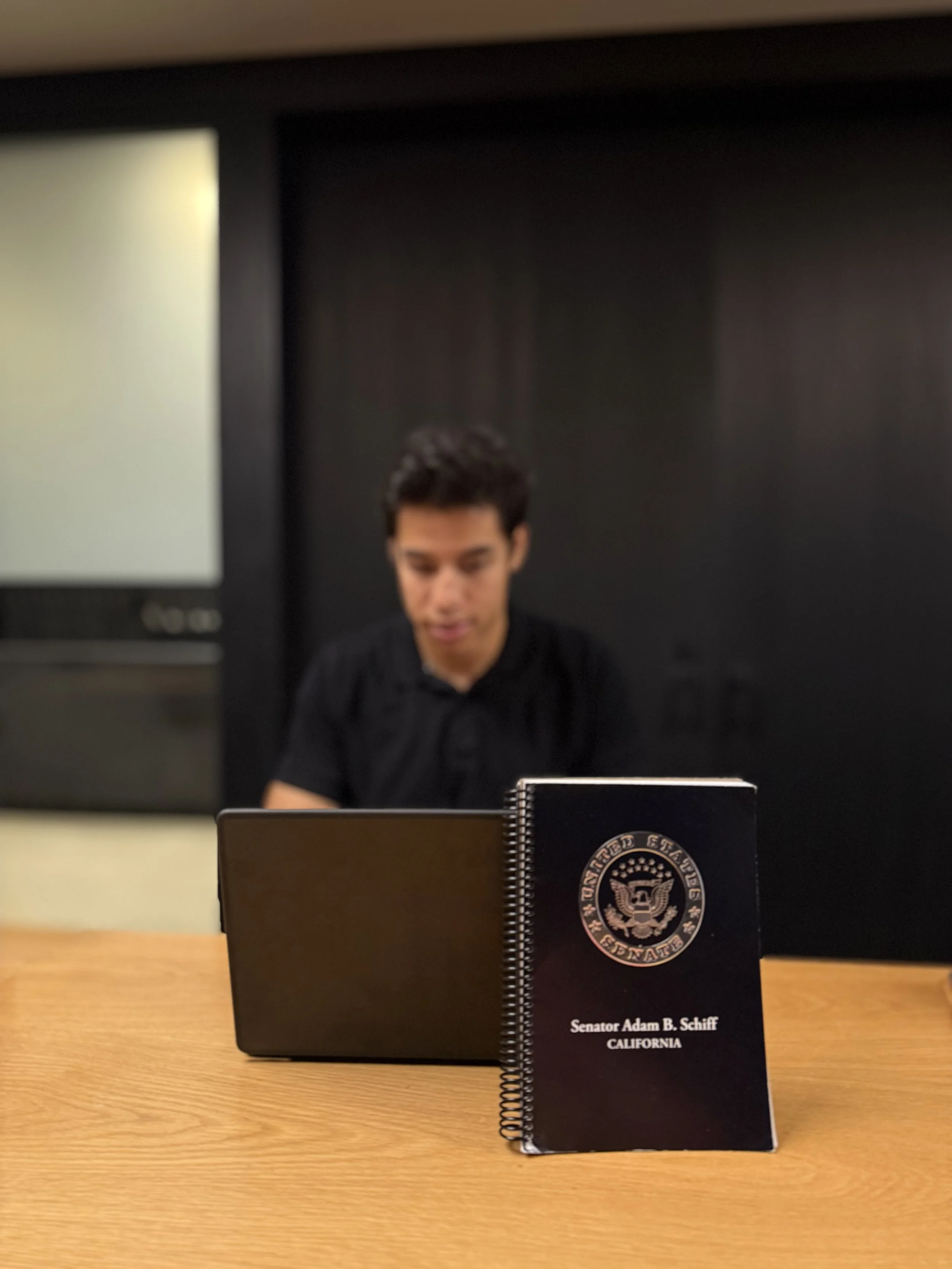
On June 30, 2026, Senator Adam Schiff held a press conference in Downtown LA to introduce legislation that would target California’s record-high gas prices. And the podium he stood behind? I built that in the office the day before. Furniture assembly is just one of my many duties around the office.

What was surprising to me was the exponential rate at which my responsibilities increased each time I went back into the office. On my first day, I did a lot of housekeeping: I watched email scam identification training, logged on to everything I’d need using my Senate email, read over an intern welcome packet, and completed other tasks of that nature. On my second day, I was introduced to one of the biggest messes that the office had to offer: the unorganized supply closet (which I organized). It was during the afternoon, during my phone training, that I started thinking that I wouldn’t have much to do this summer.

On my third day, I was introduced to casework, and I got to not only see, but also be a part of, how congressional offices individually help constituents navigate and assert themselves within our complex federal bureaucracy. The majority of my caseload concerns constituents whose visas have been languishing in a purgatory known as “administrative processing” that has no definite end. I am responsible for communicating with consulates around the world about the significant and often devastating effects that delays in their visas are having on California residents and using congressional interest to weigh in on their behalf regarding their status. Given the current immigration environment, there are a lot of constituents with this same problem, and the hundreds of cases I’m working on are just the tip of the iceberg.

Everyone around the office understands how important casework is and works tirelessly to serve our constituents. I remember hearing my coworker in the cubicle next to me exclaim, “I GOT HER THE PASSPORT!” after spending nearly half an hour on the phone with a consulate. While my share of frustrating phone calls is still largely relegated to when constituents call in with concerns, my caseload keeps me busier than I could have imagined on those first few days. Add on top of that the hours I should be spending on phones, mail sorting, or working on my intern projects for the week, and I find myself wishing I had more hours before 5 PM so I could finish my work.

I’ve never wished there were more hours of work for me in my life, but hearing constituents’ heartbreaking stories and knowing that what I do helps them motivates me beyond the ticking clock.