
To be Asian American is to politically and socially exist right now as the historical culmination of nationalism, imperialism, militarization, transnational capitalism, displacement, and survival in an American society that homogenizes, silences, and reduces the totality of our humanity as commodities, exotic curiosities, and convenient tools in political games. Therefore, the Asian American label must be comprehended as an asymmetrically understood political label that is best utilized to give voice and power to the myriad peoples and experiences of Asia that are constantly and dynamically changing based on the American society that encapsulates it. The histories in our blood ontologically shape who we are and inherently challenge the American society that we live in; never being built or constructed to empower us, much less working towards reconciling the damage that has been done.
Intern Robinson Lee presenting on ‘steadiness’ as a primary leadership trait
As a Korean Chinese American Protestant Christian born and raised in Arcadia, California, I grew up acutely aware of the contradictions that encompassed the social messaging that Asian people are subject to in America. Arcadia High School is widely considered a highly successful and desirable public school with an over 60% Asian student population, yet the social and mental health costs of that success are widely ignored despite the necessary resources to solve it being available. A civil protest at Arcadia County Park during the wake of the 2020 killing of George Floyd led to an armed police presence and for Arcadia City Councilmember Paul Cheng to associate the peaceful protest with crime at Santa Anita Mall despite presenting no evidence of wrongdoing by protestors. In addition, Arcadia has scores of multi-million dollar homes right next to communities of unhoused Arcadians who have limited access to basic necessities including reliable food, water, and shelter. Part of experiencing and witnessing Arcadia’s shortcomings is understanding how simply having Asian American city council members, business people, and educators was not enough to confront these poignant problems that affect the most disaffected in Arcadia. So while I was excited about the opportunities that CAUSE’s Leadership Academy (CLA) presented, I was skeptical of whether the program would continue to endorse Asian American and Pacific Islander (AAPI) participation in educational, governmental, legal, and economic systems that have failed to serve the most vulnerable and marginalized. This orientation week has not only counteracted that anxiety, but has exceeded my expectations of the opportunities that are directly possible for AAPI individuals and communities.
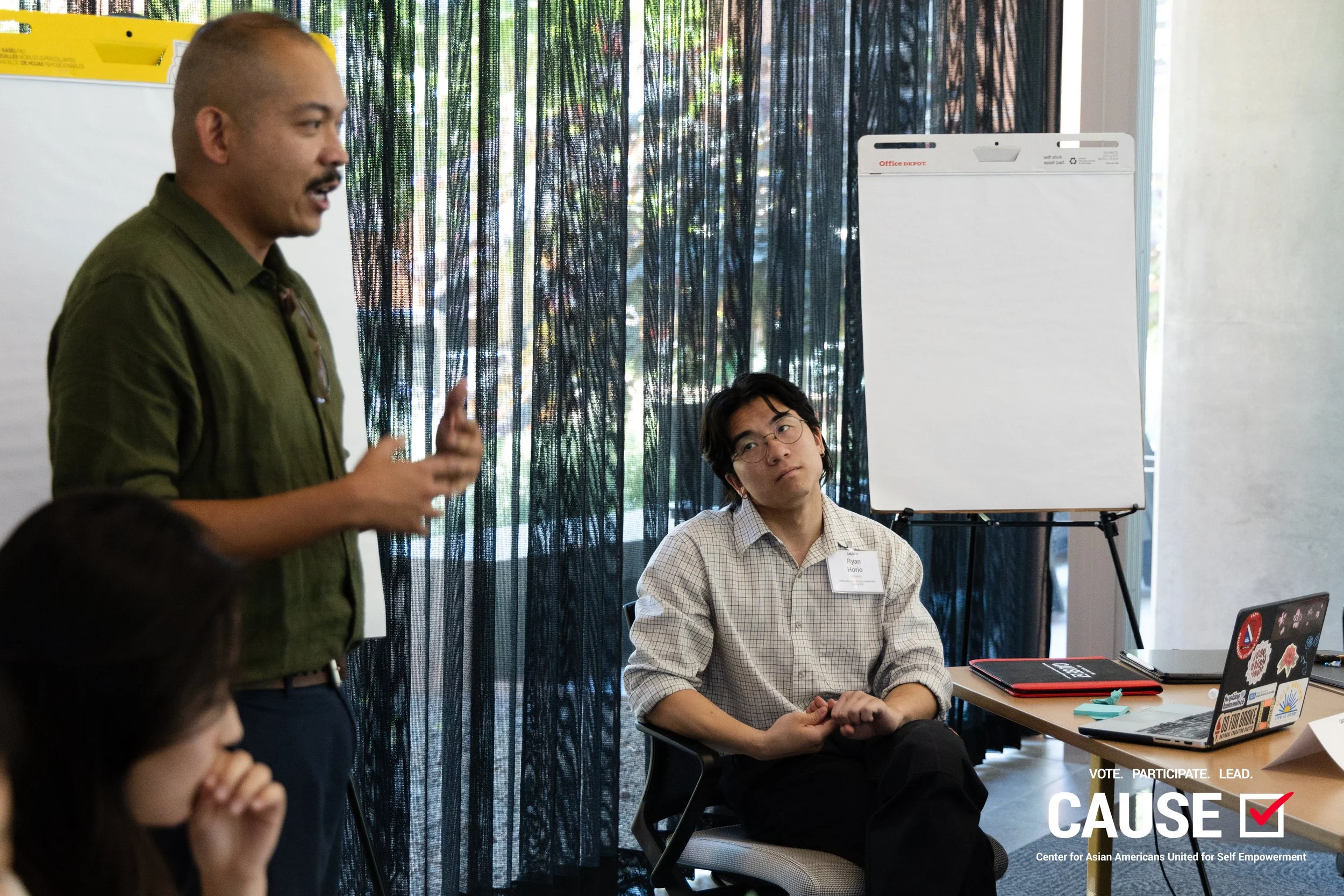
Former State Assembly Candidate Godfrey Plata introducing CLA interns to political campaigns
CLA interns spent orientation week rigorously assessing and reassessing their values and ideals of community and civic engagement through specific workshops on Monday and Tuesday. One demonstration of this was our community agreements in which all of the interns discussed what interpersonal values are important for them to work in a professional group setting. Positionality was one of the key aspects of our final agreement which emphasized how interns need to be holistically conscious of the position that they may be speaking from and the position of folks who interns will be engaging and working with. This included a consciousness of the fact that all of the interns are college-educated AAPI folks who have access to resources, finances, and people that the communities we are representing and working with often do not have. The idea of positionality permeated through our orientation week. Guest speaker Godfrey Plata spoke about the importance of letting people donate their time and money to causes, specifically political campaigns, and overcoming feelings of guilt and financial uncertainty to more substantially represent communities who want to speak with their finances, rather than believing you know better and speaking for them by refusing their contributions. Often, part of serving marginalized communities means swallowing our pride and the belief that we always know better to ask for help.
CAUSE staff and guest speakers shared a conviction to educate interns on what corporate, government, and non-profit spaces expect of interns while also continuing to inform a conscious awareness of the realistic limitations of those spaces in affirming AAPI experiences and in empowering AAPI communities. This education on professional development and spaces combined with the emphasis on values and AAPI community-led orientation week will be a constructive and fruitful introduction to the work that interns will be doing over the next nine weeks. My personal hope is to further understand the expectations and limitations of the various spaces and systems we will be interacting with aspirations to change them towards AAPI needs and empower our communities when those needs are not met. To that end, I look forward to exploring what opportunities there are for historical reconciliation, collective liberation, and political organizing for marginalized people with my fellow interns in the coming weeks.
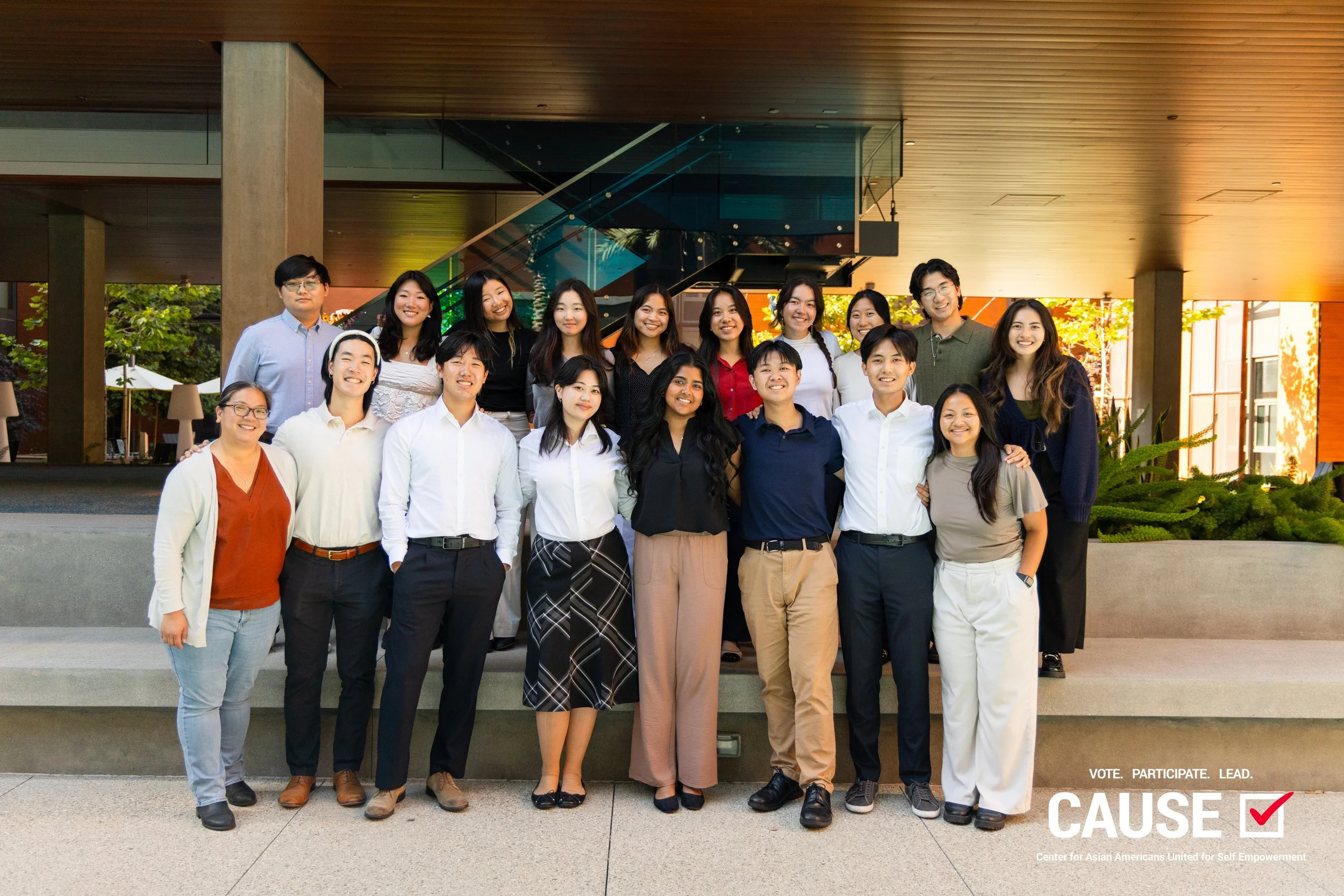
CLA interns and CAUSE staff commemorate the last day of their orientation week retreat at CSULB
The views and opinions expressed in this publication are those of the author and do not reflect the views or positions of CAUSE or the CAUSE network.
Written by Robinson Lee, Leadership Academy 2024 Intern.
The CAUSE Leadership Academy (CLA) for students is a nine-week, paid, internship program that prepares college undergraduates to lead and advocate for the Asian Pacific Islander community on their campuses and beyond.