By Kayla Mar, 2026 CLA Intern
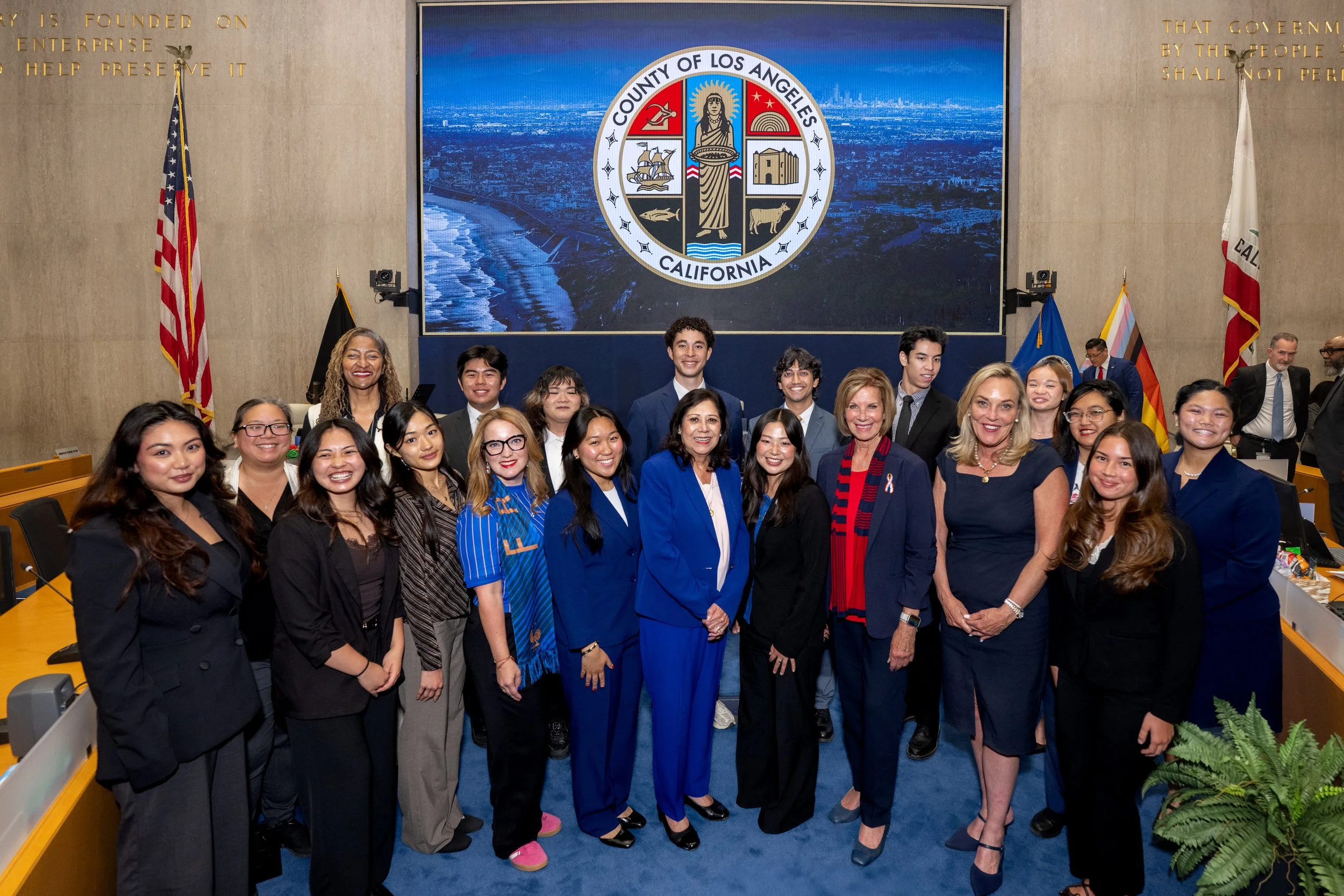
When I describe what I do at Los Angeles County Supervisor Janice Hahn’s office, a familiar preamble immediately forms in my mouth:
“The Board of Supervisors legislates and governs over the largest local government in the country. Ten million residents, five supervisors – so that’s two million constituents that one person must stay accountable to.”
My first few weeks have been a whirlwind of acronyms and meetings. Braving the beast of bureaucracy, I find myself traversing the latest department-commission-agenda-meeting-category-committee-motion-memo available to me. A new day, a new acronym, a new Google search, and new lingering questions about how our county operates.
I admittedly did not know much about the LA County Board of Supervisors before this summer. It feels a bit ridiculous in hindsight, considering how entrenched the County is in everyday life. However, I realized my lack of initial knowledge – and so many other county residents – is a symptom of a larger issue: how civics is taught, what civic education ultimately privileges, and how our government structure excludes.
As a lifelong LA County resident, my high school civics class made no mention of local government. I sat through lectures about the three branches of government, the legislative process, and major Supreme Court cases. I read the U.S. Constitution and how its framers thought through the separation of powers. Of course, this is important information, but instruction on how the government that provides our direct social services and can drastically shape peoples’ realities with one policy motion were left out.
Local government can (and often does) more directly affect constituents than state or federal level levels of governance. And yet, political engagement and education often stops at the federal level. If my civics education did not fully address the power of local government, what exactly do community members who did not have the privilege to learn about these highly influential governance systems? Even for politically engaged county residents in my life, it appeared that most people did not have a firm grasp on the structural enormity of the Board of Supervisors and the County government.
Considering how many direct social services are run through the County and how Supervisor staff continuously shape new policy, I think about the missing input from historically underrepresented communities in decisionmaking processes purely based on the visibility of governing or legislative bodies. The various overlapping jurisdictions and districts are confusing and unglamorous. If you have an issue, do you call your senator? Your Congressperson? Your state senator? Your Assemblymember? Your mayor? Your city council member? Your County Supervisor?
If our government was designed to express the will of the people, but the people are not fully aware of the government’s activity, then who does these systems actually privilege? Individual policy staff who can champion marginalized voices can only do so much to address all two million constituents within their Supervisor’s district. What could our government look like if everyone had a say?
As I continue to learn more about the inner workings of the Board of Supervisors, I look forward to imagining and building a future where all community voices are not barred from the decisionmaking table. Whether deeply structural, unintentional, or even intentionally malicious, I am excited to continue learning new acronyms everyday if that means I can make our government even more representative of the people.