By Kara Mak, 2026 CLA Intern
Unlike many of my peers in the cohort, prior to Election Night, I had no experience with political campaigning or canvassing. My team rehearsed our pitches and prepared answers to what we thought were going to be frequently-asked questions, but I still felt nervous. I was, however, pleasantly surprised by the experience! While the interactions I had during canvassing were mixed, each taught me something new about how I presented my candidate, how I presented myself, or what people were looking for in a county executive.
Some interactions I had emphasized the need for redirection. When I approached one elected official asking if they had heard about my candidate yet or if they would like to learn more about them, she straightforwardly replied, “No.” Slightly shocked by her response, I tried to quickly thank her for her time and move on. But before I had the chance to leave, she said, “Do you want a little advice? It’s because [the other team] got to me first. You guys didn’t try to come up and talk to me.” This confused me. Here I was, trying to talk to her, but she simply didn’t want to hear it. When I brought this up to Nancy, she explained that may just be the voter strategy that certain elected officials were taught, and what they personally believed was best for securing votes. Although I was unsure how to approach it at first, this elected’s comment ended up informing my outreach approach for the rest of the night: talk to as many people as possible, as concisely as possible.
As I continued canvassing throughout the night, I felt my pitch getting clearer and more concise, all the while I felt myself getting more confident. I got into a flow, detailing my candidate’s lived and professional experiences, tying it into their policy platform, before passing out fortune cookies that would “predict” who the people I was speaking to were voting for— all in under two minutes. I felt people becoming more receptive to my pitch because of the energy and enthusiasm I was putting into it. A handful of elected officials told me I was doing a great job, and one even told me that the way I tied the candidate’s backstory into their policy approach really resonated with them. Those moments were incredibly reassuring, especially forsomeone like me, who went into canvassing today with a lot of nerves and no experience.
All in all, this experience demonstrated to me that canvassing is not about the perfect pitch or having the most experience with campaigns. Rather, being successful at canvassing all comes down to connecting with others. Connecting with as many voters as possible, as quickly as possible, so they can be empowered with the knowledge they need to cast an informed vote. Connecting with your candidate so you can meaningfully convey their reason for running to voters. Connecting with individual voters on a personal level, through being open to their questions, advice, and concerns. While I do not see myself working the campaign trail, I do know that the skills I learned while pitching and the self-confidence I gained through this experience will serve me well in the future as a mentor, community advocate, and leader.
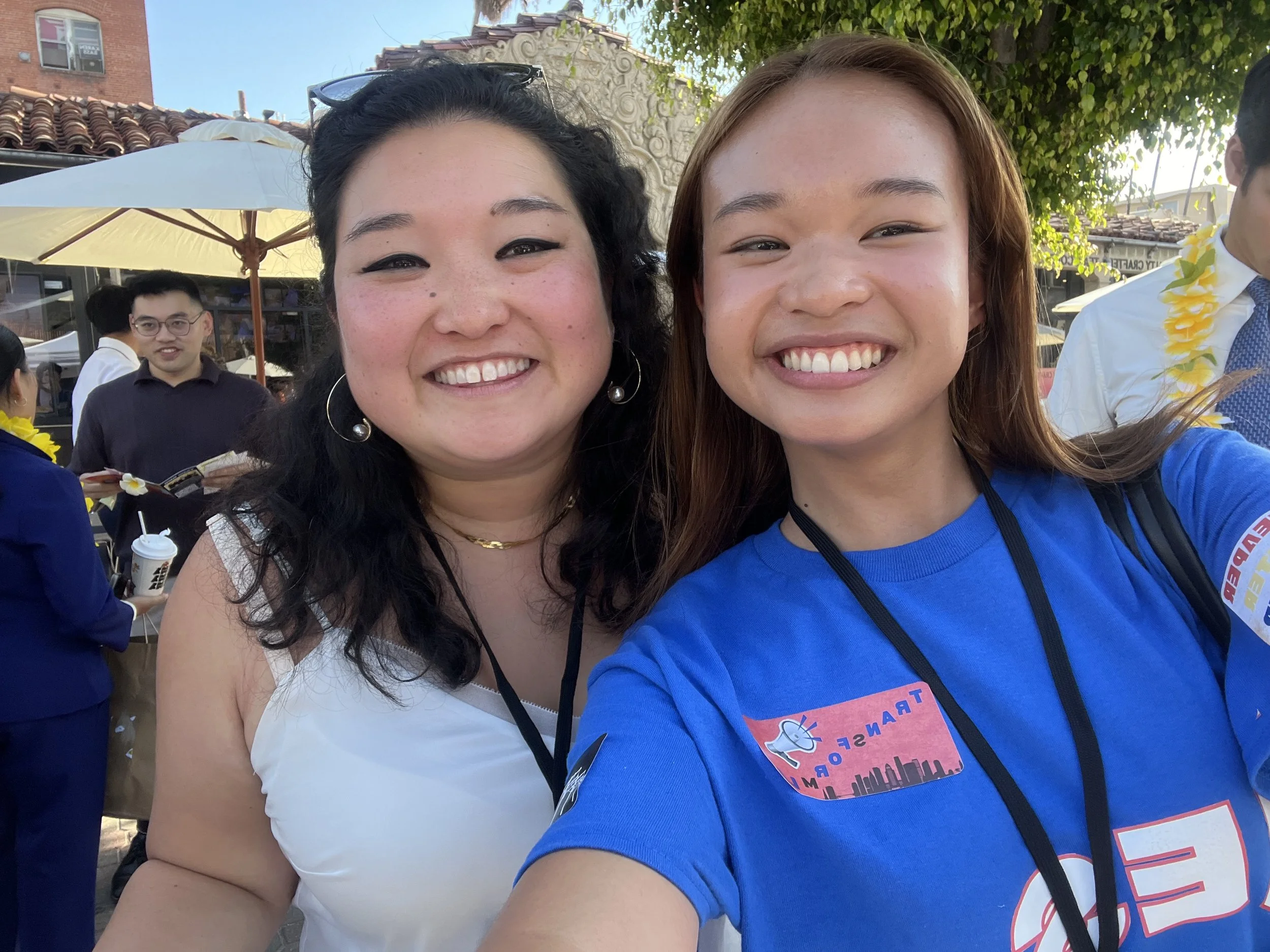
I had a great conversation with Mayor Adena Ishii, the first Asian American and the first woman
of color to serve as Mayor of the City of Berkeley!