Blog 3: Build, Bridge, Belong TOGETHER

By Jada Sirivisut, 2026 CLA Intern

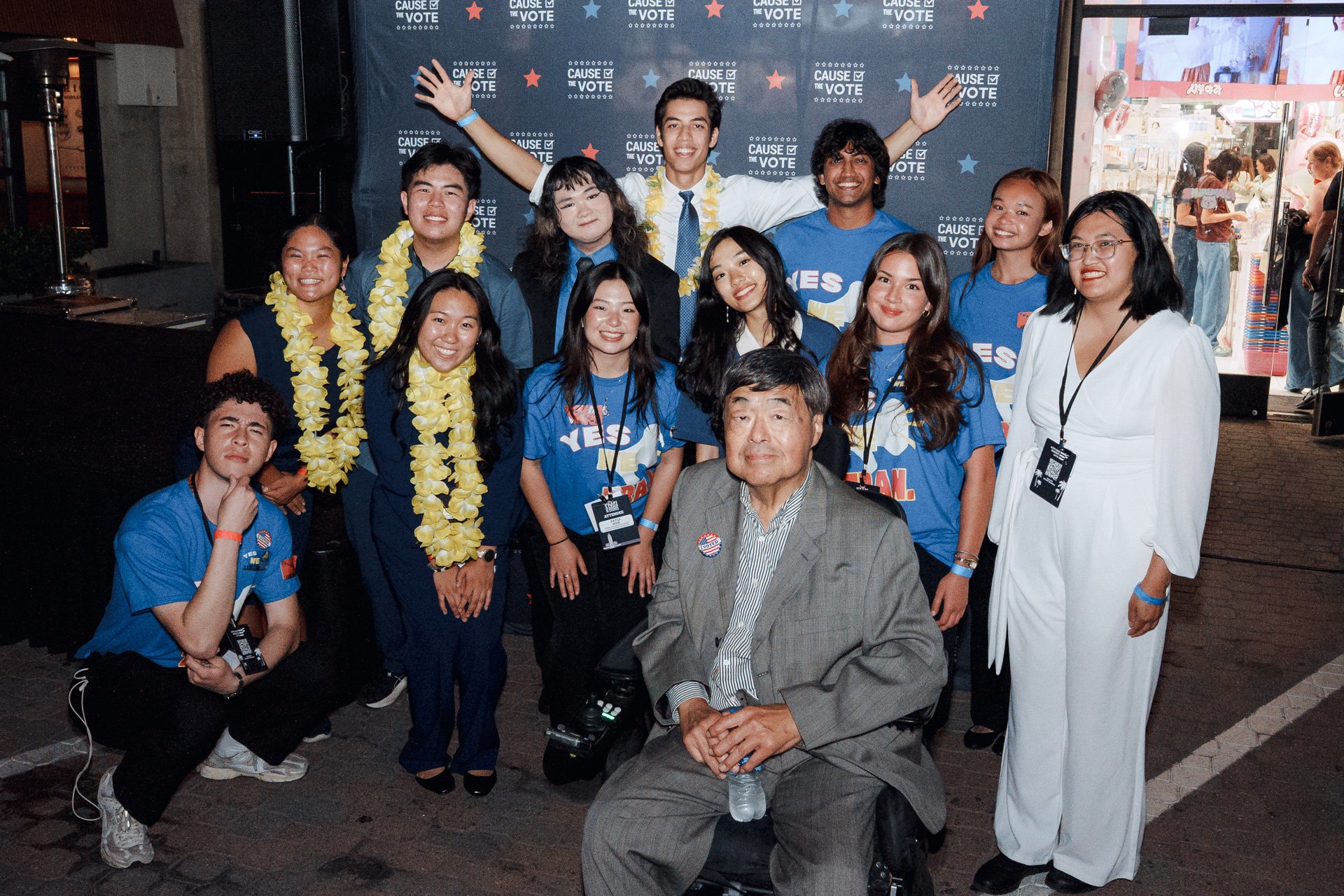
From the moment I woke up, my mind was racing with anticipation for the day ahead: the AAPI Lead conference, the Community Reception, and finally, Mock Campaign Election Night. As I went through my morning routine, I repeatedly rehearsed my pitch, practicing how I would invite community members and government leaders to our event while advocating for Team GMK.

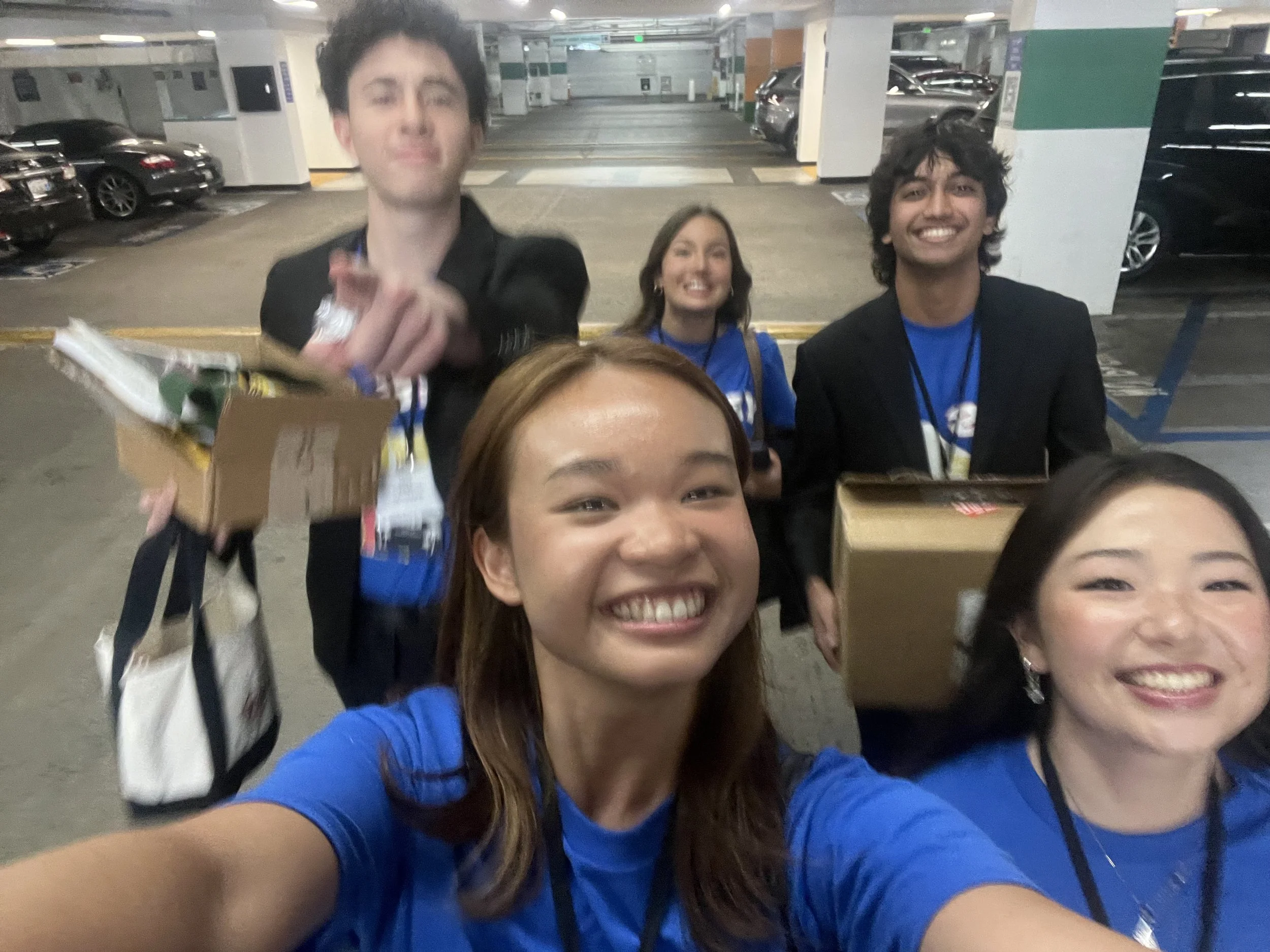
To foster an authentic civic engagement experience, we reached out to API elected officials and experienced industry professionals to spread the word of Measure G and our summit. From the conference room to the courtyards of Koreatown, we were hard at work behind the scenes. By the afternoon, we hauled heavy boxes, set up booths, arranged table centerpieces, and folded brochures—the unglamorous side of running a political campaign. Although Team GMK and this election were built as a mock campaign, the effort we poured into it was as real as it gets.

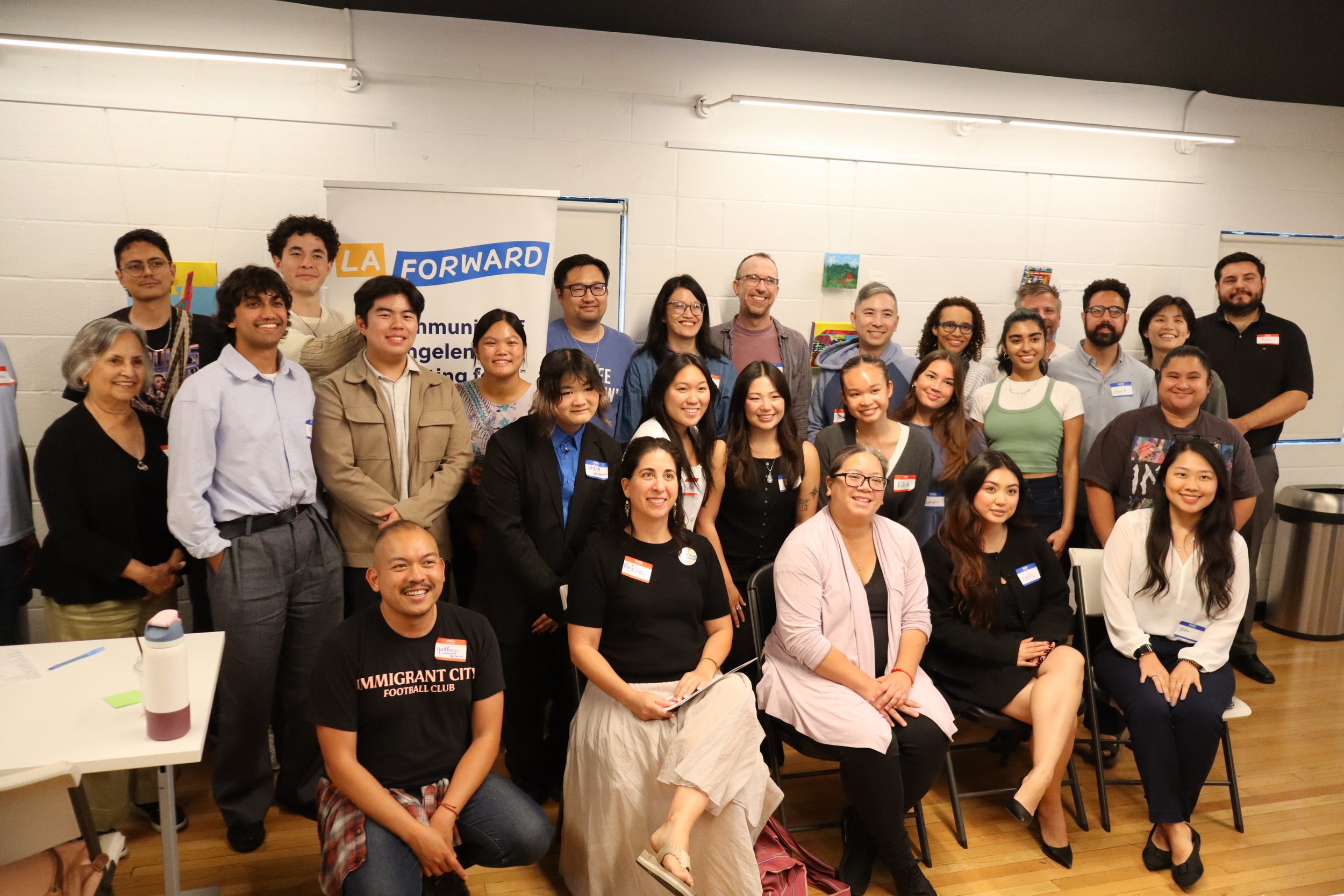
The CAUSE Mock Election was the culmination of all that groundwork. Once the reception began, the heavy lifting was already done, literally and figuratively. Our comprehensive policy platforms were printed, talking points were locked in, and no matter the outcome, the cohort and both respective teams knew we had already made each other proud.

The rest of the night passed in a blur. I moved between tables, introducing myself, explaining the new LA County Executive role, and pitching Team GMK’s vision over and over to more people than I could keep track of. My favorite moments manifested when conversations drifted into personal stories. From connecting with community leaders from across the county, state, or nation, to exchanging experiences with CAUSE alumni, I reflected on my growth since the first few days of CLA as I became increasingly well versed in this ever expanding community.

Throughout the event, one theme repeatedly surfaced: solidarity. Running the day-long show of canvassing, networking, and outreach required us to completely rely on and look out for one another. Between constant conversation, I made a point to check in on my team, pausing to catch our breath together and find some reassurance.

With the evening’s campaign gauntlet finally drawing to a close as the voting period ended, I took a brief moment to handle a quick late-night mission: securing a well-earned dinner using my Chapman dollars for sushi takeout. I hurried back to the courtyard just as the winning result was announced for my team. There, I was breathless yet genuinely ecstatic to be part of that pivotal moment.

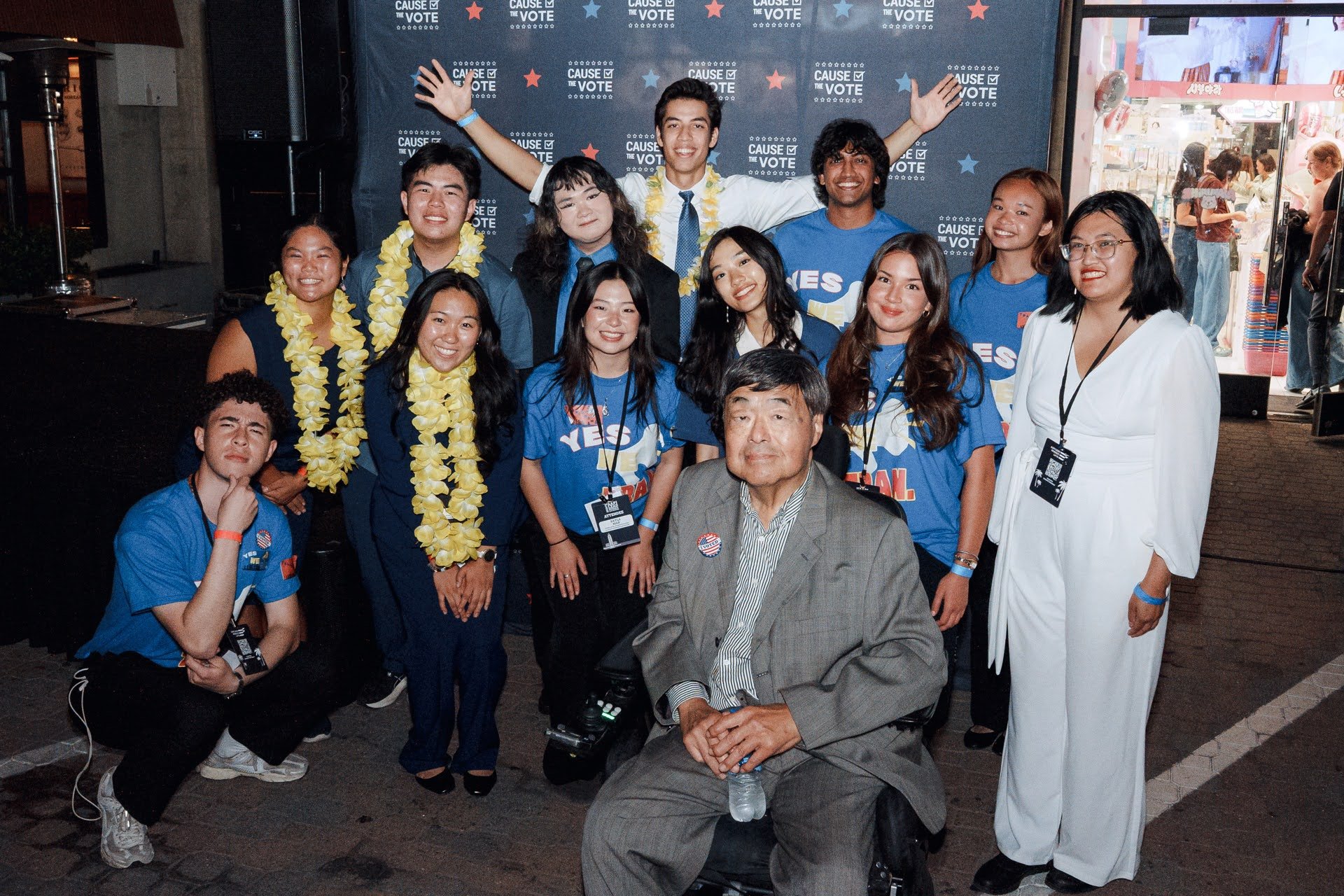
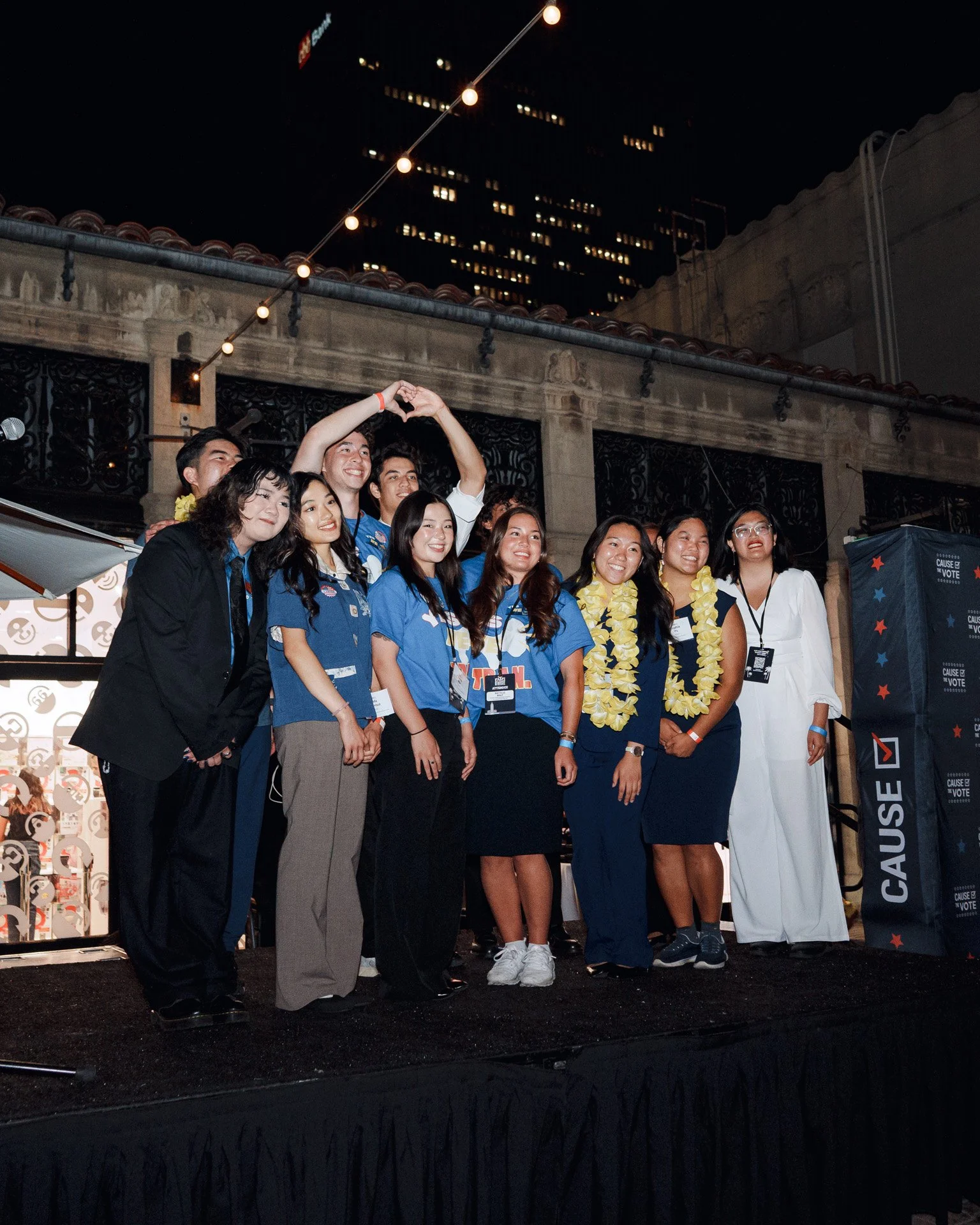
Our victory was an incredible feeling, but my greatest fulfillment came from the weeks of collective effort that brought us to that point. When our cohort celebrated on stage, we were cheering for more than just GMK’s win. We were rejoicing for our teamwork, every long afternoon invested into this vision, and the lessons we learned along the way. And as the night wrapped up, celebrating alongside the entire CAUSE family and our personal supporters made one thing clear: regardless of who won the election, the mock campaign was a victorious success for our whole community.
Blog 3: Yes We Tran.

By Abhishek Jagannathan, 2026 CLA Intern

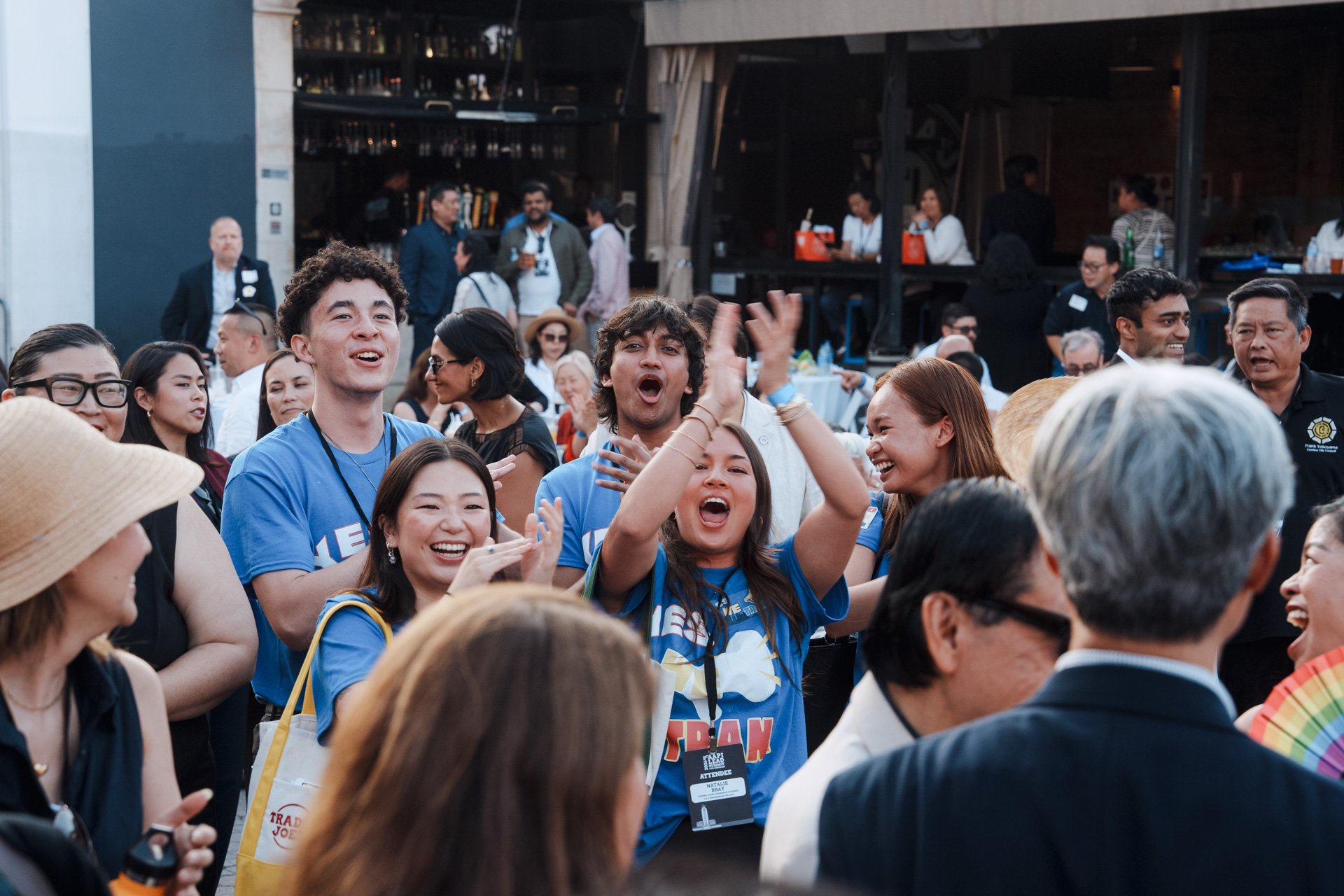
My favorite moment from election night happened right as it ended. After the results were announced (Congrats, Team GMK!), and both candidates gave their final statements, our campaign teams converged into a massive group hug/impromptu dancing to the tune of Kendrick Lamar's “Alright”. I felt this was just an amazing moment of community, something I have personally struggled to find in the past. This feeling for me was pervasive throughout all of the mock election night - while seeing community leaders and elected officials socializing together, and while interacting with many of them through the course of our canvassing. I felt very connected to the people I was around and the space I was in.

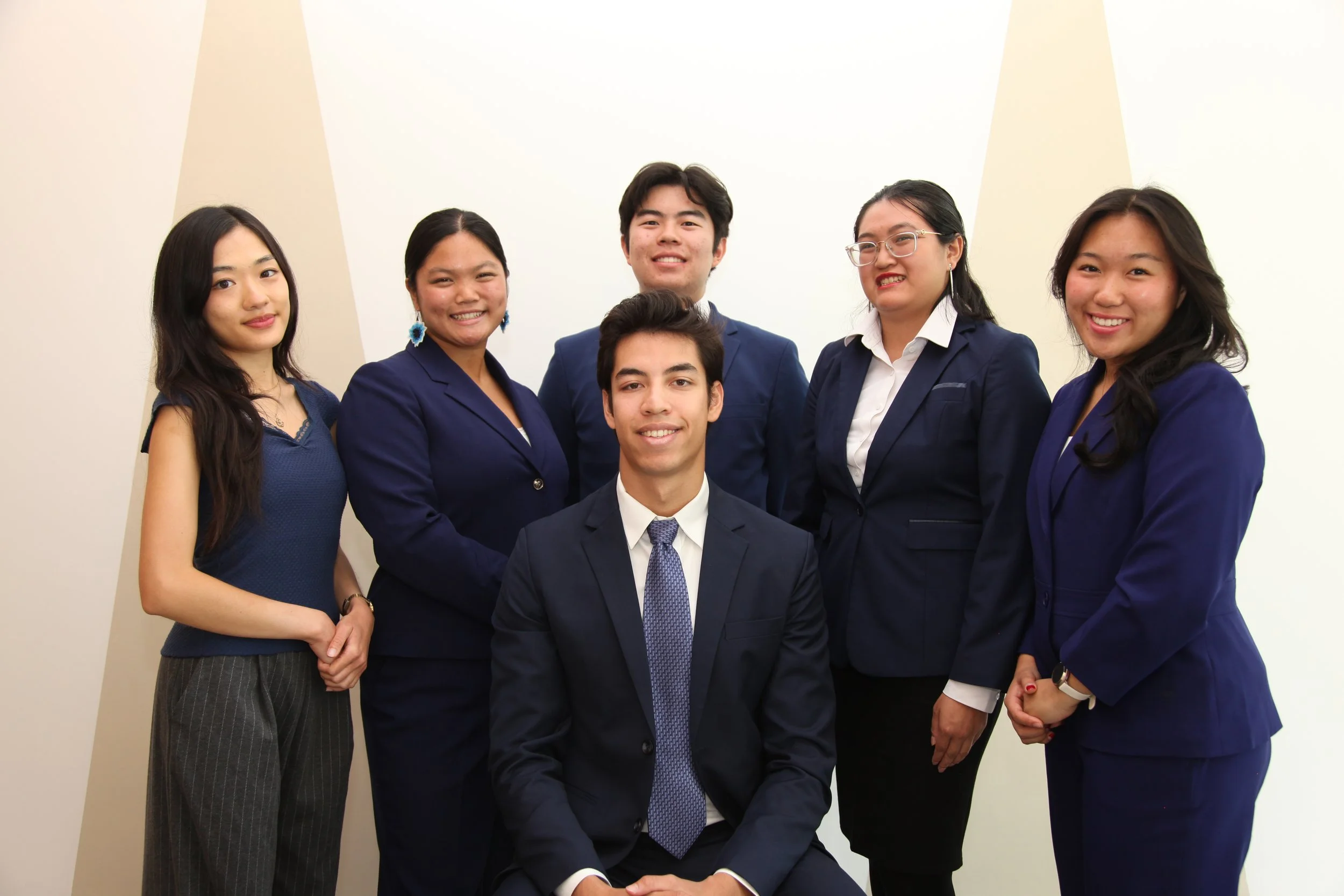
This event also marked the closing of a chapter in our cohort experience - working with our mock campaign teams. At the risk of sounding overly sentimental, I feel extremely proud of everyone on my team. Working with each one of them on our campaign over the last month has been so much fun, and has generated memories that I will treasure for a long time. I’d especially like to acknowledge the hard work that everyone put in.

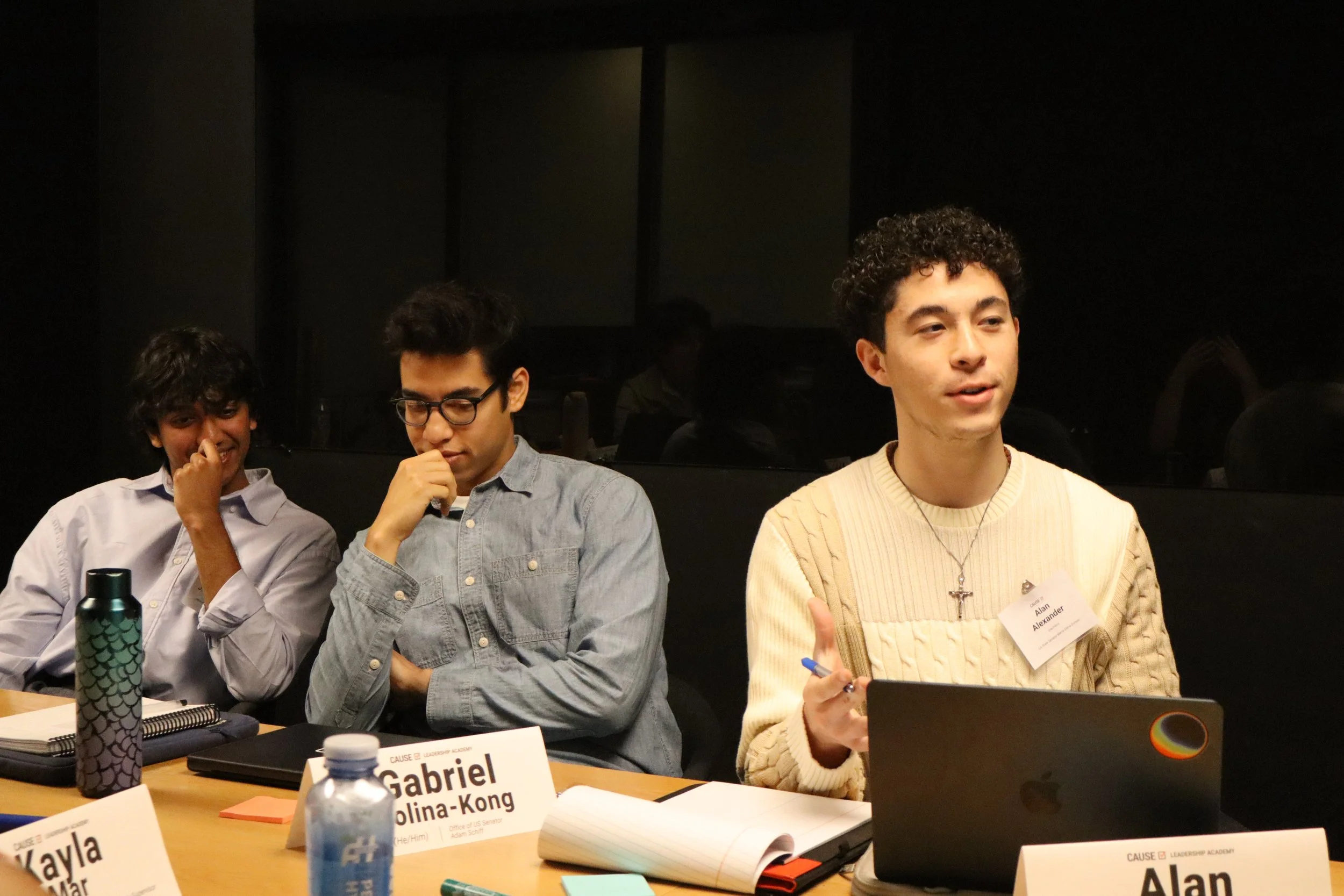
Alan, our campaign manager, brought an unorthodox approach to the table when it came to policy ideas and direction (the thought of cap and trade housing will undoubtedly haunt the members of our team for years to come), but I believe that in doing this, he set the tone for thinking outside the box that allowed us to all have fun and be creative with the way we tackled all aspects of our campaign. His spirit and confidence, especially while campaigning during election night, are traits I admire deeply.

Kara, our finance director, I think was probably the most effective member of our team. Whether it be making the budget, spontaneous phone calls to vendors for our campaign materials, or handling last minute purchases, every step of the process was handled so seamlessly that I was barely even aware it was happening (which I mean as a compliment). During election night, I was struck by just how personable Kara was while canvassing, and by her ability to explain convoluted topics in a uniquely straightforward and disarming fashion, which were very inspiring to see.

Natalie handled basically all of our materials and social media, and I feel that she did a uniformly outstanding job with all of it. Our candidate brochure, which was very much a challenging process to complete, is beautiful and lively and conveys an incredible amount of personality that perfectly encapsulates our candidate and our team. The same holds true for our social media posts, especially our team video, which I have definitely watched quite a few times since we shot it (@jayden4la on instagram!). I think she really made something special for all of us.

Kayla (our political communications lead) and I ended up working the most closely during the course of the campaign, specifically on Jayden’s campaign statement and speech. Writing these items with her has been one of the most satisfying experiences I’ve had in terms of collaborative work. When it comes to something creative like writing, I feel it’s rare to find someone with whom you can easily communicate ideas and mesh styles, and it’s so rewarding when you do. Kayla is that kind of person - a fantastic writer with great taste, and an absolute pleasure to work with. I am extremely proud of what we accomplished.

Jayden, our candidate, our fearless leader, was at the heart and soul of this campaign. Even in a mock election, it is extremely stressful to put yourself in the spotlight, and to place your name under scrutiny of strangers. I have so much respect for the way Jayden carried this responsibility, and conducted himself throughout the night. He conveyed genuine care and compassion in every conversation, traits that I think are sorely needed in politics. I said this to many people while canvassing, and I mean it truly - Jayden is the kind of candidate I would be honored to vote for in a real election.

Of course, major kudos to the other team, team GMK! Their dedication and passion for this campaign was palpable, and their win was very well-deserved :) And last, but certainly not least, a huge shoutout to Nancy, Andrea, and Rachel, who planned the election night. From my own personal experience, and from my conversations with everyone at the reception, this event brought our community together in an enjoyable and refreshing way, a testament to their hard work and effort. I’m looking forward to the next one.

Blog 3: Mock Campaign Readiness

By Ivory Sihashath, 2026 CLA Intern

Even though the mock campaign was very eventful and demanded a lot of dedication, I feel as if I learned a lot about Measure G and local political governance.

I really appreciated my team. I really do. They were incredibly understanding and accommodating for everyone. Which I feel paid off when we actually won the mock election and gained knowledge!

At the actual event, it was wonderful to make meaningful connections, albeit difficult as I felt I had to network for my career alongside advocating my candidate.

What was powerful for me was those connections I made. Especially with the West Covina superintendent, where she gave me advice on my aspirations for running for office, and about campaign strategy. Another person was a Tempe City Council Member, it was great to see someone from back home who is representing the Asian American community.
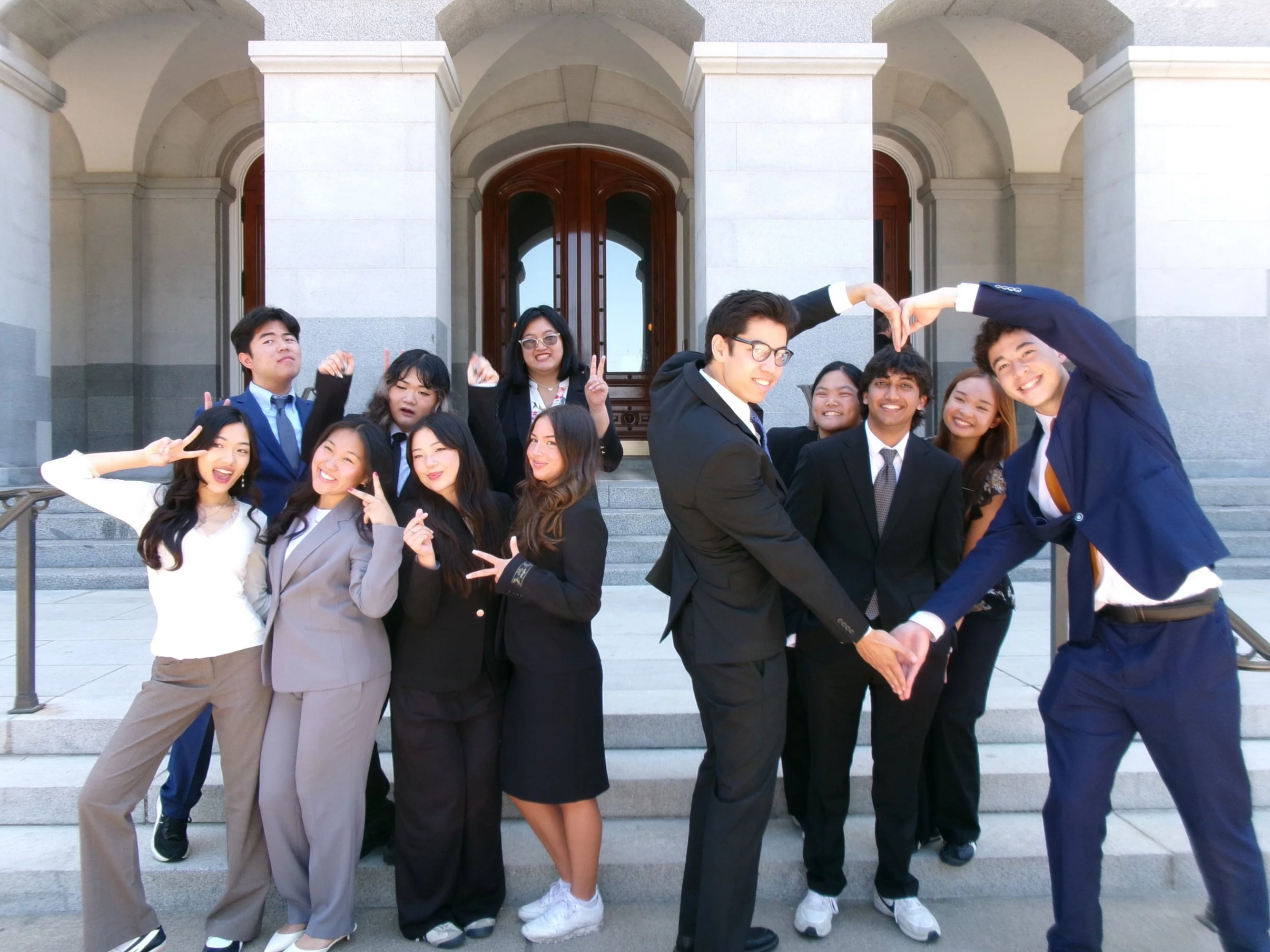
An important lesson for me during these weeks was that you can’t win everyone over. That was present during my campaigning for the mock election and when we had our guest speakers teach us the nuances of trying to be efficient and gaining votes. Even if you don’t or can’t win someone over politically, that can motivate you to try to win 10 more votes or support over 1. The discussion we had with our guest speakers on 7/23 about campaigning and organizing really was a culmination of the group work we had done but also the campaigning in practice.

To expand on this, the campaigning we did was in no means equal to that of a real campaign, but a fragment of one. It really showed how constituents react to the marketing and strategies, even if they fail, it is still a lesson of what can work for the next constituent. I felt that constituents at the event taking the time to vote in the mock election is very much civic engagement, as they took the time to learn about Measure G and the County Executive Position.

Blog 3: VOTER ENGAGEMENT WITH UNENGAGED VOTERS

By Matthew Inui, 2026 CLA Intern

This past Saturday, our cohort had the privilege of hosting a mock election for the new LA County Executive position at the AAPI LEAD Conference, a national gathering of AAPI elected officials—and it was truly exhilarating. From listening to Kamala Harris speak to seeing some of the most powerful people in the country casually eating mac and cheese and brisket, nothing about the event was normal.

Yet, ironically, the realest part of the event was trying to get people to vote in our very not-real election. I was confident in my ability to talk about my candidate’s background and policies, but when it came to convincing people to care enough the mock election to actually cast a ballot, I was at a loss. And while there were a surprising number of people who responded with enthusiasm, there was also a solid group of people who were understandably unenthusiastic about taking time out of their night to participate.

But as I talked to more people and was met with mixed reactions, I realized that this is what real voter engagement work can feel like. Real elections may not be fake, but for so many, they might as well be. They vote for candidates who make ambitious campaign promises, yet years later it can be difficult to see how those decisions have affected their daily lives.

Now that we’re past election night, our internship is shifting toward taking the lessons from our campaigns and writing them into a final report, and what I’m most looking forward to is bringing these perspectives about voter engagement. For many residents, county government remains something of a mystery. County elections can feel a lot like our mock election—you cast a ballot for someone you only recently learned about, and then rarely hear about what they do once they're in office.

Yet as I did my research about the new County Executive position, I became more excited for the 2028 elections because I realized how much of an impact the new position will have. As I'm writing this blog post in the back of a Governance Reform Task Force meeting, members are discussing how the public “does not yet grasp the magnitude of the County elected executive role”, and I couldn’t agree more. If people understood how much county government influences their everyday lives—and how much the County Executive will shape that work—I think many more people would want to be part of choosing who fills that role.

I think the challenge in the coming years won’t just be electing the first County Executive. It'll be helping people realize why this new position matters in the first place. If we can do that, then by 2028 we'll have an opportunity not only to introduce voters to a new office, but to remind them that their really can truly shape the future of Los Angeles County.

Blog 2: Rachel’s Exercise

By Alan Alexander, 2026 CLA Intern

Every afternoon, as we escape the hustle and bustle of Little Tokyo into our cozy conference room, Rachel grounds us with her signature mindfulness exercise: name four things you can see, three things you can touch, two things you can hear, and one word that would describe how you’re feeling. 

The word that would describe how I’m feeling right now is determined. 

A few weeks ago, I began my wondrous journey at the Office of State Senator Maria Elena Durazo. On the first day, I was introduced to the official constituent information management systems, where we logged the concerns of hundreds of people everyday. One detail that truly struck me as I began to help make sure our residents’ voices were heard was the incredibly diverse range of issues and experiences they presented. There were people from seemingly every walk of life fighting for actions such as the ban of 3D-printed cosplay weapons or establishment of state-subsidized portable solar panels. These exchanges revealed to me the unique perspectives that each individual carries and how that translates into true action within our government. 

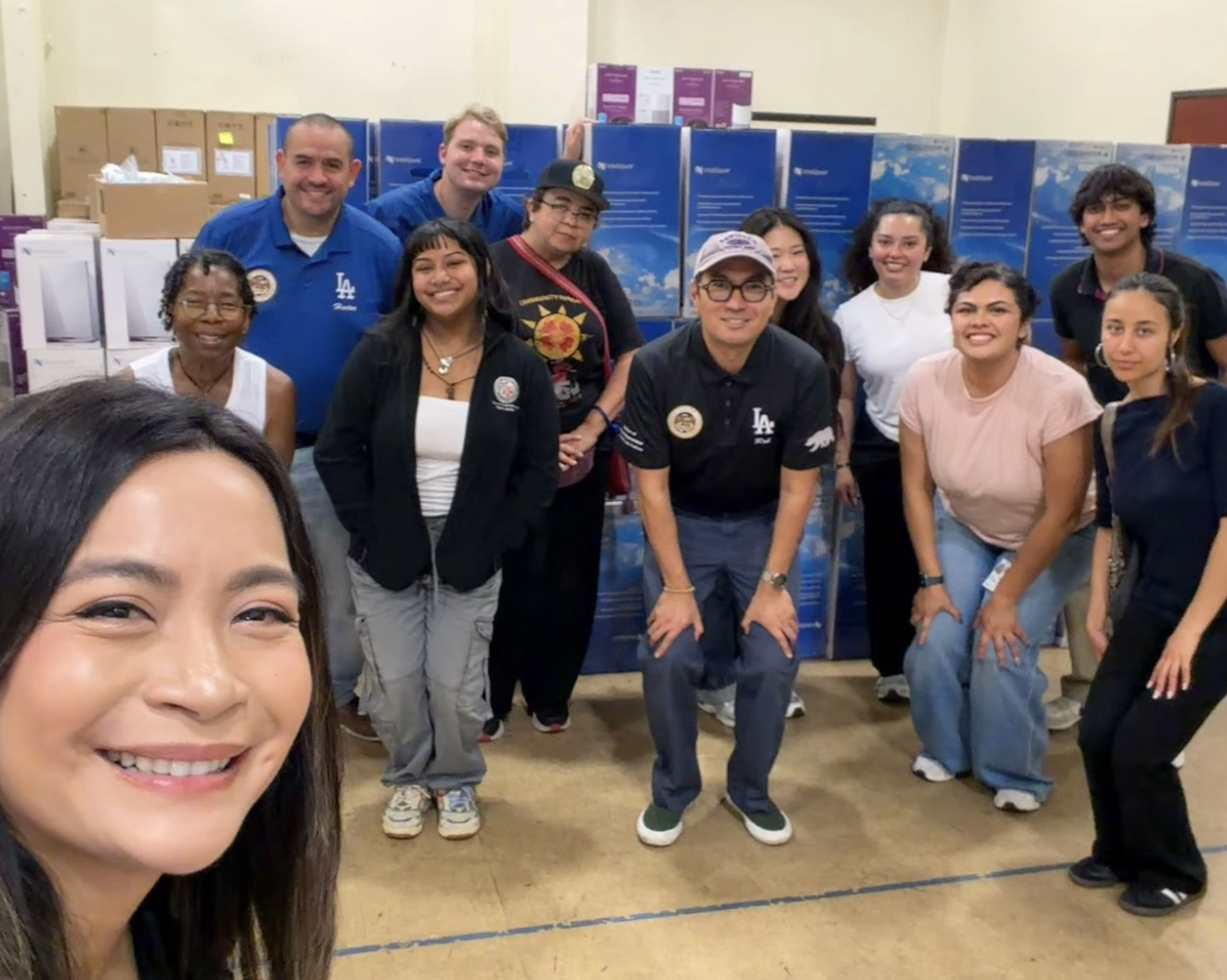
Just as I was falling into my flow at the office, fate struck down on our district with a horrendous catastrophe: the Lineage warehouse fires. Thousands of residents were egregiously affected during these fires and I even personally lost my voice due to smoke inhalation. However, during those days, the candid spirit of the office was replaced with a steely resolve as we worked furiously to convert our office into an emergency command center. The spacious office cubicles were filled with air purifiers that we later distributed to families in need, and I along with other staff provided as much as we could to support residents, especially elders, who called in seeking help. I also personally worked on a resource guide for thousands of people that provided direction to emergency pop-up medical clinics and unemployment services. 
One incredibly important lesson I learned from this disaster is the importance of adaptability and exploring alternative possibilities. Our district office isn’t granted any funding for items such as air purifiers, so one of the main challenges we ran into was how to source much-needed resources without any money to spend. Unfazed by this obstacle, we persistently called non-profits we knew in the area until we were able to cobble together an adequate supply. 

There are so many other experiences to delve into, such as tabling at the Lineage factory post-fire, but for the sake of preventing this blog from becoming a book, I’ll close by saying that it was heart-breaking to personally talk with so many who lost their jobs and livelihoods and were desperately seeking support for their families. However, the experience was also heart-warming in the sense that by providing for each other, we were able to come together as a closer community, as one people. 

So, going back to my original sentiment of determination that I expressed at the beginning of this blog, I’m now much more aware of the ginormous amount of issues that have yet to be addressed and solved. However, through the heart of the community, I’ve learned we can come together to truly bounce back stronger than we were ever before. 

Blog 2: They Waved Back

By Sophia Pu, 2026 CLA Intern

It’s hard to miss Men’s Central Jail if you’re walking down Alameda St from Little Tokyo to Union Station. At first, all I could see was pale concrete and metal fencing, making it hard to imagine what it must be like inside. Then I saw their hands.

Inmates, pressed against caged windows, looking out onto the street. I had a feeling they were looking at me while I waited to cross the 101 freeway, so I waved at them. And they waved back. 

That one simple, human interaction broke my heart. I had known conceptually about the overcrowding, sexual violence, and unsafe conditions in the jail — When CLA went to the Board of Supervisor’s meeting, activists were there to beg and berate the Board for failing to close the jail like they planned to 5 years ago. But what haunted me was seeing their hands and faces and thinking about them trapped behind fortified walls while I got to shake the Supervisors’ hands.

As an intern in a political office, I often feel as though I’m trimming the leaves of a tree that’s producing rotten fruit. So much of my job is to tell people, “sorry, that’s not under our jurisdiction.” Or, “we can submit that request for you but don’t know when they’ll get back.” Everyday I see and hear how layers of bureaucratic hot potato are keeping people from the support they need to survive. When people are truly suffering from inhumane conditions, like those at Men’s Central Jail, I’m just another cog in the machine.

There are some ways I am able to make real change in people’s daily lives. Whether it’s helping someone’s disability insurance come through, or just listening to a constituent’s grievances on the phone, I have the power to make someone’s day through my work in Senator Allen’s office. Perhaps it is those simple, human interactions and acts of service that add up into something great. But I still can’t help but wonder why the word of an intern holds more weight than someone who can’t pay their rent. Or what happens to all the people who don’t know to call our office when their insurance claims are denied.

As we approach our mock campaign election night for LA’s incoming county executive position, I’ll be thinking about the inmates in Men’s Central Jail. The county executive is supposed to cut through the layers of bureaucracy and rebuild trust in government. They’re supposed to be the one who can finally make a decision on how to shut down Men’s Central Jail. I’ll be looking forward to the day I can make that walk from Little Tokyo to Union Station and feel not heartbreak, but hope.

blog 2: Finding Small Ways to Make a Difference

By Kara Mak, 2026 CLA Intern

Over the past couple of weeks, the advice I have heard time and time again from CLA alumni, CAUSE board members, and government staffers is to take initiative at my host office. Before beginning at the Office of Congresswoman Judy Chu, I did not expect how deeply I would come to live by that advice in my work life.

After the first couple days of training, when I began getting more comfortable and less anxious about the usual intern job duties, I realized that there was a lot of downtime between tasks. Being the type of person who likes to keep herself busy, this downtime became boredom very quickly, and I also didn’t like feeling like I wasn’t contributing meaningfully to my office. So, by the end of my first week, I took the initiative to ask one of the new field representatives if I could help her by creating a resource with the names and photos of city officials representing the areas she is assigned to. She happily said yes, and I was added onto the field representative resource project that the interns, working on the opposite days as me, had been working on for the past couple of weeks. Through that interaction, I learned that more often than not, those in the office will always appreciate the help, and the initiative it takes to ask them if and what they may need help with. Since completing the field representative project, I have asked to lead and take on two additional projects, utilizing my skills, interests, and time to find small ways to make a difference in the district office.

Sometimes, it takes the same kind of initiative and resourcefulness to help constituents calling the office for assistance. Constituents call hoping that we can help them with a plethora of different concerns and situations. The ones responsible for picking up the phones—interns, like myself— do not always have an answer or solution for them. However, serving in this role has taught me how to find those answers on my own, or at least, find someone else who might have an answer for them. The most memorable instance of this occurred last week, when we were trying to help a constituent in Vietnamese with USCIS. No one in the office could speak Vietnamese, so we typed out what we wanted to say into Google Translate, then played the Vietnamese translation out loud on speaker for the constituent over the phone. Becoming frustrated, the constituent hung up. We began scouring the internet for a resource that could assist him in-language. Surprisingly, there were none. However, I was able to find an immigration resource center that could refer him to another agency that could possibly assist him in Vietnamese. While calls like these can be difficult to manage, they have demonstrated to me just how valuable our office is to the community, and just how important our role, resourcefulness, and ability to take initiative as interns is to making a difference in someone else’s life.

Blog 2: Beyond the Viewfinder

By Jayden Tran, 2026 CLA Intern

The viewfinder of a camera defines what will be in a shot, and what escapes it; you’re taught to omit the colors and subjects that detract from your focal point when photographing. Oftentimes, this means angling your camera slightly to crop out a distraction or removing a distraction in post.

I’ve always viewed politics as sharing this sentiment: promote the beautiful subjects, ignore the ugly distractions. Although rooted in a pragmatic point of view, it seemed realistic after years of studying Ezra Klein’s theories, democracy, and gridlock in the national government. And so, when I walked into my first day at Assemblymember Mark González’s District Office, I wasn’t expecting to be thrust head first into addressing “the ugly.”

Going through a TSA-adjacent security and up the elevator to the tenth floor, I anticipated a receptionist-adjacent role; my friends who have staffed district offices for national political offices often told me that work days were long and boring. Instead, I was met with the Assemblymember’s team immediately mobilizing that Monday to begin identifying resources for local constituents falling victim to the air quality, smoke, and smell of the Lineage Fires, located right in the heart of our district.

Amid their office coordination meetings on managing resource distribution, they tasked myself and a fellow intern, Devon (the current Y&G Youth Governor, a reminder of my failed campaign in 2022…), to field phone calls and manage constituent intake. We established a victims contact list of all district office callers, communicated with local organizations, and noted online requests for support made via website or social media.

This spontaneity became a constant as our office spent three weeks assisting in the distribution effort. From being listed as a dedicated resource for LA’s 311 line to taking many calls outside our constituency, rather than learning through tutorial, I learned through action, quickly familiarizing myself with systems like LCMS while calling constituents. I used these new lessons in combination with skills already developed from prior work: customer service for phone calls; graphic design when making distribution flyers; policy analysis when responding to constituent comments.

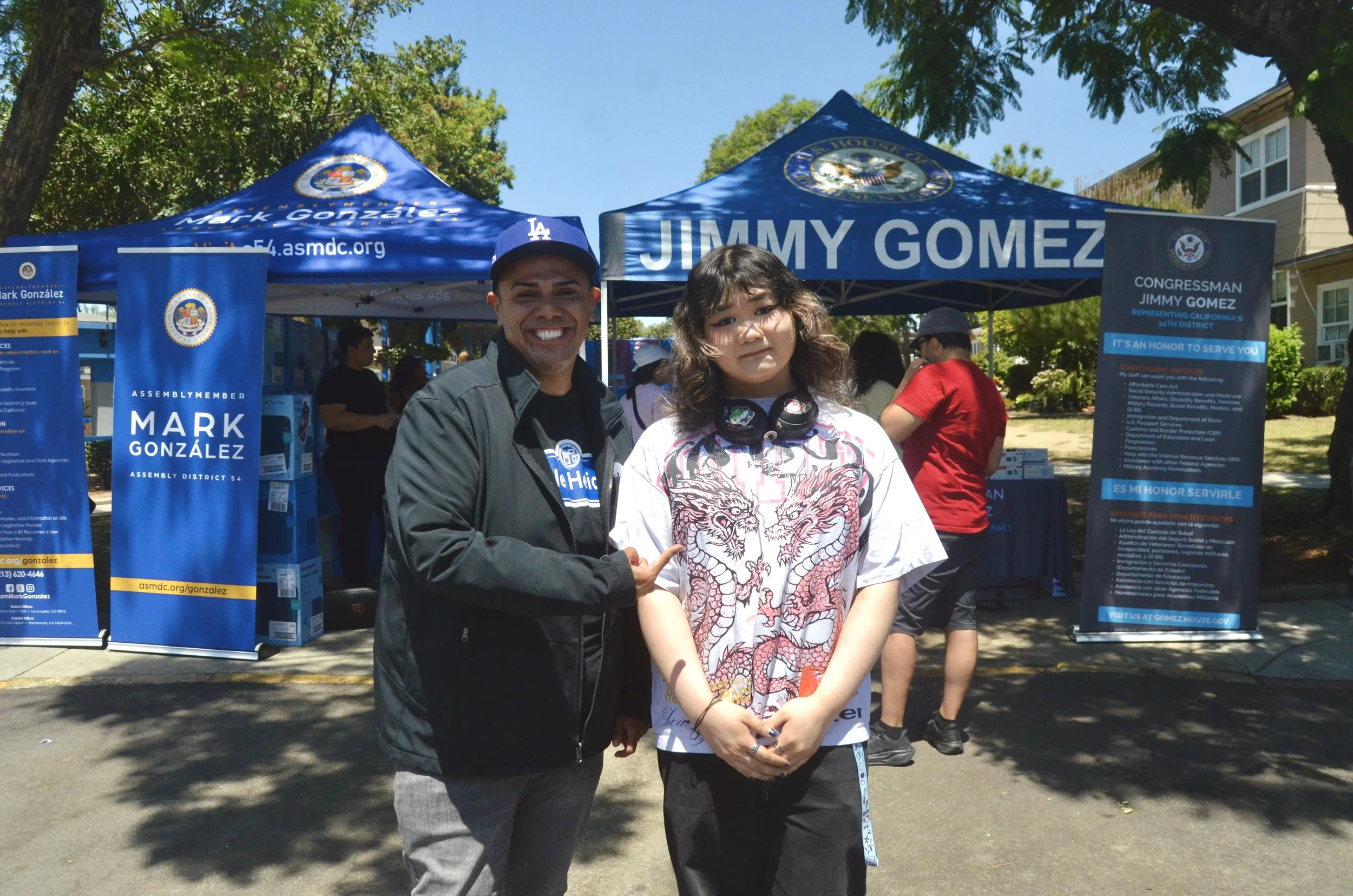
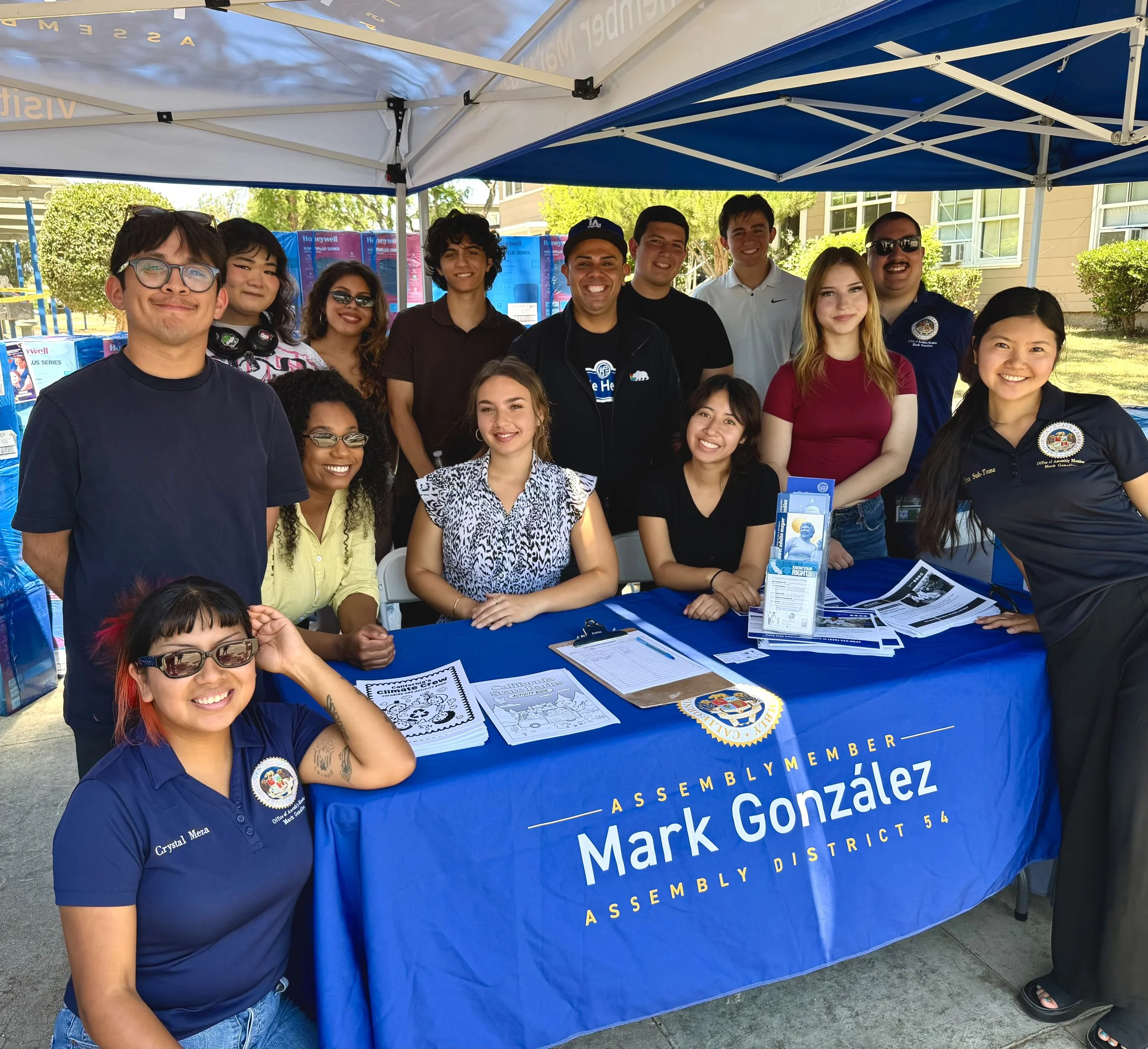
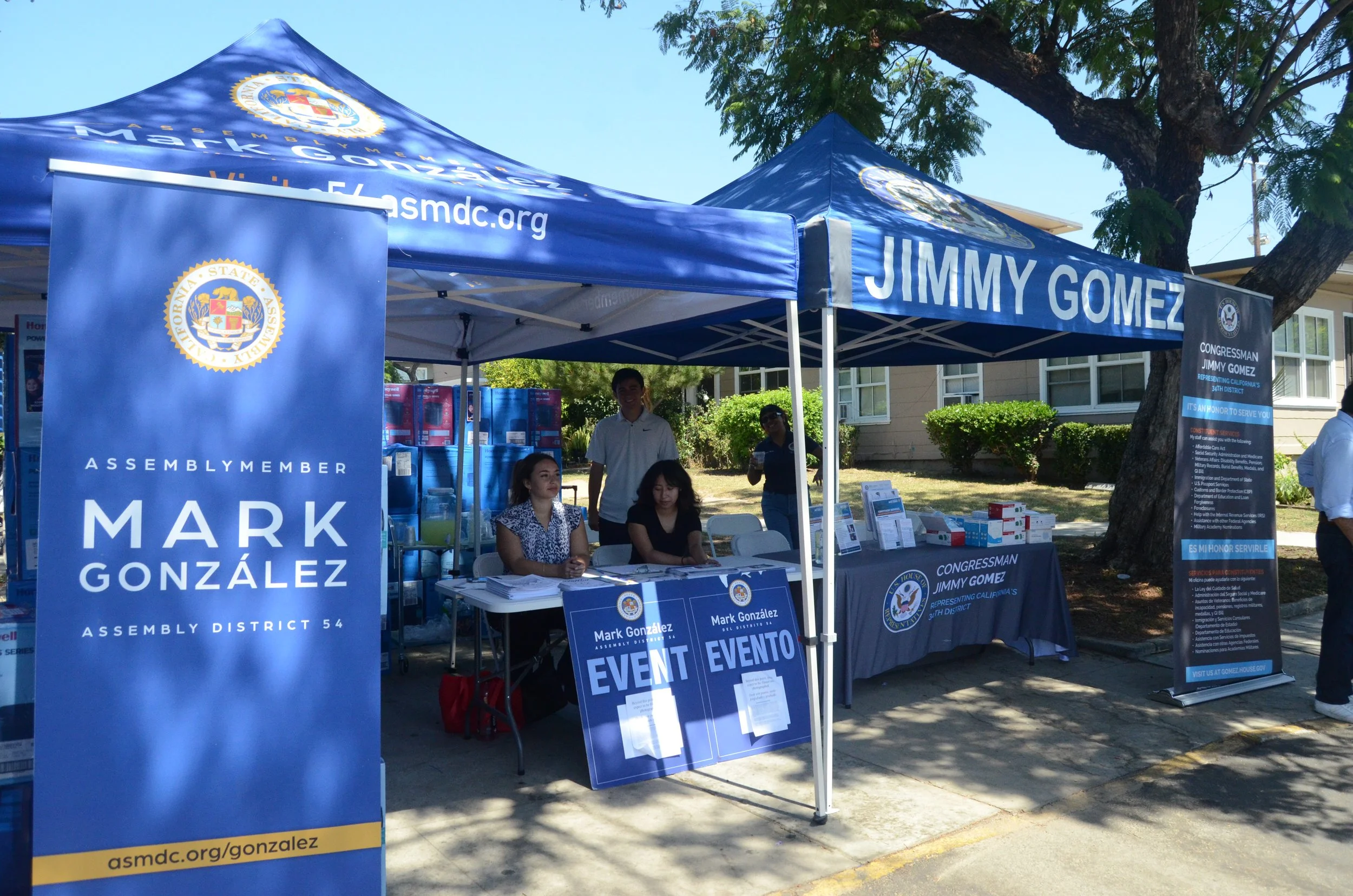
My work was filled with many microwaved popcorn breaks, walks to Grand Central Market, and staring at excel sheets. It all came to a head when I was assigned to staff an air purifier distribution event on Tuesday, July 7th in collaboration with Congressman Jimmy Gomez’s office, will.i.am’s I Am Angel foundation, and Proyecto Pastoral. Photographing the distribution, we helped do a final push for air purifiers in Estrada Courts and delivered 200 purifiers to the area.

While I’ve never viewed critical response as “the ugly,” the political world nowadays seems to view community dismay as subjects not worth focusing on. But as a community advocate, I’m acutely aware of the importance of shedding light on community response. Continuing to work with an office constantly on the ground will expose me to both the beautiful subjects and the ugly distractions, a reminder that politics often extends beyond the viewfinder.

Blog 2: Quiet Rooms with Loud Impact in Defining Modern Justice

By Jada Sirivisut, 2026 CLA Intern

Behind every milestone, policy, and statewide directive lies a foundational commitment to progress at the intersection of statewide authority and the community it is meant to serve. During my experience at my host office at California Attorney General Rob Bonta’s Office of External Affairs so far, I have barely scratched the surface of the extent to which the Attorney General’s influence touches. Spanning the entire state in numerous districts and covering areas such as environmental justice, labor, crime, healthcare, and more, I have been enlightened to the office’s jurisdiction. From my time being learning from my supervisor, Eric Boyd, it has become clear that true pride in this work oftentimes is rooted in small ideas and quiet, intimate conversations that can be amplified into groundmaking change.

In a massive bureaucracy, it is easy to focus solely on standout legislation or high-profile litigation. However, with the past few weeks of mentoring, Eric has shown me that meaningful progress starts with actively listening to the concerns and ideas of passionate individuals and community members. A single, local concern voiced in a spontaneous meeting can expose systemic gaps and pave the way for remarkable reform. By taking these grassroots conversations seriously, I look forward to contributing to the way the Office of External Affairs serves as a vital bridge to translate lived experiences from constituents in Los Angeles and beyond into policy initiatives and statewide priorities.

This profound potential for positive, systemic impact is something I am honored to be part of. Some of my most memorable work currently manifests in preparation for the upcoming annual community-building campaign National Night Out or notetaking during a logistics call with Transformative Good Lab to discuss leveraging Artificial Intelligence for the good of youth in BIPOC communities. I am excitedly anticipating the journey of how these endeavors, along with the many I hope to take on throughout the rest of my summer with Attorney General Bonta’s office, will develop beyond mere projects and into tangible forms of change in both a local and national context. 

Beyond my personal work, I have also had the pleasure of interacting with several other staff members and fellow interns within both the Attorney General’s office and beyond. Through shared assignments such as compiling daily press clips in order to supplement the Department of Justice in tracking relevant events within our county, or getting to know the Department Director and Analysts as we explore new spots during the lunch break, every moment has exceeded my expectations. 

Engaging in this space has shown me how the Department of Justice, and by extension governments, can proactively shape the future to ensure that these ever-evolving institutions can serve as instruments for equity and peace rather than displacement and marginalization. Each event, interaction, and assignment reveals that truly successful governance is a collective effort driven by a network of individuals dedicated to protection and empowerment—a mission I further develop at CAUSE, my host office, and am committed to henceforth.

blog 2: Home at Supervisor Hahn’s: Reflections on Civics

By Kayla Mar, 2026 CLA Intern

When I describe what I do at Los Angeles County Supervisor Janice Hahn’s office, a familiar preamble immediately forms in my mouth:

“The Board of Supervisors legislates and governs over the largest local government in the country. Ten million residents, five supervisors – so that’s two million constituents that one person must stay accountable to.” 

My first few weeks have been a whirlwind of acronyms and meetings. Braving the beast of bureaucracy, I find myself traversing the latest department-commission-agenda-meeting-category-committee-motion-memo available to me. A new day, a new acronym, a new Google search, and new lingering questions about how our county operates. 

I admittedly did not know much about the LA County Board of Supervisors before this summer. It feels a bit ridiculous in hindsight, considering how entrenched the County is in everyday life. However, I realized my lack of initial knowledge – and so many other county residents –  is a symptom of a larger issue: how civics is taught, what civic education ultimately privileges, and how our government structure excludes.

As a lifelong LA County resident, my high school civics class made no mention of local government. I sat through lectures about the three branches of government, the legislative process, and major Supreme Court cases. I read the U.S. Constitution and how its framers thought through the separation of powers. Of course, this is important information, but instruction on how the government that provides our direct social services and can drastically shape peoples’ realities with one policy motion were left out. 

Local government can (and often does) more directly affect constituents than state or federal level levels of governance. And yet, political engagement and education often stops at the federal level. If my civics education did not fully address the power of local government, what exactly do community members who did not have the privilege to learn about these highly influential governance systems? Even for politically engaged county residents in my life, it appeared that most people did not have a firm grasp on the structural enormity of the Board of Supervisors and the County government. 

Considering how many direct social services are run through the County and how Supervisor staff continuously shape new policy, I think about the missing input from historically underrepresented communities in decisionmaking processes purely based on the visibility of governing or legislative bodies. The various overlapping jurisdictions and districts are confusing and unglamorous. If you have an issue, do you call your senator? Your Congressperson? Your state senator? Your Assemblymember? Your mayor? Your city council member? Your County Supervisor?

If our government was designed to express the will of the people, but the people are not fully aware of the government’s activity, then who does these systems actually privilege? Individual policy staff who can champion marginalized voices can only do so much to address all two million constituents within their Supervisor’s district. What could our government look like if everyone had a say?

As I continue to learn more about the inner workings of the Board of Supervisors, I look forward to imagining and building a future where all community voices are not barred from the decisionmaking table. Whether deeply structural, unintentional, or even intentionally malicious, I am excited to continue learning new acronyms everyday if that means I can make our government even more representative of the people. 

Blog 2: Beyond the Desk, Into the District

By Kaitlan Sakuma, 2026 CLA Intern

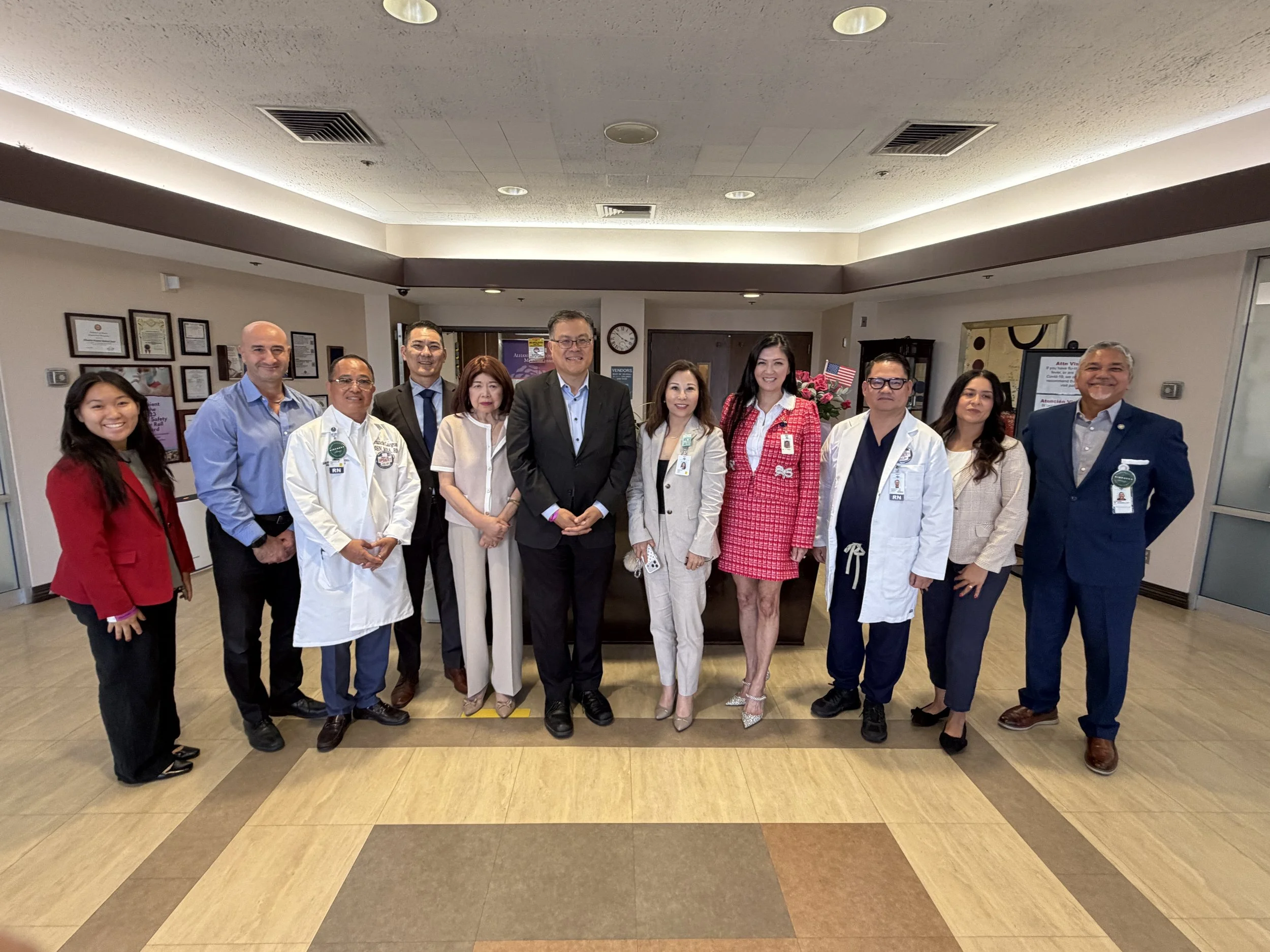
Since starting my placement in Assemblymember Fong’s district office, I’ve come to understand that representing a community doesn't just happen from behind a desk – it also happens by showing up. Over these past few weeks, I’ve gone from 626 mixers to hospital tours, each one teaching me something new about what it actually means to serve District 49. I came into this internship expecting to learn the mechanics of consistent services; what I didn’t expect was how much I would learn about the district itself, and about the many communities layered within it – several of which I belong to myself, beyond just my hometown.

From researching concerns, learning how to navigate phone calls with people who were frustrated, confused, or simply looking for help, to preparing certificates that recognize the achievements and milestones of people across the district, a lot of my day-to-day work has been centered on responding to constituents. At first, these tasks often felt procedural. But the more research I completed and the more certificates I helped prepare, the more I realized that every piece of work represented a real person trusting their local government to see them. That trust is not abstract, it is built by showing up for our community and responding to each constituent.

What has struck me most is the sheer range of communities that make up District 49. Attending events across the district has meant stepping into spaces that reflect the diversity of the San Gabriel Valley and beyond – spaces where I’ve recognized pieces of my own upbringing, and others where I’ve been welcomed as a guest and a learner. Being able to move between these communities, to connect with people who might otherwise never interact with their Assemblymember’s office directly, has shown me that representation isn’t just about who holds office. But rather, it is about who shows up on their behalf and how they do so.

This work has reaffirmed a feeling that I initially felt at the Capital Summit. That is, that the strongest kind of leadership is one rooted in presence. Assemblymember Fong’s office doesn’t just legislate for District 49; they show up for it, event after event, call after call. Being part of that has given me a clearer sense of the leader and public servant I strive to become: one who is not just working for a community, but who remains genuinely part of it. I am so grateful for the time I have had thus far in my host office. I am eager to continue building the communities in District 49 alongside an amazing team who truly understands these communities—not only as constituents but as neighbors.

Blog 2: Acts of service call that a love language

By Abhishek Jagannathan, 2026 CLA Intern

When my friends, family members, and other treasured acquaintances ask me about my experience at my host office, I often find myself responding with “It was pretty fire, man”.

As you can see, I have a charming way with words.

Of course in my case, this description is a shockingly clever (/s) double entendre, because my host office is the District Office of Assemblymember Jessica Caloza (AD 52), which includes parts of East LA that were significantly impacted by the Lineage Warehouse fire that broke out on June 17th.

Leaving aside my fairly tasteless attempt at a pun, this fire was a serious situation. The Lineage warehouse was a cold storage facility for raw meat, and the nature of the structure meant that when the fire broke out, firefighters could not get into the building to put the fire out completely. The resulting blaze was difficult to put out, and also led to the smell of burning, rotting meat permeating the air, creating significant health concerns about air quality and the spread of toxic chemicals.

This consequently shaped my first two weeks at my host office in an unexpected way. Rather than spending my time just answering phones and writing background memos for community events, my initial days at the district office were almost entirely focused on responding to constituent needs during this crisis, most notably by delivering essential resources, like air purifiers, to locals in the affected areas. This involved a lot of driving around, engaging with members of the community directly, and carrying hundreds of air purifiers to and from various trucks.

While not what I had predicted, this introduction to my host office and the community I was serving is one that felt far more valuable to me than a more typical intern experience, because it placed the act of service at the forefront of my day.

Service can come in a lot of different forms. Oftentimes, the way we find ourselves providing service relates to our strengths. We enter careers based on what subjects we excel at in school. We provide advice to others based on challenges that we’ve already overcome. But service can sometimes be more meaningful when it doesn’t come from a place of expertise, but rather a drive to be helpful in any way. I’m not the best driver in East LA, an area I am still very unfamiliar with. I am certainly not the strongest guy, nor the best at unloading a U-Haul full of air purifiers. But an emergency means all hands are on deck, which means we all have the opportunity to serve outside of our comfort zone - and knowing that something I did immediately improved someone else’s quality of life is a deeply rewarding feeling.

I think this experience of mine also highlights the power of government to connect with people directly and meaningfully. Very often we are witness to a bureaucracy that either negatively affects people’s lives, or seems to lack any tangible impact. My first days at the district office were in many ways a reaffirmation for myself that government is about service, and when it stays true to that core, it delivers.

Blog 2: Schiff-ty Business

By Gabriel Molina-Kong, 2026 CLA Intern

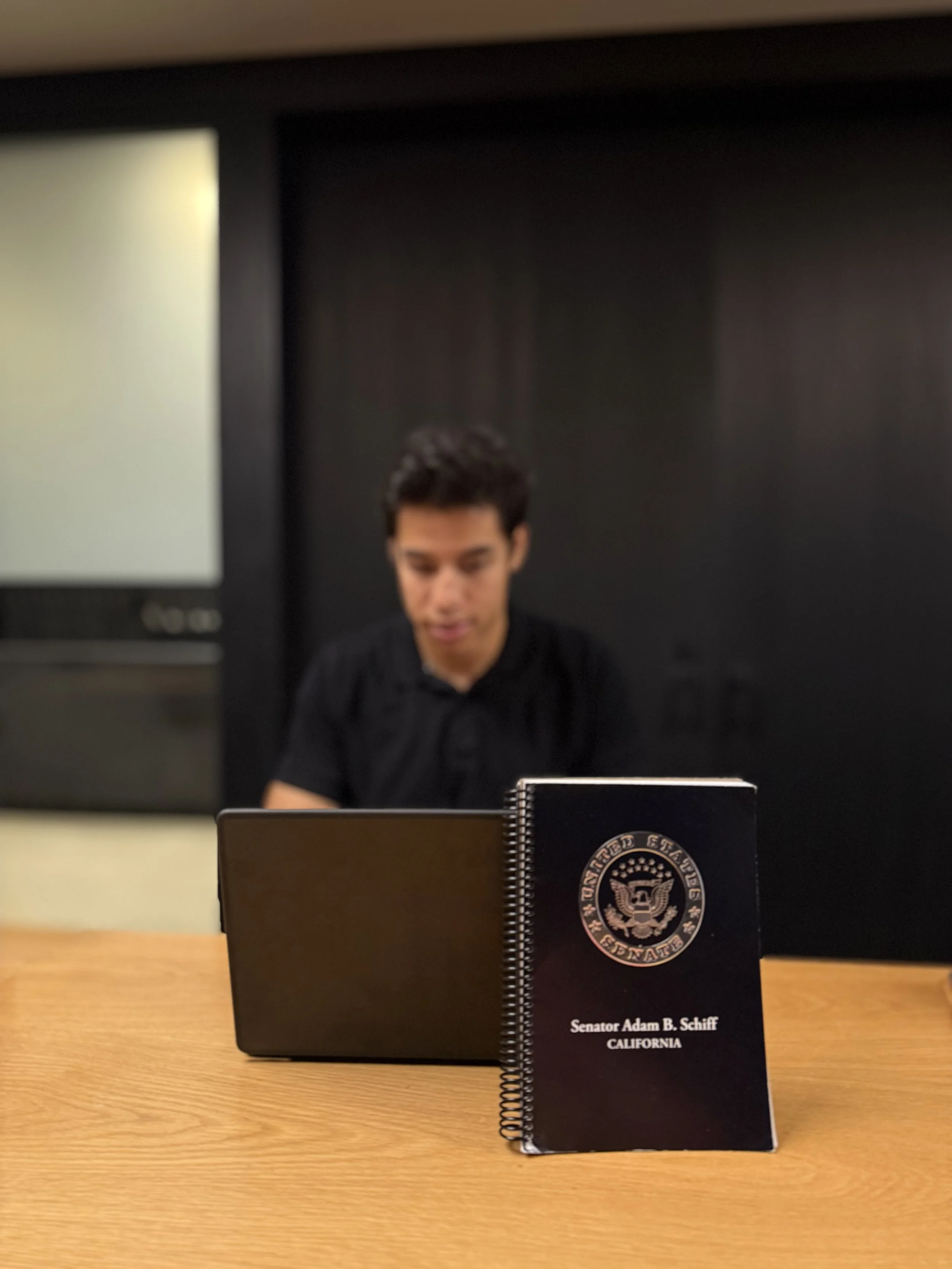
On June 30, 2026, Senator Adam Schiff held a press conference in Downtown LA to introduce legislation that would target California’s record-high gas prices. And the podium he stood behind? I built that in the office the day before. Furniture assembly is just one of my many duties around the office.

What was surprising to me was the exponential rate at which my responsibilities increased each time I went back into the office. On my first day, I did a lot of housekeeping: I watched email scam identification training, logged on to everything I’d need using my Senate email, read over an intern welcome packet, and completed other tasks of that nature. On my second day, I was introduced to one of the biggest messes that the office had to offer: the unorganized supply closet (which I organized). It was during the afternoon, during my phone training, that I started thinking that I wouldn’t have much to do this summer.

On my third day, I was introduced to casework, and I got to not only see, but also be a part of, how congressional offices individually help constituents navigate and assert themselves within our complex federal bureaucracy. The majority of my caseload concerns constituents whose visas have been languishing in a purgatory known as “administrative processing” that has no definite end. I am responsible for communicating with consulates around the world about the significant and often devastating effects that delays in their visas are having on California residents and using congressional interest to weigh in on their behalf regarding their status. Given the current immigration environment, there are a lot of constituents with this same problem, and the hundreds of cases I’m working on are just the tip of the iceberg.

Everyone around the office understands how important casework is and works tirelessly to serve our constituents. I remember hearing my coworker in the cubicle next to me exclaim, “I GOT HER THE PASSPORT!” after spending nearly half an hour on the phone with a consulate. While my share of frustrating phone calls is still largely relegated to when constituents call in with concerns, my caseload keeps me busier than I could have imagined on those first few days. Add on top of that the hours I should be spending on phones, mail sorting, or working on my intern projects for the week, and I find myself wishing I had more hours before 5 PM so I could finish my work.

I’ve never wished there were more hours of work for me in my life, but hearing constituents’ heartbreaking stories and knowing that what I do helps them motivates me beyond the ticking clock.

Blog 2: Lieu Review: The Sweet Symphony of Sawtelle

By Natalie Bray, 2026 CLA Intern

It was my first day at Congressman Ted Lieu’s District Office and I was beyond nervous. I had never worked in any sort of congressional office before, and did not know what to expect. Tentatively, I found myself staring at the seal on the door in front of me reading “Congressman Lieu’s District Office,” before knocking to be let in. The door was opened by my supervisor, who greeted me with a warm smile and a greeting before saying to me “cute outfit!” Based on that quick introduction I had to my amazing supervisor and the environment within the office, I knew I would enjoy my time spent in Westwood, and I was 100% correct. 

Aside from the obvious highlights of my days working in the office talking to my coworkers about food recommendations along Sawtelle, how their weekends were, and what TV shows they had been binging recently, I have learned so much already in my time at the District Office. Listening to constituent’s concerns and figuring out how best to help them has been a very rewarding part of my experience thus far at the District Office, and it is empowering to see that everyone in the office is truly passionate about helping individuals within the district as best as they can. I also really enjoy writing both the office’s Daily Digest briefings consisting of the top international, national, state, and local news stories of the day, as well as the office’s White House Briefings, watching what media the White House has produced for the day and keeping the office informed as to what our Congressman will ultimately be responding to throughout the day based on that media. 

I have also been given my own individual assignments that I am extremely passionate about. As a CAUSE intern, I have had the fortune to be introduced to much more nuance in the spaces regarding AANHPI legislation and what people within the AANHPI communities are particularly passionate about in the realm of politics. I have been able to carry over this knowledge to the District Office where I am researching current and ongoing AANHPI legislation that Congressman Lieu has particularly taken interest in. This has not only made me feel more empowered on a political basis, but also a personal one, knowing that our AAPI community gets representation of people like ourselves through Congressman Lieu advocating on our behalf for our values, beliefs, and ongoing issues. 

Joined at the DO by four other collegiate female interns, I feel like I won the jackpot in terms of the best working environment ever (aside from my CAUSE supervisors and cohort; nothing can truly ever come close to rivaling that Sacramento trip). Being surrounded by so many young, bright, and impassioned individuals both at CAUSE and at the District Office makes me feel incredibly blessed to be able to be a part of these groups, and even getting to call them my friends. 

Blog 2: Beyond the Ballot

By Matthew Inui, 2026 CLA Intern

As the intern placed at CAUSE, I’ve had the unique opportunity this summer to work on a wide variety of tasks. For the past three weeks, I’ve done everything from grant writing and social media work to cleaning the CAUSE office. That’s one of the reasons I love nonprofit work: unlike government offices, which are beholden to the needs of their constituents, nonprofits have the freedom to pursue a wide range of topics that are personally important to us. As the only CLA intern placed at a non-profit this summer, I’m grateful for the opportunity to explore the issues I find interesting and important.

That being said, perhaps the strangest, most frustrating, but also, surprisingly, the most meaningful task I’ve had this past week was compiling a list of every small-business resource offered by the 88 cities in Los Angeles County. In partnership with the LA County Economic Development Corporation (LAEDC), CAUSE is developing a wayfinding tool for small-business resources in LA County, and I had the opportunity to be part of its early data-gathering stage.

I won’t lie, it was difficult and grueling work. Most of the websites were not easy to navigate, and finding resources was frustrating. But as I clicked through seemingly endless webpages, I realized that my frustration mirrored that of every business owner trying to access these resources. In a way, my frustration with my work doubled as motivation to do better and to contribute to a tool that makes this resource-finding process easier.

Still, as I compiled my list, I couldn’t help but wonder what this has to do with CAUSE. Our mission is to advance the political and civic empowerment of the Asian Pacific American (APA) community, and I struggled to connect my small business research to this mission. That is, until I thought of my grandmother. Perhaps the strongest person in my life, my grandmother, does not speak English and didn’t even graduate from middle school, yet was a successful business owner for several decades. But thinking about her trying to navigate these resources put my work into perspective.

CAUSE’s work would not be complete if it started and finished with voting. As Jada, one of my fellow interns, said, “civic engagement manifests in all aspects of life,” and I realize now that this couldn’t be truer. Just because our small business resource tool doesn’t cover elections or legislation doesn’t mean the API perspective isn’tt important. Like my grandmother, many in our community are business owners with limited English proficiency and are exactly the population our tool is meant to help.

I’ve had such an incredible time working on topics that are important to me—language access, youth leadership, voting. But looking forward to the next six weeks, what I’m most excited for is tasks like these, where I can dive into topics that I’ve never touched before (never would I have thought I’d spend so long researching RFPs and fictitious name filings) and truly grow my understanding of the role the API community plays in community decision-making.

Blog 2: Empathy in Civic Engagement Praxis

By Ivory Sihashath, 2026 CLA Intern

I feel that CAUSE really placed us where we belong when it comes to our host offices. I have a massive appreciation for CAUSE and the staff at Senator Alex Padilla’s office for mentoring and guiding me as well as being empathetic and understanding when it came to the passing of my father during the beginning of the program. My father would have loved to see me succeed in public service and leadership that helps marginalized and underserved communities.

A particularly powerful moment in the course of these past couple of weeks was when my supervisor showed me incredible empathy and accommodation. It stood out to me as it truly gave me an epiphany of what my mission and values were: helping give a voice to those who need help, which is why I applied to CAUSE in the first place. My mock campaign team and my cohort’s understanding and kindness made me realize that professional programs like CAUSE are not just about developing professional connections, but meaningful ones.

A particular lesson I learned at my host office was to be professionally flexible. What this means is to be alert and confident, but also be willing to accommodate or be flexible in a Congressional office, especially with the hustle and bustle of a local congressional office, where changes can be last minute or adapting is needed on the fly.

My most interesting discussion during the program so far was comparing and contrasting my experience at my host office with my cohort members. It was interesting to learn what we are all getting out of our host offices, whether it be similar or different experiences of how we are helping communities and constituents.

I greatly appreciate the hands-on experience that shows civic engagement and local government in practice. I hope to gain more from my host office so that I can share leadership and community engagement resources with my Lao community back at home.

Blog 1: CAUSE for Community

By Kayla Mar, 2026 CLA Intern

It appeared I preached the importance of community without knowing what exactly I meant. Nervous laughter and first day exuberance saturated the room as we stood before a big sheet of paper, “COMMUNITY” sprawled across the top in hot pink marker. Tasked with defining the term, three of my peers and I threw around words we thought it encapsulated. 

“A group of people!”

“Reciprocity…”
“Mutual aid?”

“Togetherness!”

“They have to know they’re actually in a community, right?”

We crafted a confident definition and continued with our Day 1 activities. But throughout the first week of CLA, the boundaries of community never quite left my mind. How does one define such an abstractly used word?

Community appeared in my textbooks. Through my academic endeavors and extracurricular activities, community has remained at the forefront as a necessary source of power. It’s where ideas proliferate, where movements take root, where power lies. Even in spaces I occupy that I label as community, I held an abstract, less confident understanding of the exact term. I questioned when the term was used too broadly, too narrowly, too often, not often enough. 

Community appeared in API history. As we learned about API history in this first week, we identified our motivations, values, and family histories. Situating our personal histories within those of our forefathers who stood at the helm of change, progress, and visibility, I quickly realized that the API networks and groups whose existence I grew up assuming as natural are in fact direct products of deliberate, consistent connections across time and geography — and, whose existences have only appeared in history far too close in time to myself. 

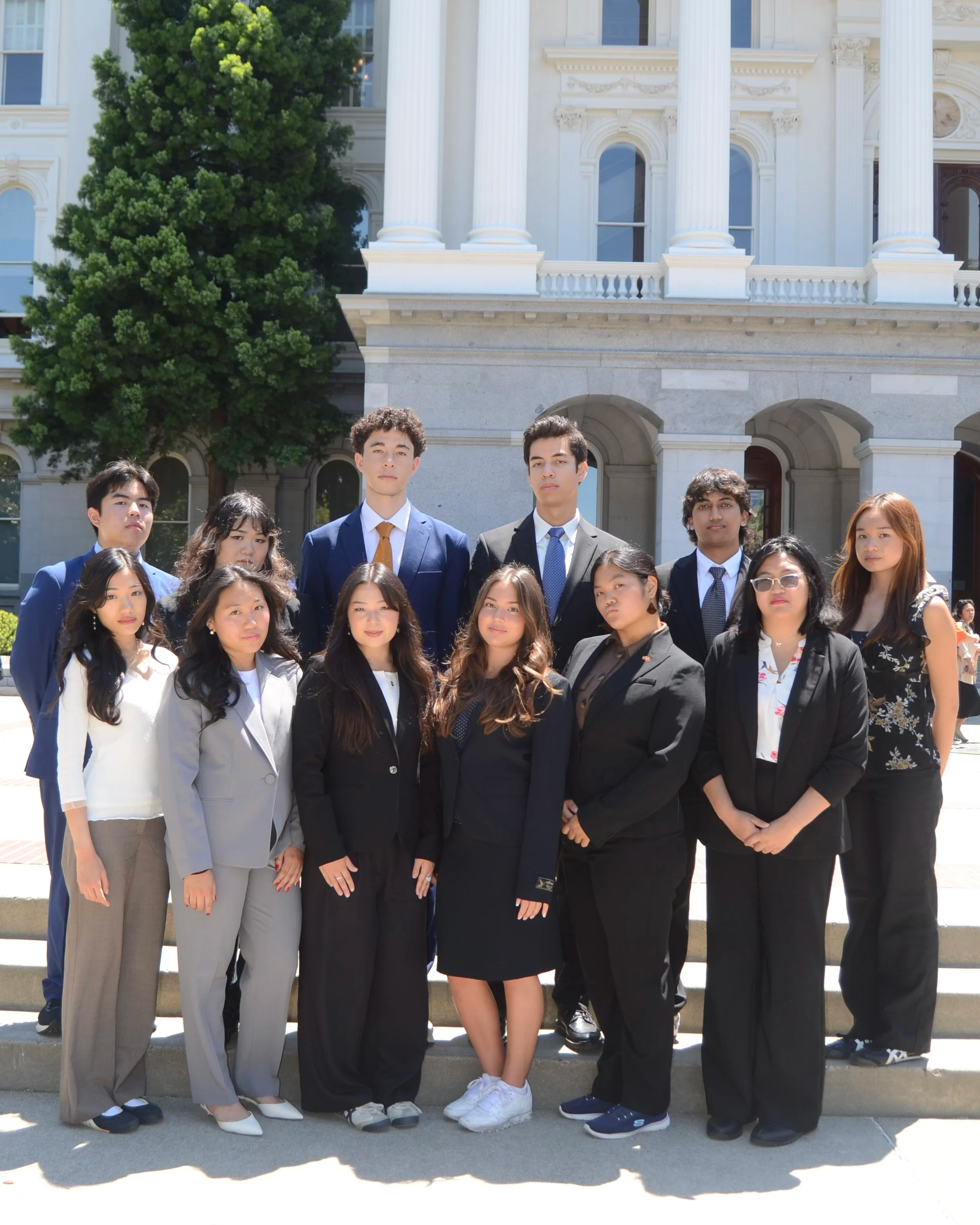
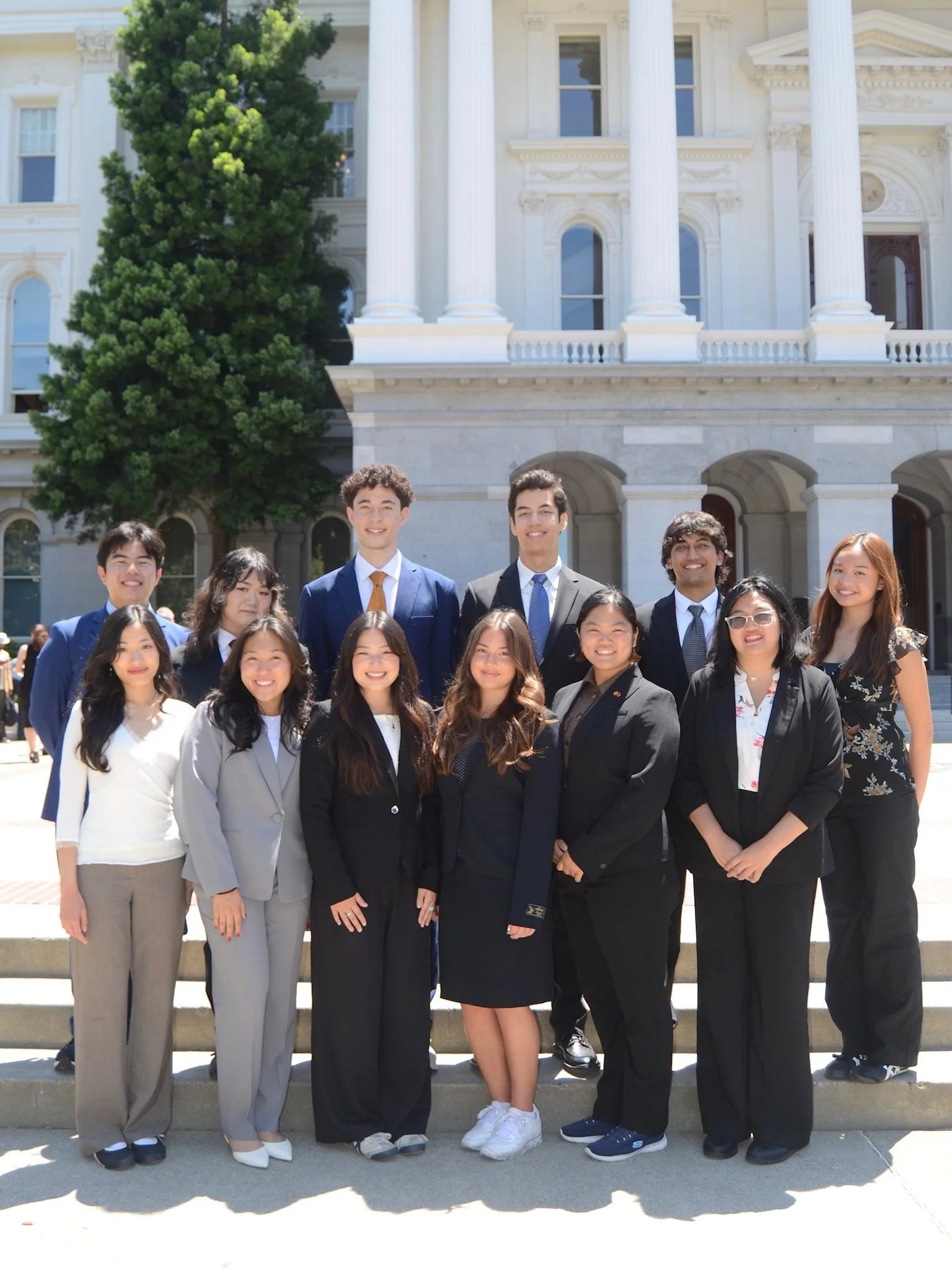
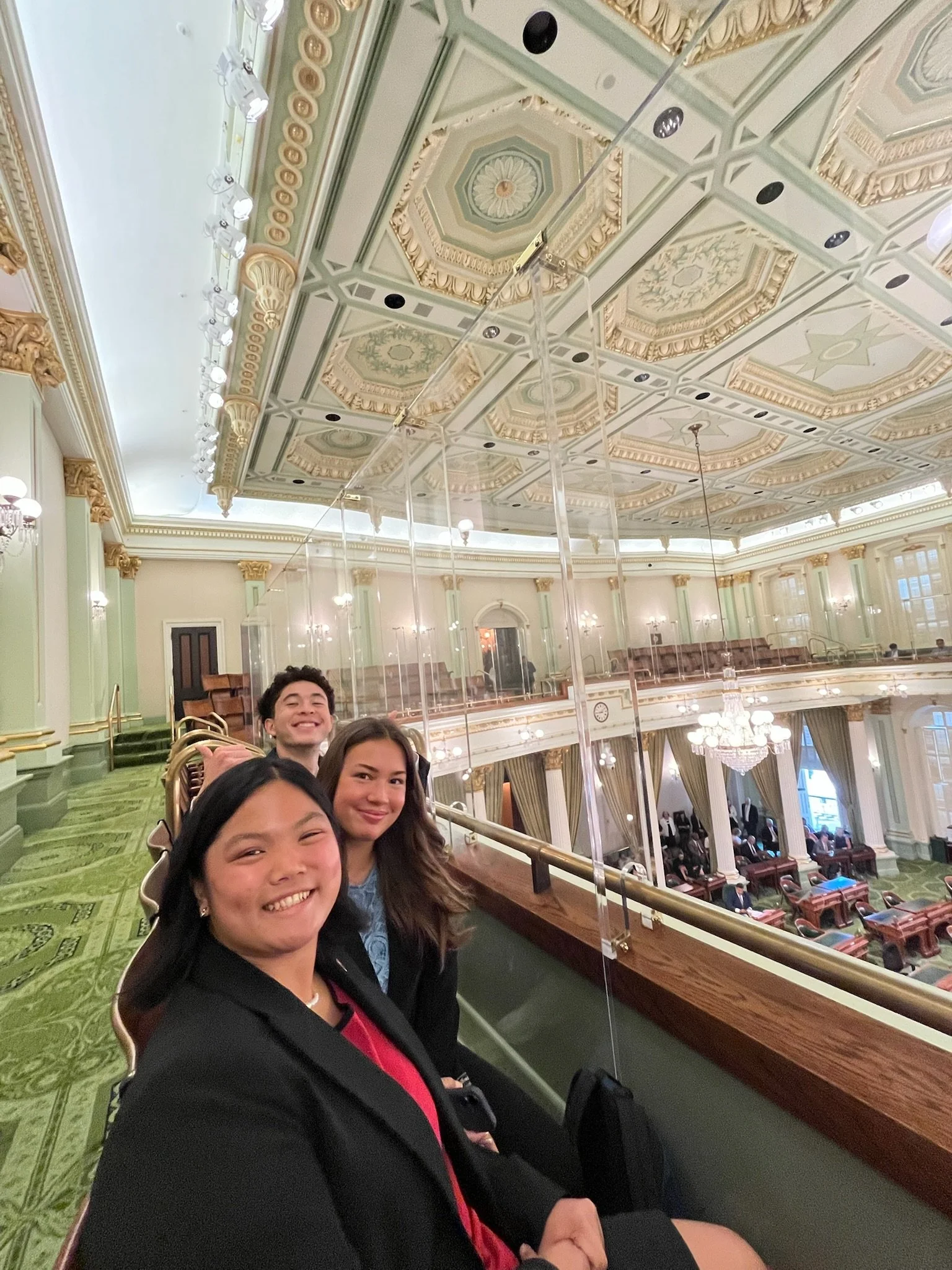
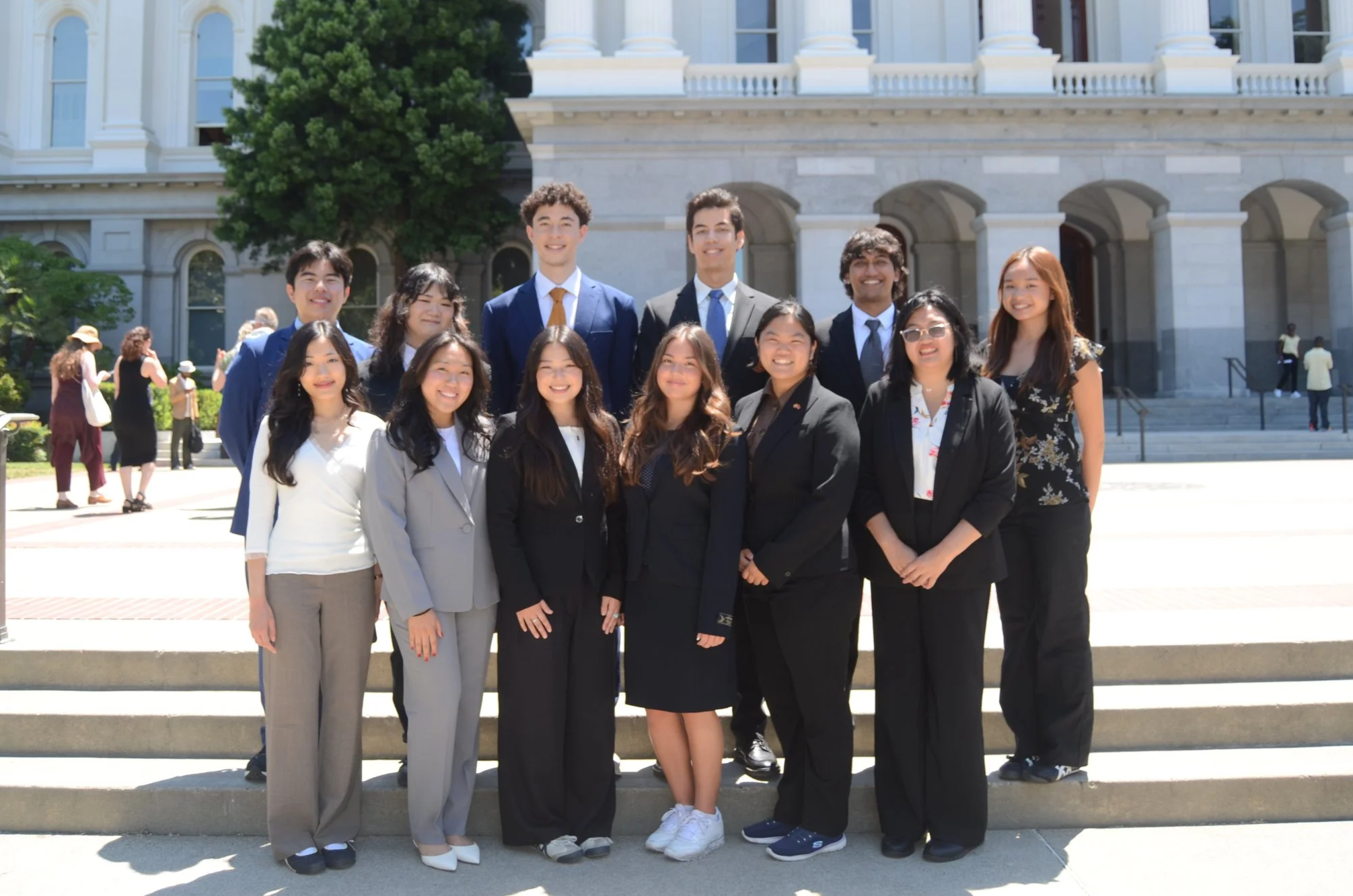
Community appeared in the state capitol. Traveling to Sacramento with my eleven other CLA cohort-mates on the third day of knowing each other felt daunting at first, but my anxieties were immediately relieved by everyone’s benevolent amicability. Walking the antique halls of immense power, shaking hands with staffers and legislators whose words and actions directly impact our lives, and peering over glass panes with wide eyes onto the Assembly floor to see exceptional racial and ethnic diversity amongst our policymakers forced my reflection upon how far racial minorities have come in such a short amount of time. 

It was within my grandparents’ lifetimes that an API legislator was exceptional. It was within my parents’ lifetimes that an API network was established across the state. It is within my lifetime that I was born into an epoch where there is an API network that allows us unprecedented access to decisionmaking spaces. Watching the interactions between CAUSE staff and Sacramento folks that could only be achieved by sustained and intentional relationships opened my understanding of how community manifests and what is required to fight against the systemic barriers facing our communities.  

Community appeared in lunchtime conversations. Getting increasingly closer to my CLA cohort exponentially excited me for not only the duration of summer, but for the rest of my career. 

So, what exactly is community? After one full week of CLA, I still have a hard time claiming one exact definition. Perhaps you can’t precisely formulate it into words. Perhaps it’s a moment of excited glances at your cohort-mate. Perhaps it's a 10 p.m. ice cream run in the state capitol. Perhaps it’s a tender exchange of words after a whirlwind of a week. Perhaps it’s the long term connections you make along the way. Perhaps it's the legacy of an identity group that fought for a seat at the decisionmaking table. Perhaps it’s people advocating for you when you least expect it. 

Perhaps, even, it is something you continue to define throughout your life. However it manifests in the future, I am prepared to work for it. 

Blog 1: From Behind the Lens

By Jayden Tran, 2026 CLA Intern

I’ve always chosen to be the person behind the lens of the camera. I love capturing moments, memorializing them as pivotal points of not just my own life, but the lives and experiences of others. For years, I’ve captured candid memories of my friends at concerts, my family eating at a local restaurant, or my peers deep in thought at events.

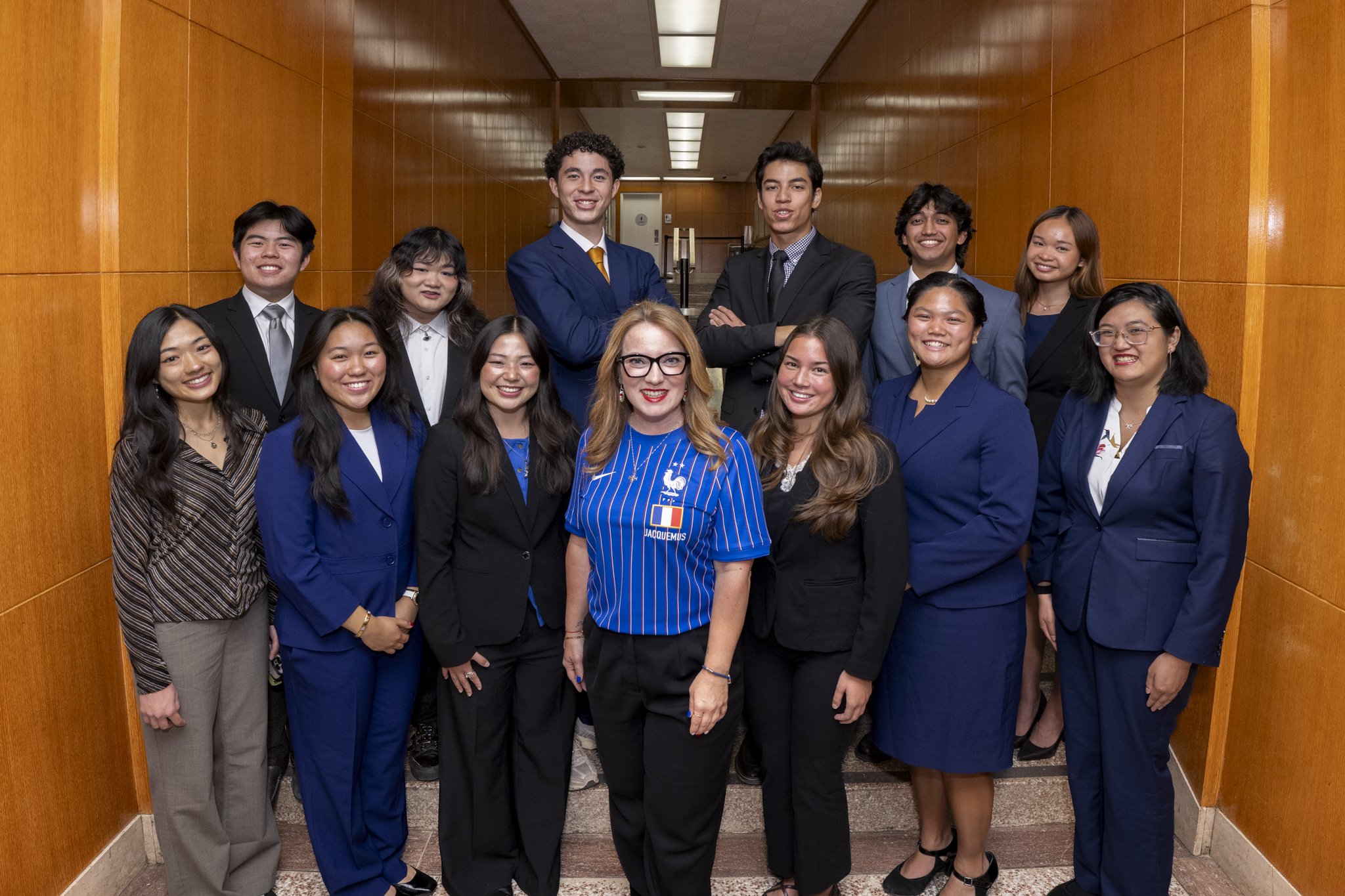
Stepping into the CAUSE building, I definitely was not prepared for the camera’s focus to be shifted onto me. In the first 30 minutes, Andrea [CAUSE Programs Manager] was taking photos of Matthew, Kaitlan, Ivory, and me after our spaghetti tower won with its height. In our first group photo, where we attempted to create a formation where everyone could be seen, I purposefully hid myself in the back (even though I’m quite short).

This theme of being in focus continued into the rest of the week. I’d brought my camera to Sacramento for our Capitol trip, wanting to take photos of our programming. Instead, I found myself passing off my baby to Andrea and Rachel [CAUSE Programs Intern], who photographed as I listened in on valuable insights from people like Jaspreet Johl, Chief of Staff for Asm. Mark González’s (Shoutout AD- 54!) and the Honorable Mike Fong. Meeting Capitol Office interns and fellows, being introduced during Senate and Assembly sessions, and getting to see the CAUSE Alumni connections in action are all things I might have missed out on had I been too busy behind the lens.

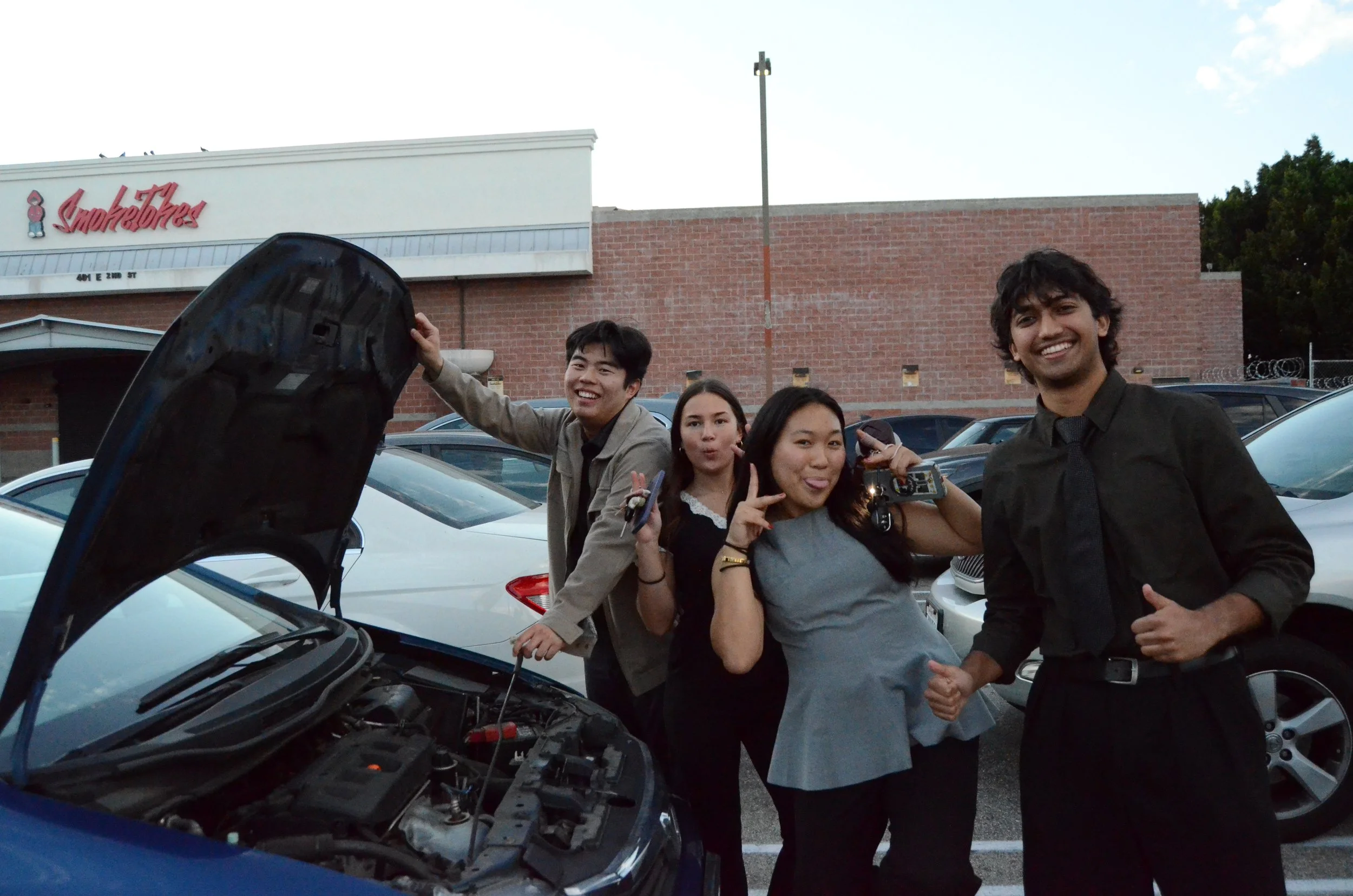
And so, although I’ve been photographing some of the fun parts of CAUSE (see: Matthew’s car battery breaking), I’ve also been learning to live in the moment as well: taking in information as it comes, being an attentive listener, and engaging in conversation. While I used to focus only on what I could see through the viewfinder, I’ve “opened up my senses” and do my best to see everything that’s everywhere all at once.

This was evident in more recent conversations that have emerged post Capitol trip. Meeting with former CLA Alum, the CAUSE Board, and other guest speakers, I’ve found myself listening in more intently instead of simply looking for “the moment.” By taking myself away from the camera and putting myself into the environment, I’ve found that although a picture paints a thousand words, the lessons, emotions, and memories you take from a moment can paint a thousand more words.

CAUSE has given me the opportunity to transform from the photographer to the subject as we continue to explore our work. I have been constantly engaging and mobilizing with constituents and the community at my Host Office. I am the candidate for CAUSE’s Mock Campaign program. I will become more comfortable in environments I’m unfamiliar with.

I recognize that I’ll continue to be that person behind the lens of the camera — that’s just my nature. But, the first two weeks of CAUSE have shown me one thing: sometimes, it’s not too bad to be in the foreground, either.

I still have to work on smiling, though…

Blog 1: APIS. Mobilize.

By Alan Alexander, 2026 CLA Intern

It’s been 14 days… 

…14 days since I stepped into that fateful Little Tokyo office building–14 days that have felt like an eternity of transformative experiences, and yet all no longer than the blink of an eye. 

On the morning of that first Monday, I was greeted by a sea of unfamiliar faces as I entered the 7th floor conference room where the rest of my cohort was already situated. Though the faces were new, I was eased by a sense of familiarity in our collective ambition, unvoiced but strongly apparent, and our silent hunger for impactful action. 

After an ice breaker activity, we split off into groups to discern the true definition of “civic engagement.” Though we all wrote down rather lofty and inspiring interpretations, Nancy made the thought-provoking observation that none contained the words “government” or “voting.” This observation prompted the following questions: why were we reluctant to associate our ideals of societal participation with voting and other methods of democratic involvement? Did we view voting as an unmeaningful method of civic engagement? 

On the third and fourth days, we travelled to Sacramento to immerse ourselves in the heart of California governance. It was surprisingly humanizing and grounding to observe actual people—our state senators and assembly members—fighting passionately about issues they and their constituents were passionate about. While talking with electeds such as Senator Sasha Renee Perez, Senator Maria Elena Durazo, and Assemblymember Jessica Caloza, I was inspired and empowered by their perspectives and dedication to take action and truly make a difference. 

These experiences, among many others, have undoubtedly shaped me into a more holistic individual. They have also shown me the magnitude of the work that has yet to be done. From conversations with Nancy [CAUSE Executive Director] and Andrea [CAUSE Programs Manager], I’ve realized that, factoring in outreach efforts, a significant portion of the Asian and youth population still doesn’t vote, even though their ballot could mean the difference between a political landscape where our communities are represented or blatantly ignored. I’ve also contemplated deeper the true implications of LA County Measure G, and the crucial importance of shaping the County Executive and Board of Supervisor roles to be equitable for all ethnic populations. 

As I go forth with an invariably determined spirit, I’m excited to explore different solutions, whether through technological or logistical means, to drive increases in voter participation. Furthermore, I look forward to working with the rest of my cohort to ascertain how measure G should truly take shape and how we can most optimally educate the general public about the Board of Supervisors expansion to create an LA county that works for all. 

Blog 1: Policymakers Are People Too

By Sophia Pu, 2026 CLA Intern

I’ve been to California’s capitol three times as a student at UCLA, but my visit with the CAUSE Leadership Academy was unlike any other. I was able to go beyond advocating for bills and resources to see legislators and their staff in action and have detailed conversations about their work.

One of the most meaningful experiences for me was speaking directly with my own representatives – Assemblymember Mike Fong and Senator Sasha Renée Pérez – and asking them about my primary concerns as a constituent, including supporting undocumented students and regulating data centers. When we visited other cohort members’ host offices, I saw how proud each legislator was to represent their constituents, even as they were hundreds of miles away from their home districts. The time and attention legislators and senior staff gave us made me feel that Sacramento as a place where ordinary people can come to make their voices heard. 

Attending Assembly and Senate floor sessions – courtesy of Senator Ben Allen and Assemblymember Jessica Caloza’s office – allowed me to see myself in their shoes, speaking for the communities they care about in front of some of the most powerful people in the state. Speaking to members of the CAUSE network who were once in my shoes demystified the legislative process and the path to shaping policy for almost 40 million people.

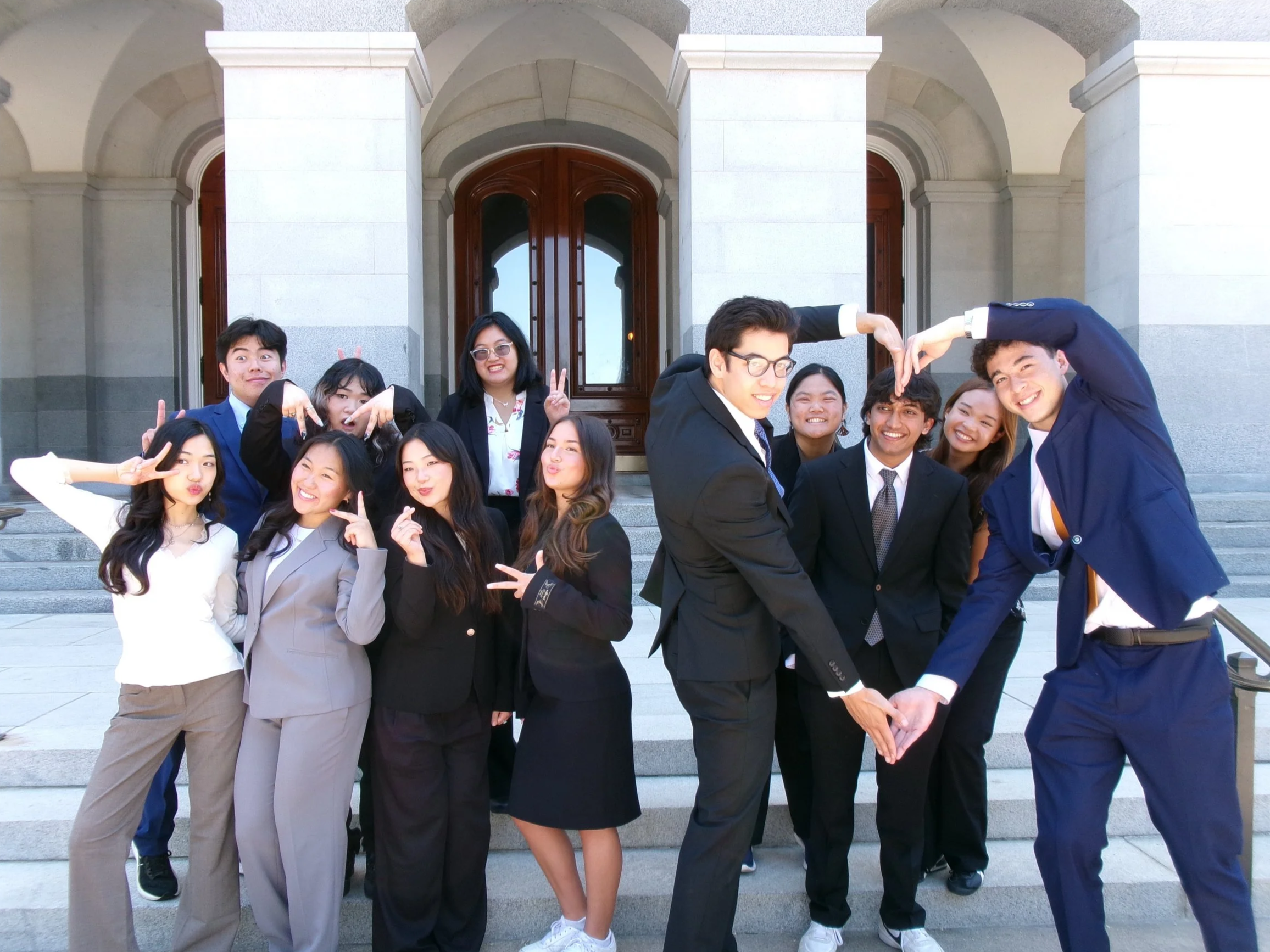
After a long day of meeting with offices and networking, I almost felt too tired to explore Sacramento with my cohort – but I’m so grateful that I did. Leaving the hotel to get dessert, take silly photos, and walk 30 minutes to see the capitol building at night turned us from coworkers separated by walls of professionalism to friends going through the same journey together. A stranger on the street would have seen a group of raucous young people disturbing the peace. But if I learned anything from my conversations with CLA alumni and political stars, it’s that those loud, laughing college students will one day champion change in California and beyond.